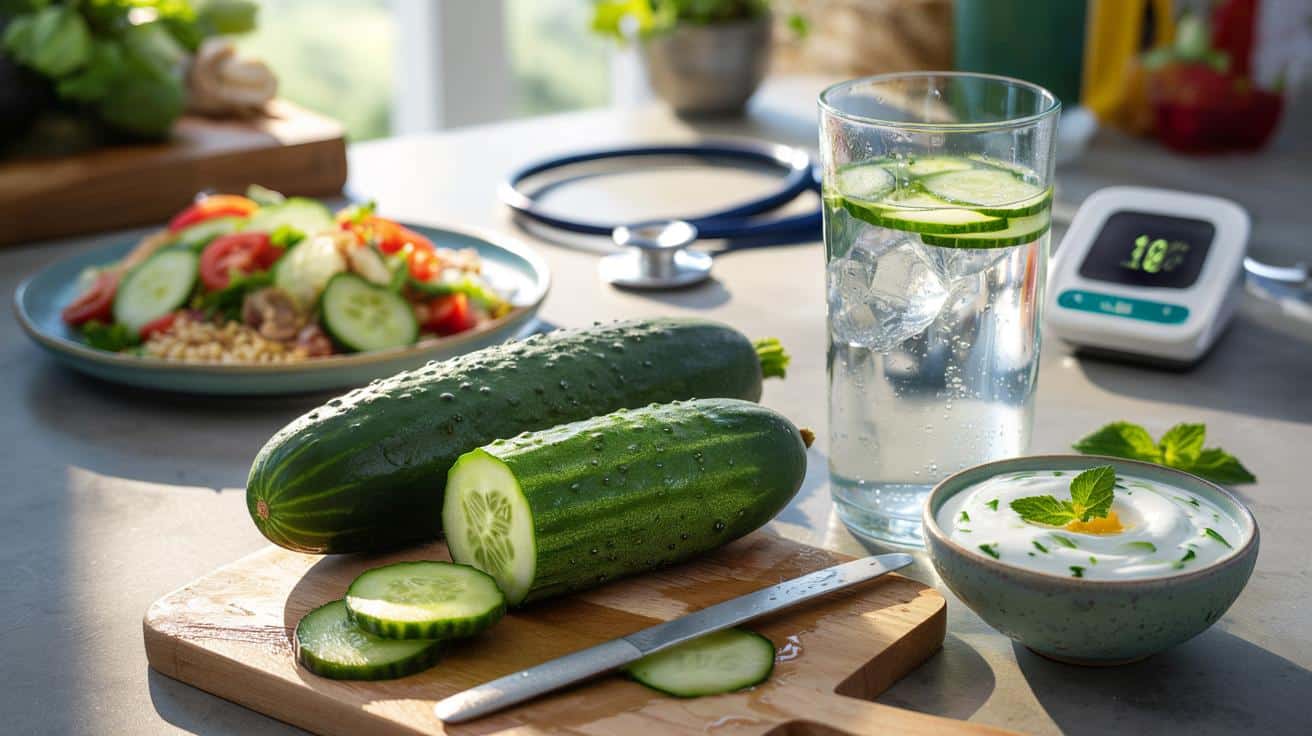
That simple crunch is doing far more than you think.
Cucumber looks almost too light to matter, yet nutrition experts keep recommending it. Behind its fresh taste hides an ally for hydration, digestion and even blood sugar balance, especially when it becomes a regular fixture in everyday meals.
The quiet hydration champion
Cucumber is made of around 95% water, which gives it a genuine role in maintaining fluid balance throughout the day. That high water content helps compensate for the steady losses caused by breathing, sweating and going to the bathroom.
Cucumber acts like an edible water bottle: it hydrates while bringing minerals that plain water does not provide.
When eaten with the skin, cucumber also supplies small but useful amounts of potassium and magnesium. These minerals take part in muscle function, nerve signalling and blood pressure regulation. For people who struggle to drink enough, adding cucumber to meals or snacks can quietly increase total water intake without any effort.
Low in calories, high in volume
From a calorie standpoint, cucumber is one of the lightest foods you can put on your plate. A typical half-cucumber barely reaches a few dozen calories. Yet it takes up space, needs chewing and fills the stomach.
This makes it valuable for people trying to manage their weight. Swapping part of a pasta dish, sandwich or rice bowl for chunky cucumber slices raises the volume of the meal without raising energy intake.
- Very low energy density (few calories per gram)
- Plenty of water and some fibre to increase fullness
- Neutral taste that fits many dishes and snacks
The effect is not magical, but it is practical: you feel satisfied with slightly fewer calories, which can, over weeks and months, support gradual weight loss or help stabilise the number on the scales.
Gentle support for digestion
Cucumber contains a modest amount of fibre, especially in the peel and seeds. This fibre contributes to smoother transit in the intestines and helps create a more regular bowel pattern.
Keeping the skin on the cucumber increases its fibre intake and adds to the feeling of satiety after a meal.
➡️ What really happens to your metabolism after 35 and how to slow the change naturally
➡️ People who stay happy and fulfilled after 60 have usually given up these 9 habits
➡️ How a single unclear expense category can throw off an entire monthly budget
➡️ This dinner comes together naturally, without overthinking
➡️ He puts parchment paper at the bottom of his trash can and avoids scrubbing it all week
For people sensitive to heavy, high-fibre foods, cucumber brings a milder option. It can be a starting point for those who want to increase fibre gradually without experiencing intense bloating. Cutting it finely, salting it lightly and letting it rest can also make it easier to tolerate for sensitive stomachs.
Vitamins and antioxidant compounds
Cucumber is not the most concentrated vegetable in vitamins, but it still contributes several useful nutrients when eaten regularly. It usually offers a bit of vitamin K, some vitamin C and traces of B vitamins.
The green skin contains plant compounds such as flavonoids and carotenoids. These substances act as antioxidants, helping the body limit damage from free radicals generated by pollution, smoking or normal metabolism.
Most of the beneficial plant compounds in cucumber sit in or just under the skin, which argues for washing rather than peeling when possible.
The presence of silica, a mineral often mentioned in relation to connective tissues, has been highlighted in some nutrition sources. While cucumber alone will not transform skin or joints, it participates in a varied diet that supports these structures over time.
Impact on blood sugar and heart health
A friend for blood sugar balance
Cucumber brings almost no simple sugars and contains a bit of fibre and water. When added to a meal rich in carbohydrates, it helps dilute the overall sugar content of the plate and can slightly slow gastric emptying.
This softer digestion can lead to a more gradual rise in blood glucose. For people with prediabetes or type 2 diabetes, combining rice, bread or pasta with a generous portion of cucumber salad is a simple daily strategy to stabilise sugar peaks.
Support for blood pressure and the heart
The potassium present in cucumber contributes to the delicate balance with sodium in the body. Eating more potassium-rich vegetables can support normal blood pressure when combined with an overall balanced diet and low salt intake.
| Component | Potential effect |
|---|---|
| Water (≈95%) | Hydration and volume for satiety |
| Potassium | Supports blood pressure regulation |
| Fibre | Helps digestion and moderates blood sugar rise |
| Antioxidants (in the skin) | Contribute to protection against cellular damage |
No single food protects the heart alone, but cucumber fits well within dietary patterns linked to better cardiovascular outcomes, such as Mediterranean-style or plant-forward diets.
Skin, freshness and everyday uses
Beyond the plate, cucumber keeps its reputation as a “beauty” food. When you eat it, the water and micronutrients participate in general hydration, which tends to support skin elasticity and suppleness.
Applied cold on the skin, cucumber slices or pureed cucumber bring an instant refreshing sensation. While the effect is mostly local and temporary, many people use it to soothe puffy eyes or tired skin after long days or short nights.
Using chilled cucumber slices on the eyelids will not erase wrinkles, but it can relieve the feeling of heat and swelling.
In hot weather, combining cucumber with yoghurt, mint or lemon makes light dishes that are easy to digest and help people who lose their appetite in the heat maintain a minimum intake of fluids and nutrients.
How to add cucumber to your routine
Simple ideas beyond the classic salad
Cucumber fits into many quick recipes that suit busy weekdays. Here are some concrete options:
- Grate it into plain yoghurt with garlic and herbs for a fresh dip served with bread or raw vegetables.
- Add thin slices to sandwiches and wraps to bring crunch, water and volume.
- Mix diced cucumber with lentils, olive oil and lemon for a more satisfying lunch box.
- Blend it with spinach, apple and a squeeze of lime for a light, hydrating smoothie.
Seasoning matters. A pinch of salt, vinegar, sesame oil or fresh herbs like dill and coriander can transform the taste and encourage people who “don’t like vegetables” to actually eat them.
Choosing and storing cucumber safely
Firmness and uniform colour suggest a fresh cucumber. Wrinkled skin, soft spots or yellowing signal ageing and some nutrient loss. Once at home, the vegetable keeps best in the fridge, ideally wrapped in a cloth or paper to limit moisture loss.
Washing under running water, and brushing gently if you keep the skin, helps remove soil and some surface residues. People worried about pesticide traces can prefer organic cucumbers or peel them, though that removes part of the fibre and antioxidants.
Who should be cautious and what to watch
For a small group of people, cucumber can trigger digestive discomfort such as bloating or belching. The combination of seeds, skin and certain fermentable sugars explains this sensitivity. Trying seedless varieties, peeling the skin or eating smaller quantities with other foods can reduce these effects.
Rare allergic reactions exist, often linked to cross-reactivity with pollen or other fruits like melon. Itching in the mouth or swelling after eating raw cucumber calls for medical advice and, in some cases, allergy testing.
Even a harmless-looking vegetable can cause issues for a minority of people, especially those with allergies or irritable bowel conditions.
Putting cucumber into real-life scenarios
Picture a hot weekday for someone working at a desk, who often skips water and snacks on biscuits. Swapping the afternoon biscuits for a small box of cucumber sticks with hummus can change several things at once: more hydration, more fibre, better blood sugar control and less ultra-processed food.
For an older person who eats less and struggles with constipation, adding a cucumber and tomato salad to both lunch and dinner increases fluid and fibre, without creating a heavy feeling. Over a few days, this simple move may improve transit and comfort without resorting straightaway to laxatives.
Related tips and combinations that make sense
Pairing cucumber with protein-rich foods such as eggs, chickpeas, tofu or grilled fish turns a very light salad into a complete meal. The protein brings long-lasting satiety, while cucumber provides volume and freshness, useful in warm weather or for light evening meals.
For people watching their salt intake, cucumber can replace part of the bread or crackers usually used with cheese or charcuterie. This lowers sodium per bite, boosts water intake and introduces crunch, without feeling like a strict diet. Small, repeated changes of this kind often make the real difference over the years.