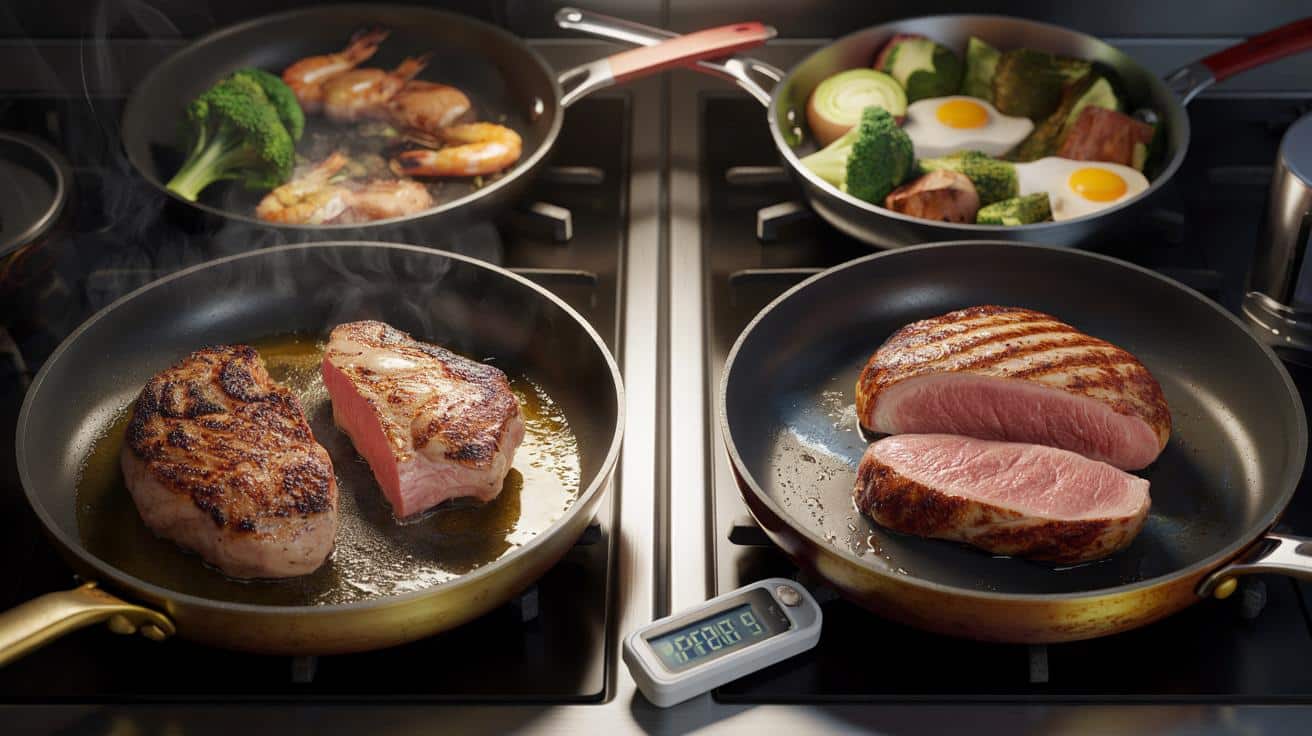
The pan is already smoking when you drop the chicken breast in. The outside seizes instantly, hissing like it’s angry. In four minutes flat you’ve got color, you’ve got smell, you’ve got… a raw center and a burnt crust. You chew anyway, telling yourself it’s “just a little under”.
Later, you open social media and see yet another video promising “perfect steak in 90 seconds” or “pasta in 5 minutes”. Nobody shows the chewy edges, the cracked custards, the rubbery eggs that happened the other five times.
Something strange happens when we rush heat. Food scientists have been quietly measuring it for years.
What speed-cooking really does inside your food
Turn the heat to maximum and things start happening in fast-forward. Water rushes out of your food as steam, proteins seize like overworked muscles, and sugars race toward dark brown before your eyes. On the surface it looks like magic: color, smell, sizzle. Inside, the story is slower and much less glamorous.
Food scientists call it a problem of gradients. The outside of your steak might hit 200°C, while the center is still cold enough to harbor bacteria. You get the illusion of “cooked” on the outside, while the inner structure hasn’t caught up.
Take a common weeknight disaster: pan-fried chicken. A 2023 study from the German Federal Institute for Risk Assessment looked at home cooking temperatures. They found that when people cranked the heat to “get it done”, the outside of chicken could hit 180°C in two minutes, but the center hovered stubbornly below 60°C.
That’s the danger zone, microbiologically speaking. Bacteria like Salmonella are still very much alive there. So you get this strange combination: a dried-out surface where proteins have squeezed out their juice, and a center that’s both rubbery and risky. On the plate, you notice it as that unpleasant texture where you need to saw through each bite.
Scientifically, rushing heat is basically bad time management at the molecular level. Proteins need time to unfold and set gently, starches need time to swell and gelatinize, connective tissue in meat needs time to slowly melt into gelatin. When you blast high heat, the outer layer races past these stages into damage mode.
*Instead of building textures, you’re breaking them.* The classic Maillard reaction that gives you a delicious crust doesn’t get a chance to line up evenly with doneness inside. You get harsh flavors, bitter notes, and a texture that swings between mush and tire rubber in a single mouthful.
The science-backed way to “go fast” without wrecking dinner
Food scientists have a quiet obsession: controlled heat. That doesn’t always mean low; it means predictable. One simple method crops up again and again in the research: start gentler, finish hotter. For meat, that might be oven first, sear last. For eggs, that might be starting in a cool pan, not a raging one.
➡️ If your bank card PIN is on this list, change it now: your account can be emptied
➡️ Heating: the 19°C rule is outdated: experts reveal the new recommended temperature
➡️ The shocking truth behind a dying beekeeper and the retiree who must now pay his agricultural tax
➡️ Goodbye hair dye for grey hair, this simple conditioner add-in restores natural colour
➡️ What does it mean to always talk to yourself? Psychology explains it
➡️ A psychologist says: “This small change in how you think about people marks true emotional maturity”
➡️ Goodbye microwave: here’s the appliance that will replace it, and it’s much better
You’re letting the inside of the food climb to the right temperature all the way through, then using short bursts of high heat as a finishing touch. Think of it as cooking with a seat belt on. You get your crust or your char, but your center isn’t fighting for its life.
This is where our everyday habits trip us up. You come home hungry, you turn all the knobs to max, you throw cold food straight from the fridge onto the pan. We’ve all been there, that moment when you’re watching a pot of rice boil over because you tried to “save a few minutes”.
The common mistakes are boring and universal: no preheating, overcrowded pans, zero resting time, and constant poking. Each one interrupts how heat moves through your food. Let’s be honest: nobody really does this every single day. Most of us wing it. And that’s exactly where fast cooking turns from shortcut into sabotage.
“Heat is not just hot or cold,” says Dr. Greg Blonder, a physicist and food scientist who has advised several restaurant groups. “It’s a schedule. Ramping up slowly, pausing, then hitting it hard at the end gives you better flavor and much safer results than just slamming the dial to high.”
- Let food lose its chill
Take meat or fish out of the fridge 15–20 minutes before cooking so the center isn’t ice-cold when it hits the heat. - Use a medium start, high finish
Cook at medium until almost done, then briefly bump the heat for browning instead of searing from the first second. - Give it a rest
Let meat, casseroles, even lasagna sit a few minutes after cooking so heat evens out and juices redistribute. - Stop crowding the pan
Leave gaps so steam can escape. Otherwise, you’re half-boiling, half-burning at the same time. - Trust a thermometer
It takes five seconds and removes the guesswork around “is this actually cooked inside?”
What you really trade when you rush your cooking
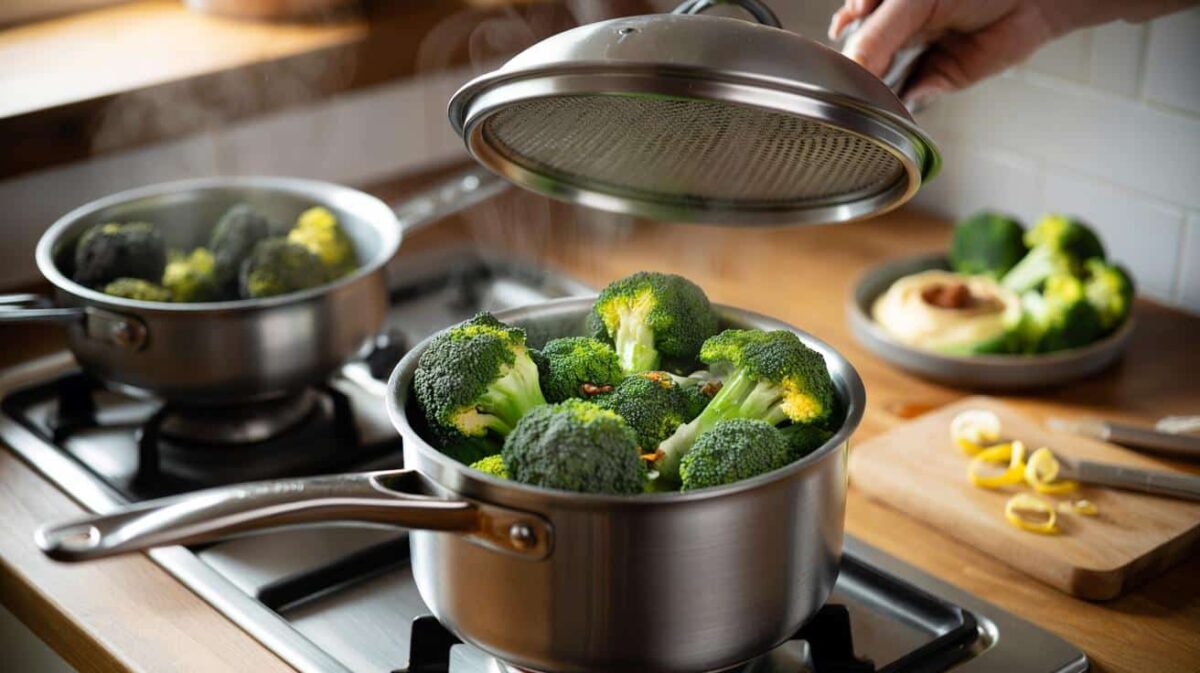
When you rush, you don’t just risk flavor. You lose nutrients, consistency, and a lot of the pleasure that makes home cooking worth it at all. Vitamins like C and some B vitamins are sensitive to both heat and time, but very intense heat can damage them faster, especially in thin foods like vegetables. That scorched broccoli that looked so “quick and easy”? It may be more char than vegetable by the time you chew it.
On the texture front, the trade-off is brutal. Fast, fierce heat pushes water out. That’s why your shrimp curl hard and dry, your potatoes brown before they’re tender, your sauces split into greasy pools.
There’s also a quieter cost: trust. If your chicken is sometimes perfect and sometimes terrifyingly pink, you stop believing in your own cooking. You rely more on processed shortcuts, less on real ingredients, because at least the box is predictable. Food scientists will tell you this isn’t a mystery of talent. It’s pure physics and patience.
Slowing just one element — the way you bring up the heat — often changes everything. Your pan doesn’t scream, your kitchen doesn’t smoke, and your food doesn’t look like it’s been through a small fire.
Maybe that’s the real shift: seeing cooking not as a race but as a kind of negotiation with heat. You don’t need a lab, or a sous-vide machine, or an extra hour every night. You just need to decide where you want your speed. Prep can be fast. Cleanup can be fast. But the moment when fire meets food? That’s where a little slowness wins.
Next time you feel yourself reaching for the highest setting on the knob, pause for one breath. Ask what you actually want: browned, tender, safe, flavorful. Then set the heat for that, not for your impatience. Your food — and your confidence — will quietly change.
| Key point | Detail | Value for the reader |
|---|---|---|
| Speed changes heat gradients | High heat cooks the outside far faster than the inside, creating unsafe and uneven results | Helps avoid undercooked centers and food safety risks |
| Texture depends on time, not just temperature | Proteins, starches, and collagen need gradual heating to set properly | Leads to juicier meat, creamier starches, and fewer “rubbery” disasters |
| Controlled heat is the real shortcut | Medium-then-high, resting, and not crowding pans give faster, more reliable cooking | Delivers better flavor with less stress and fewer failed meals |
FAQ:
- Question 1Is high heat always bad for cooking?
- Answer 1No. High heat is great for short bursts — searing steak, charring vegetables, stir-frying in a thin layer. The problem comes when thick foods are cooked entirely on very high heat, because the inside can’t catch up.
- Question 2Why does my meat turn tough when I cook it quickly?
- Answer 2