Across social media, a quietly brilliant “grandma hack” is going viral: using a single sock to clean blinds quickly, cheaply and almost effortlessly. No gadgets, no fancy sprays, just a bit of common sense and a few household staples.
The sock trick that turns blinds cleaning into a two‑minute job
Blinds are notorious dust magnets. Each slat collects a thin film of grime that never seems to budge with a duster. The sock trick flips that problem on its head by letting your hand do the work directly.
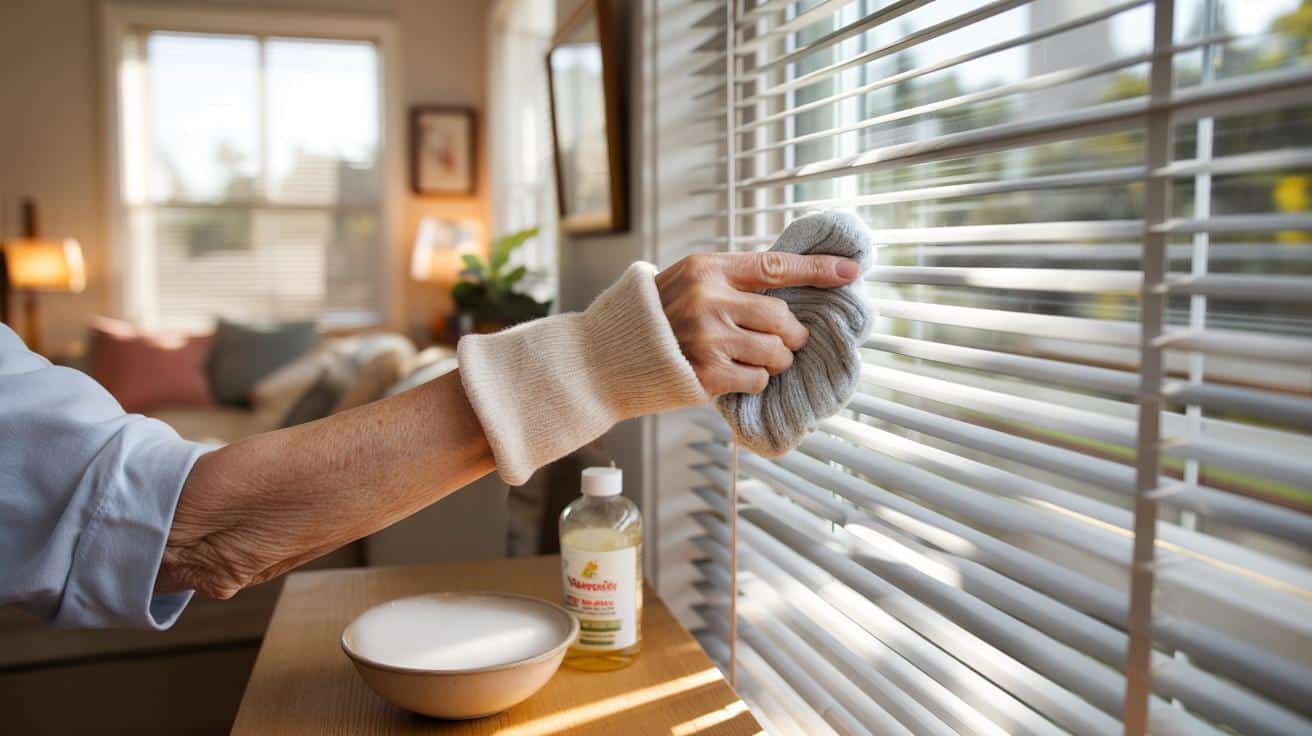
Slip a clean, old sock over your hand and use it like a fitted cleaning glove to wipe every slat in one motion.
The method is simple:
- Pick an old, clean sock made of cotton or microfibre.
- Slip it over your hand like a glove, thumb and fingers free to grip.
- Lightly dampen the sock with a homemade cleaning mix.
- Pinch each slat between thumb and fingers, then slide from one end to the other.
- Rinse or swap the sock when it looks too dirty.
This direct contact gives you far more control than a feather duster or a bulky cloth. You feel where the dust is, can adjust the pressure and reach the corners where grime usually hides.
Why a sock actually works better than most tools
A soft sock hugs the surface of each slat, front and back at once. That saves time, since you are not cleaning one side, then the other. The fabric fibres grab dust rather than just push it around.
Microfibre socks or a microfibre cloth wrapped around your hand increase that effect. Their fibres build up a slight static charge when rubbed, which helps cling to tiny dust particles instead of letting them float back into the air.
Microfibre acts like a dust magnet, trapping particles in its fibres instead of letting them resettle seconds later.
Cotton works too, especially for a quick weekly wipe-down. For a more thorough clean, microfibre gives a clearer finish on shiny materials like aluminium or PVC.
➡️ “I make this creamy oven dinner when I want consistency more than excitement”
➡️ Designing Innovation Programs With Dual Impact Outcomes
➡️ If your bank card PIN is on this list, change it now: your account can be emptied
➡️ I realized my home needed fewer rules, not more cleaning
➡️ Psychology explains why emotional states can shift without obvious reasons
A simple homemade cleaning mix for your sock
The sock does the mechanical work, but what you soak it in matters. Harsh sprays are unnecessary for most households and can damage delicate finishes.
For regular light dust and daily grime
For most living rooms and bedrooms, a gentle mix is enough:
- 1 bowl of warm water
- A few drops of mild washing-up liquid or black soap
Stir until slightly foamy. Dip the socked hand in the solution, then wring it thoroughly. The fabric should feel just damp, never wet. Excess water risks streaks, water marks and, on wood, warping.
For greasy kitchen blinds or heavy build‑up
In kitchens, blinds collect a sticky layer of cooking fumes and grease.
In that case, a vinegar solution helps:
- 1 part white vinegar
- 1 part water
White vinegar contains acetic acid, a mild acid known to break down grease and act as a natural disinfectant. Studies in food safety have shown its antimicrobial action against several common bacteria. That makes it handy on surfaces that sit near food preparation, like kitchen windows.
Always wring the sock well: most damage to blinds comes from too much water, not from the cleaning product itself.
Adapting the sock method to different blind materials
Not all blinds are created equal. What works for PVC can be risky for natural wood. Adjusting the technique keeps blinds looking new for longer.
Cleaning PVC or vinyl blinds
PVC and vinyl blinds are the easiest to manage. They handle moisture better than wood and do not rust.
- Use warm soapy water for routine cleaning.
- Switch to a water–vinegar mix if you notice greasy marks or yellowing.
- Wipe again with a dry cloth after cleaning to prevent limescale spots, especially in hard water areas.
For very dirty PVC blinds, some people unclip them and wash them in a bath. The sock method can often avoid that effort by tackling grime in stages over a couple of sessions.
Cleaning aluminium blinds
Aluminium blinds tend to show fingerprints and dull patches. The vinegar mix restores a subtle sheen without specialist polish.
Apply it with your damp sock, then follow with a dry microfibre cloth to buff. Aluminium handles humidity better than wood, but drying still matters. Water spots can leave faint rings on glossy finishes if left to evaporate slowly.
Cleaning wooden blinds
Wooden blinds are the most fragile. They bring warmth to a room but react badly to moisture.
For wood, think dust first, water last – and only the tiniest amount if you really have to.
Use a completely dry sock for regular dusting. The fabric clears dust from grooves and edges without scratching the surface. For light marks, use a sock barely dampened with water, then dry each slat immediately with a second, dry cloth.
Avoid strong detergents, abrasive creams and prolonged exposure to water. Too much liquid can cause swelling, staining or even cracks over time.
How often should you use the sock hack?
Blinds sit close to open windows, radiators and cooking areas. That means they collect airborne particles faster than walls or furniture. A regular schedule keeps the job easy:
| Room type | Suggested frequency | Recommended method |
|---|---|---|
| Bedroom / office | Every 2–3 weeks | Dry or slightly damp sock with mild soap mix |
| Living room | Every 2 weeks | Damp sock, focus on visible dust and pollen |
| Kitchen | Weekly or every 10 days | Damp sock with vinegar mix to cut grease |
| Bathroom | Every 2 weeks | Damp sock, then dry to avoid limescale spots |
A quick five‑minute pass every couple of weeks stops dust from hardening and sticking. That is what turns a simple wipe into a full afternoon’s scrubbing session.
Extra tips to make the blind sock trick even easier
A few small adjustments can make this routine smoother:
- Close the blinds fully one way, wipe all visible slats, then tilt them the other way and repeat.
- Use a second dry sock on your other hand to buff as you go, especially on shiny PVC or metal.
- Work from top to bottom so falling dust lands on uncleaned slats.
- Wash the used sock on a hot cycle so grease and dust do not build up in your laundry.
If you suffer from allergies or asthma, blinds can quietly worsen symptoms. Dust and pollen collect on each slat and fall when you open the window or adjust the angle. A regular wipe with a slightly damp sock reduces that airborne load and may ease sneezing or itchy eyes, especially during pollen season.
When the sock trick is not enough
There are occasions where a simple wipe will not fully restore the blinds. Paint peeling, deep rust marks on metal or warped wooden slats signal deeper damage. In those cases, cleaning improves hygiene but cannot hide structural wear.
For rented homes, a basic sock clean before moving out can still make a difference during inspections. Landlords often look at blinds to judge how well a property has been maintained. Presentable blinds can send a quiet but helpful signal that the place has been cared for.
Used smartly, the sock hack bridges the gap between professional cleaning and neglect. It costs nothing, uses what you already own and fits into those odd ten minutes between other tasks. For a chore most people dread, that is a welcome change of pace.