The night I realized I’d fallen in love with this recipe, I was standing in my kitchen in socks with a hole in the toe, staring blankly at the fridge. The day had been one of those slow car crashes of emails, delays, and tiny frustrations. I wasn’t craving anything fancy. I was craving something that would simply… work.
So I pulled out the potatoes, the carton of cream, the pack of chicken thighs I’d been ignoring. Fifteen clumsy minutes later, the oven door closed with a soft thud, and a wave of calm followed. No juggling pans, no last‑minute panic. Just a dish quietly transforming in the heat.
Every time I make this creamy oven dinner, I’m not chasing excitement.
I’m choosing consistency over fireworks.
The quiet power of a dish that never lets you down
There’s a weird comfort in a recipe you could make half-asleep and still trust the outcome. This creamy oven dinner is exactly that. It’s just chicken, potatoes, onions, cream, garlic, and a handful of herbs. Nothing viral, nothing dramatic, just honest ingredients doing their jobs.
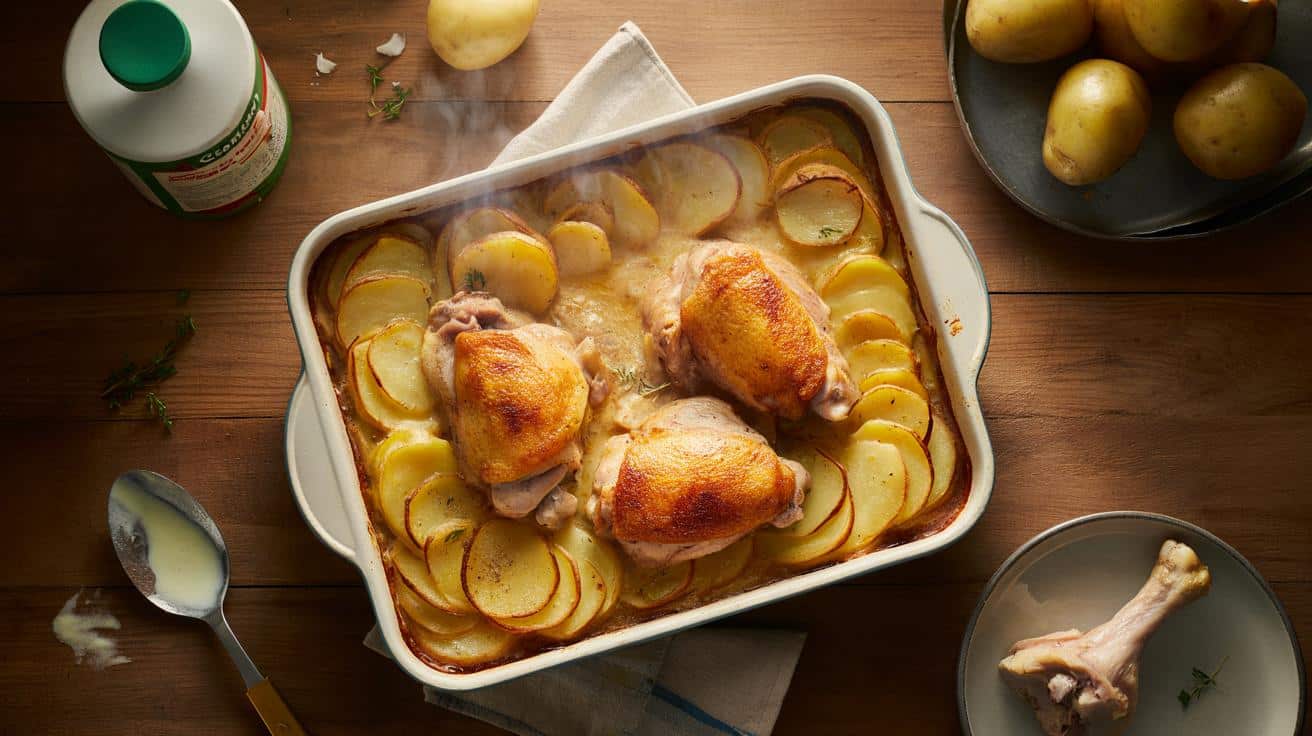
You layer everything in one big dish, pour over the cream, scatter salt and pepper, and slide it into the oven. That’s it. No stirring, no deglazing, no timing gymnastics. Forty-five minutes later, the top is golden, the edges are bubbling, and the whole kitchen smells like you know what you’re doing with your life.
I don’t always feel in control, but this dish almost tricks me into believing I am.
A friend came over once right in the middle of one of those chaotic weeks where every plan felt like a moving target. I threw this dinner in the oven while we sat at the table picking at our worries like old scabs. She kept glancing toward the kitchen, asking if she should help.
There was nothing for her to do. The dish was already taking care of itself. By the time we sat down, the chicken was tender, the potatoes soft but not collapsing, the sauce thick enough to coat the back of a spoon. She took one bite, looked at me, and said, “Okay. I get why you keep making this.”
Not because it was the best meal she’d ever had in her life. Because it was steady.
➡️ A first in 100 years: a chinook salmon returns to its native California river
➡️ According to psychology, very independent people often had to fend for themselves too early
➡️ What does it mean to always talk to yourself? Psychology explains it
➡️ What are the health benefits of cucumber?
This dinner works because it’s built on tiny, reliable decisions. You use skin-on chicken thighs, not breasts that dry out for sport. You cut the potatoes thin enough to cook through, but thick enough to hold their shape in cream. You rely on the oven’s slow, even heat instead of wrestling three burners at once.
There’s nothing risky in the technique. No fragile sauces to split, no temperamental dough. Just time and temperature quietly doing chemistry while you answer texts, handle homework, or scroll yourself numb on the couch.
We talk a lot about “exciting” food. But on a Tuesday at 7:30 p.m., **reliable** food is its own kind of thrill.
How I actually make this creamy oven dinner on real weekday nights
I start with a baking dish that can take some abuse. Into it go thinly sliced potatoes, cut like lazy scalloped rounds, overlapping just enough to look like I tried. I sprinkle salt, pepper, a bit of garlic, maybe some thyme if I find it before I give up looking. Then I lay chicken thighs on top, skin side up, like little golden promises.
Over everything, I pour a mixture of cream and a splash of stock or water. Not carefully measured, just enough to come about halfway up the potatoes. The cream will thicken, the potatoes will drink it in, and the chicken fat will melt down into the whole thing like a quiet upgrade.
The dish goes into a hot oven and stays there. I don’t babysit it. I don’t poke it every five minutes. I let it be.
Most people overthink a recipe like this. They worry about exact timings, perfect browning, whether they used the “right” herb. They open the oven door ten times, letting the heat bleed out along with their confidence. The truth is, this dinner forgives almost everything.
If the potatoes are a bit thicker, it just takes a few more minutes. If you used half-and-half instead of heavy cream, it’ll be a touch lighter but still warm and soothing. If the top looks too pale, you leave it in longer until the edges crisp and caramelize. Let’s be honest: nobody really does this every single day with Michelin precision.
The only real mistake is rushing it. This is a dish that needs time, not perfection.
Sometimes I think this recipe works because it behaves better than I do on a bad day: calm under pressure, slow to react, and always turning out softer than it started.
- Base ingredients
Chicken thighs, potatoes, onions or leeks, cream, garlic, herbs, salt, pepper. - Simple method
Layer sliced potatoes and onions, season, top with chicken, pour over cream and stock, bake until golden and bubbling. - Slow upgrades
Add mushrooms, swap in sweet potatoes, tuck in spinach at the end, finish with lemon zest or parmesan. - Low-effort, high comfort
One dish, minimal chopping, almost no active cooking time, but the payoff feels like Sunday lunch. - Built-in flexibility
Works with leftover veg, different herbs, frozen chicken (thawed), lactose-free cream, whatever real life throws at you.
Why I keep choosing this dish over something “more interesting”
There are nights when I scroll past shining bowls of ramen, complicated sheet-pan hacks, and twelve-step pastas with five kinds of cheese. I save them, I admire them, I promise Future Me will definitely try them someday. Then I look at the clock, look at my energy level, and reach for the same baking dish again.
This creamy oven dinner doesn’t ask for ambition from me. It just asks me to show up, pour, season, and trust. *There’s a strange relief in knowing exactly how dinner will end before it even begins.* When the rest of the day has been one long question mark, a predictable plate of food can feel almost radical.
We’ve all been there, that moment when you need dinner to be a gentle background, not the main event of your already overloaded evening. That’s when I make this. Not because it’s the most exciting thing I know how to cook. Because sometimes, consistency tastes better than surprise.
| Key point | Detail | Value for the reader |
|---|---|---|
| One-dish method | Everything bakes together in a single ovenproof dish | Less cleanup, less stress, more time to unwind while it cooks |
| Creamy, forgiving base | Cream plus stock, potatoes, and chicken thighs | Reliable results even with imperfect measurements or swaps |
| Flexible “template” recipe | Easily adapted with extra vegetables, herbs, or different cuts | Works with what’s already in your fridge, reduces food waste |
FAQ:
- Can I use chicken breasts instead of thighs?Yes, but they tend to dry out faster. If you use breasts, cover the dish loosely with foil for part of the baking time and add a bit more cream or stock so the meat stays moist.
- Does this work without dairy?You can swap the cream for a thick plant-based alternative like oat cream or coconut milk. Use a neutral stock, taste the sauce, and adjust seasoning since non-dairy options can be slightly sweeter.
- Can I prep it ahead of time?You can assemble the dish a few hours in advance and keep it in the fridge. Let it sit at room temperature for 15–20 minutes, then bake, adding a little extra time if it’s going into the oven cold.
- What temperature should I bake it at?About 375–400°F (190–200°C) works well. Lower gives softer, slower-cooked results, while higher browns the top more quickly. Aim for golden skin and tender potatoes pierced easily with a knife.
- How do I store and reheat leftovers?Cool completely, refrigerate in an airtight container, and eat within 2–3 days. Reheat in the oven with a splash of cream or stock, covered with foil, until hot in the center, or use the microwave in short bursts.