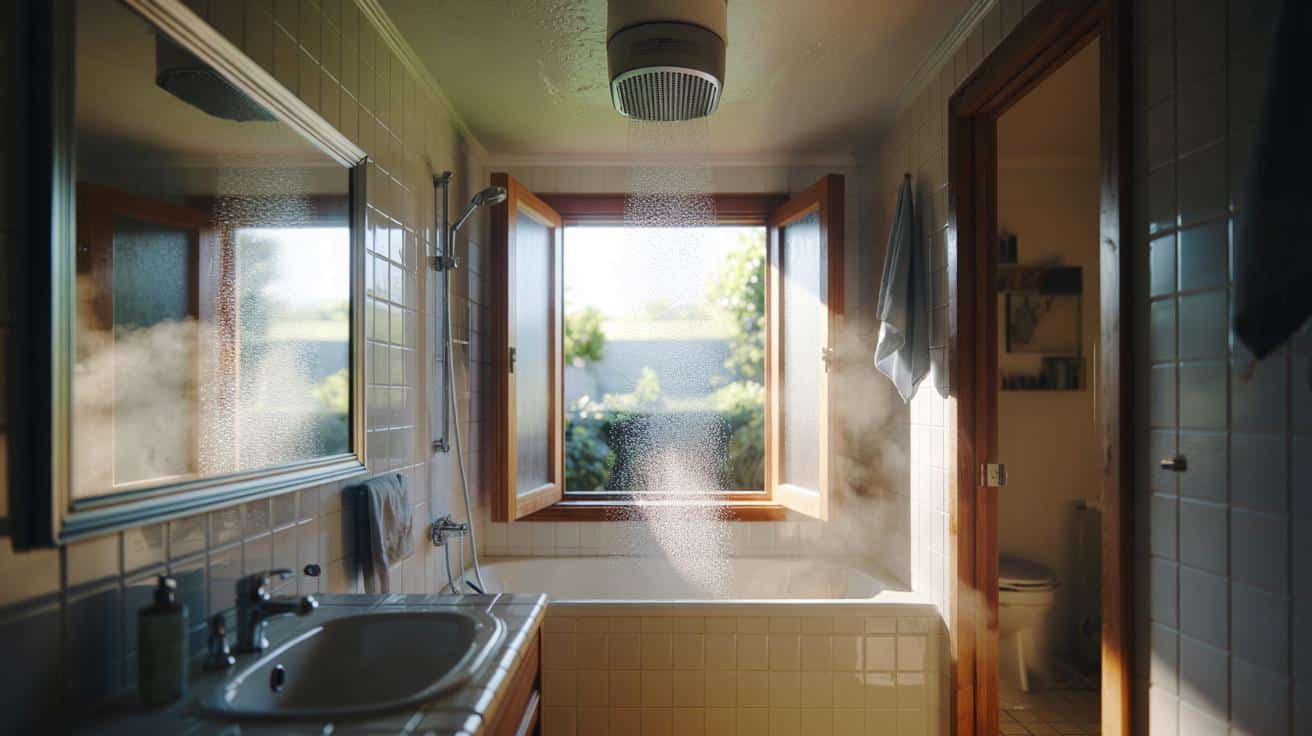
The bathroom mirror was still fogged when Emma pushed the door open with her hip, towel tucked under one arm, phone in the other. Steam rolled out like a low cloud, wrapping the hallway in a warm, damp hug. Her extractor fan hummed dutifully in the background, that faint mechanical whine nobody really hears anymore. She paused, glanced at the window above the bath, then shrugged and headed straight for the bedroom. The fan was on. Job done, right?
Three months later, a faint grey shadow bloomed in the corner above the shower. A suspicious black speck appeared on the silicone seal. The smell changed first – not quite bad, just… stale. She had no leaks, no obvious problem, just showers and that faithful humming fan.
The window, though, stayed shut.
Why extractor fans often overpromise and underdeliver
Walk into almost any rental flat and you’ll see the same scene: a tiny bathroom with no natural light, a clapped-out extractor fan on the ceiling, and paint quietly peeling near the shower. The fan kicks in the second the light goes on, wheezing away, giving everyone the soothing impression that the moisture is being “handled”. It feels modern. Automated. Hands-off.
The real scene, the one you can’t see, is a different story. Warm, wet air lingers at head height. Condensation settles on the coldest surfaces. Microscopic mould spores get the perfect spa day. The fan pulls some air out, of course. Just not as much, or as quickly, as most of us assume.
Ask people if their bathroom is well ventilated and they’ll often just point to the fan. “Yeah, it comes on with the light,” they say, then swipe a finger through a dusty grille. One UK housing survey found that over half of extractor fans checked were underperforming due to low airflow or poor installation. Some weren’t even vented outside properly – they were just blowing damp air into loft spaces.
A friend of mine thought he had a roof leak because his ceiling went patchy and brown. The roofer climbed up, checked the tiles, and came back down shaking his head. The culprit was the bathroom below: short showers, old fan, always a closed window. Years of slow, invisible damp had done the rest.
Fans move air, but they don’t create fresh air out of nothing. They rely on pressure differences and somewhere for that humid air to be replaced from. If every door and window is sealed, the fan is sucking against a closed system, fighting to pull air through tiny gaps under doors and around frames. Open a window even a crack and the physics changes instantly. You get a clear pathway: fresh, dry air rushing in, saturated air rushing out.
That’s when you notice something subtle. The mirrors clear faster. The room smells cleaner. The walls don’t feel as clammy to the touch. That little rectangle of glass, swung open for ten minutes, quietly does what many fans can’t manage in half an hour.
How to open your windows so they actually work for you
There’s a world of difference between cracking a window “a tiny bit” and creating real airflow. The sweet spot is straightforward: open the bathroom window wide right after you shower, and keep the door at least slightly open so air can cross the room. Full cross-ventilation beats a half-hearted tilt every single time.
➡️ Some people talk incredibly loudly: What that reveals about their character
➡️ This dinner comes together naturally, without overthinking
➡️ If, Between 65 And 80, You Still Do These 9 Things, You Really Are One Of A Kind
➡️ Goodbye microwave: here’s the appliance that will replace it, and it’s much better
➡️ I made this cozy bowl-style dinner and it felt incredibly satisfying
➡️ How to clean glass tables without constant fingerprints
If privacy or cold is an issue, think timing, not heroics. Two or three sharp bursts of open window during the day do more than one sad, half-open gap left all morning. Let the steam out, let the room drop back to room temperature, then close it again.
One small ritual helps more than any gadget: as soon as the water goes off, window goes open. Not five minutes later, not “I’ll do it after I dry my hair”. Right then. That’s when the air is thickest and easiest to clear. Leave it like that for 10–15 minutes. If your bathroom has no window, open the closest one in the hallway or bedroom and the bathroom door wide, so the damp air at least has a route to escape.
Let’s be honest: nobody really does this every single day. Life happens, mornings are rushed, kids are yelling, you’re late. That’s fine. Your goal isn’t perfection, it’s better habits most of the time. A few more open-window moments each week can be the difference between a fresh bathroom and a slow creep of mould.
“Extractor fans are like background music,” a building inspector once told me. “They make you feel like something’s happening, but the real work is done when you open the window and move air from outside.”
- Best timing: Open the window the second you turn off the shower and leave it wide for at least 10 minutes.
- Best combo: Use the fan and the window together, not one instead of the other, especially in tiny bathrooms.
- Best backup: If there’s no bathroom window, open the nearest window and the bathroom door to create a draft.
- Quiet win: Squeegee the shower walls and screen before you leave. Less moisture means faster drying.
- Big picture: Think of your whole home as one breathing body. Air has to come from somewhere and go somewhere.
What’s really at stake when you skip that simple gesture
The conversation around bathrooms often gets stuck on “mould is ugly” or “landlords won’t repaint”. Yet the real story is softer, more personal. It’s the kid with a lingering cough that seems worse in winter. The tenant who keeps wiping black dots off the silicone, wondering why they come back. The couple arguing over the smell in a windowless ensuite that never feels properly fresh.
Everyone thinks about tiles, fittings, expensive extractor upgrades. Few people think about the free tool they’ve had all along: that pane of glass that turns, slides, or tilts. *One simple habit, repeated over years, shapes the air you breathe and the walls you live between.*
Next time you finish your shower and reach for the towel, pause for half a second. Look at the mirror, at the beaded water on the tiles, at the quiet fan whirring above you. Then listen to the small click of the window handle as you open it and feel that first cool ribbon of fresh air on your face. That’s the sound of your bathroom – and your home – finally exhaling.
| Key point | Detail | Value for the reader |
|---|---|---|
| Windows clear moisture faster | Opening a window creates a direct path for humid air to escape and dry air to enter | Less condensation, fewer mould patches, and a fresher-smelling bathroom |
| Fans need help from fresh air | Extractor fans work best when air can flow freely from an open window or adjoining room | Better performance from existing fans without new spending |
| Simple routines beat expensive fixes | Short, regular window-opening habits reduce long-term damp problems and repair costs | Protects health, paintwork, and your wallet with almost no effort |
FAQ:
- Do I still need an extractor fan if I open the window?Yes. The fan helps pull moist air out, while the open window feeds in drier air. The combo is far more efficient than either one alone.
- What if it’s freezing outside?Open the window wide for a short burst rather than a crack for ages. Five to ten intensive minutes of cold, dry air is usually enough to clear steam without dropping the room temperature too much overall.
- Is it bad to keep the bathroom door shut after a shower?With the door shut and no window open, the moisture has nowhere to go. Keep the door at least partly open once you’re dressed so the humid air can spread out and dilute.
- How do I know if my fan is actually working well?Hold a sheet of toilet paper up to the grille. If it barely sticks or falls away, airflow is weak and you may need cleaning, repair, or an upgrade.
- Can plants or dehumidifiers replace opening the window?They can help a little, but they don’t move large volumes of moist air fast. **Nothing beats real ventilation through an open window or well-designed airflow.**