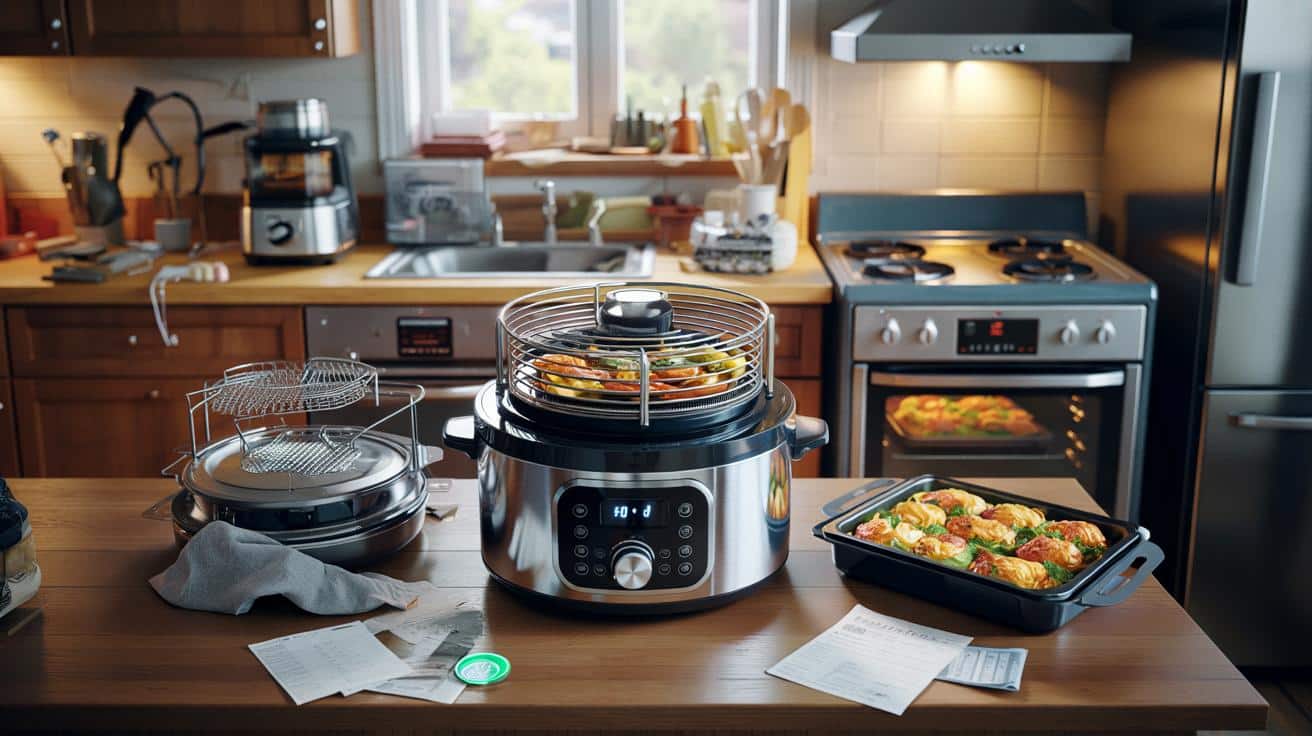
The first time I saw the “9-in-1 miracle cooker” was at a friend’s flat on a rainy Sunday. We were half-watching a cooking show, half-scrolling through our phones, when an influencer popped up, caressing a shiny countertop box like it was a new sports car. “It grills, bakes, air-fries, steams, dehydrates, slow-cooks, roasts, reheats and toasts,” she chirped, while perfect wedges of sweet potato glowed on screen like a food commercial from the future.
My friend laughed, then quietly opened the cupboard under the sink. Inside: an air fryer, a food processor, a blender, a sandwich press and, yes, a “smart multi-cooker” still wrapped in its plastic.
The new one, she admitted, had cost almost half her weekly salary.
She’d used it once.
And that’s the uncomfortable truth starting to surface in a lot of kitchens right now.
From air fryer hero to gadget fatigue
For a while, the air fryer really did feel like the hero of weeknight cooking. People were posting crisp chicken thighs and golden chips, bragging about “no oil, no guilt” dinners ready in 10 minutes. Sales exploded. Manufacturers smelled blood – and money – and quickly pivoted from the humble air fryer to a new class of “do-everything” machines promising nine, sometimes eleven, cooking modes in a single, futuristic cube.
Yet as the marketing got louder, a quieter reality set in. These gadgets took up a huge chunk of worktop space, demanded a serious chunk of cash, and often ended up doing… the exact same thing as the oven you already own. Only smaller.
Look at the numbers: UK retail analysts note that multi-function “air fryer plus” appliances jumped in sales during the cost-of-living crisis, driven by the promise of cheaper energy use and quick meals. Social media did the rest. One viral TikTok video, one “you need this in your kitchen” Reel, and people clicked “Buy now” faster than they’d ever boil a kettle.
Then came the part no brand highlights in its glossy ads. Return rates quietly rose. Online forums filled with honest posts like: “Used it for two weeks, now it’s just collecting dust,” or “It’s good, but my oven does the same thing.” One consumer group in Europe found that, for many households, the energy savings per meal barely justified the price tag. Especially when the gadget cost more than the weekly shop.
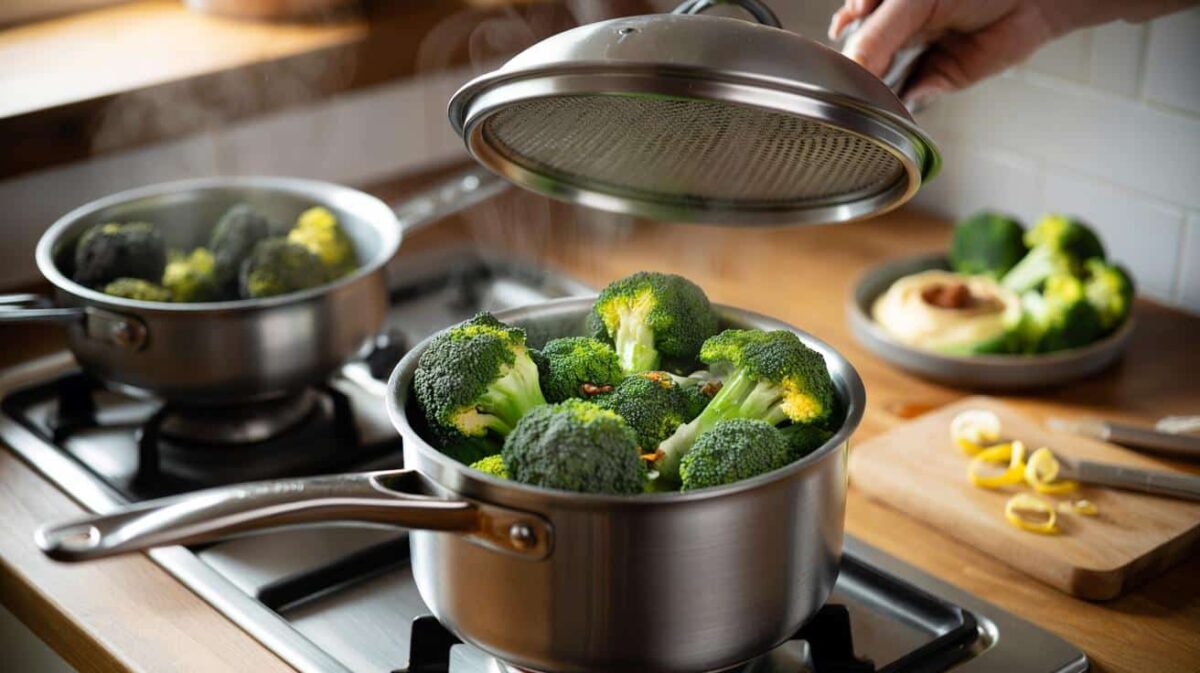
What experts are starting to say out loud is what a lot of home cooks already feel in their gut. These new nine-mode kitchen stations are less revolution, more rebranding. Convection heating dressed up as moon-landing technology. The steam function? Your stovetop with a lid. The reheat mode? A glorified microwave substitute. **The promise of “nine cooking methods” sounds huge, but most are just tiny variations on the same process.**
➡️ Got an Annoying Twitch? Here’s What to Consider Before You Think The Worst : ScienceAlert
➡️ February feeders place this cheap treat to ensure birds return every morning
➡️ People who stay happy and fulfilled after 60 have usually given up these 9 habits
➡️ Heating: the 19°C rule is outdated: experts reveal the new recommended temperature
➡️ This slow-simmered dinner feels richer with every bite
Engineers who test appliances point out that many of these boxes cook unevenly when they’re full, struggle with large family portions, and are awkward to clean. They also lose a lot of their supposed energy advantage if you’re constantly cooking in batches because the basket is too small. What looked like a sleek solution starts to feel like a very expensive workaround.
The new “must-have” that nobody really needs
So what do you actually do when faced with the latest shiny machine calling your name from a supermarket aisle or your Instagram feed? The most grounded experts suggest one simple method: kitchen auditing. Before you even think of adding a 9-in-1 gadget to your cart, open your cupboards and list what you already own that can fry, grill, bake, reheat or slow-cook.
Then, ask a plain, slightly boring question: “Is there anything this new machine can do that my current tools absolutely cannot?” Not “can it do it faster” or “will it look nicer on my counter,” but truly cannot. Most people, when they’re brutally honest, end up with a short, uncomfortable answer. No.
We’ve all been there, that moment when stress, tiredness and a slick video combine to whisper that one purchase will fix your life. You picture quick midweek dinners, kids happily eating, a tidy kitchen and more free time. The new 9-in-1 cooker isn’t just a tool; it’s a fantasy. Then reality lands: the instruction manual is thick, the interface feels clunky, and you need to Google half the settings before cooking a basic piece of salmon.
This is where lots of people quietly give up. Let’s be honest: nobody really does this every single day. They fall back on their old habits – oven on, pan on the hob, toaster for breakfast. The “game-changing” gadget is pushed to the back or banished to the garage, in that silent graveyard of bread-makers and juicers. The waste isn’t only money. It’s also space, attention, and a little bit of self-trust each time you think, “I fell for it again.”
Some specialists in consumer behavior are starting to speak more bluntly about these trends.
“Most of these nine-function gadgets don’t fail on performance,” says one independent kitchen tester. “They fail on lifestyle. People buy the dream of being a different cook, with a different routine. After a few weeks, their real life wins.”
That’s the friction brands rarely talk about. The experts who test appliances for a living now recommend a simple checklist before buying any new “smart” cooker:
- Does it replace at least two devices you already own, not just duplicate them?
- Can you clean it easily without special tools or endless scrubbing?
- Will it realistically handle the quantity you cook most often?
- Do you still want it after waiting 30 days with the tab open?
- Could the same money be better spent upgrading a pan, knife or basic oven tray you use daily?
What comes after the air fryer hype?
The end of the air fryer era isn’t a literal end – plenty of people will keep using theirs daily, and some genuinely love their multi-cookers. What’s fading is the idea that every new kitchen problem demands a new, expensive appliance to solve it. There’s a quiet shift back towards fewer, better tools and cooking methods that fit real lives, not marketing scripts.
You hear it in the way people talk now. “I went back to my old cast-iron pan.” “My oven on fan setting does the same as an air fryer.” *I just want gear that works every night, not just on the first week when I’m excited.* These aren’t anti-technology rants. They’re small acts of resistance against a cycle of constant upgrading that leaves households with more clutter than comfort.
| Key point | Detail | Value for the reader |
|---|---|---|
| Gadget overlap | Most 9-in-1 cookers repeat functions your oven, hob and microwave already cover | Helps avoid wasting money on duplicate tools |
| Short-lived enthusiasm | Many buyers stop using new appliances after a few weeks as habits revert | Encourages reflecting on real routines before purchasing |
| Kitchen audit first | Listing existing tools and their uses exposes what you truly lack | Leads to smarter, calmer buying decisions and less clutter |
FAQ:
- Is a 9-in-1 cooker really more energy efficient than an oven?Sometimes for small portions, it can be slightly more efficient, as it heats a smaller space. For family-sized meals or frequent batch cooking, the difference often shrinks, and your main oven on fan setting can be just as sensible.
- Should I replace my air fryer with the new multi-function model?If your current air fryer works and you use it regularly, there’s rarely a strong reason to upgrade. The new modes mainly repackage similar heat-based cooking under different names.
- What’s a smarter first upgrade for my kitchen?Most chefs suggest basics: a sharp knife, a solid pan, a decent cutting board, maybe better storage. These unglamorous upgrades often transform daily cooking more than a new machine.
- Are these gadgets useless for small kitchens?They can help in tiny spaces if they genuinely replace an oven or several devices. The problem comes when they’re added on top, stealing worktop space without removing anything else.
- How do I know if I’ll really use a new appliance?Test the habit first. For a month, cook the kind of recipes you’d use the gadget for with what you already have. If you still feel the same need – and you’ve kept up the routine – the purchase will likely serve you better.