Across much of Gen Z, the simple act of writing by hand is turning from a daily habit into a rare occasion, and researchers say this change is reshaping how young people think, learn and connect.
From clay tablets to touchscreens
Humans have been putting thoughts into physical marks for roughly 5,500 years, from cuneiform on clay tablets to ink on paper. Writing did more than record trade or law. It carried stories, beliefs and ideas across generations.
Now, a generation raised on smartphones may be breaking that chain in a way we have never seen before. Studies cited by researchers at the University of Stavanger in Norway suggest around 40% of Gen Z are losing functional mastery of handwritten communication.
For the first time in millennia, a large share of young people may not comfortably write long, legible text by hand.
That does not mean teenagers and students cannot scrawl a birthday card or jot a quick note. The concern lies in sustained, structured handwriting: pages of clear, connected sentences, produced at speed and with ease.
Why handwriting is fading for gen z
For many young people born between the late 1990s and early 2010s, the keyboard came first and the pen came second, if at all. Primary school exercises once done with lined notebooks now happen on tablets and laptops.
Digital by default
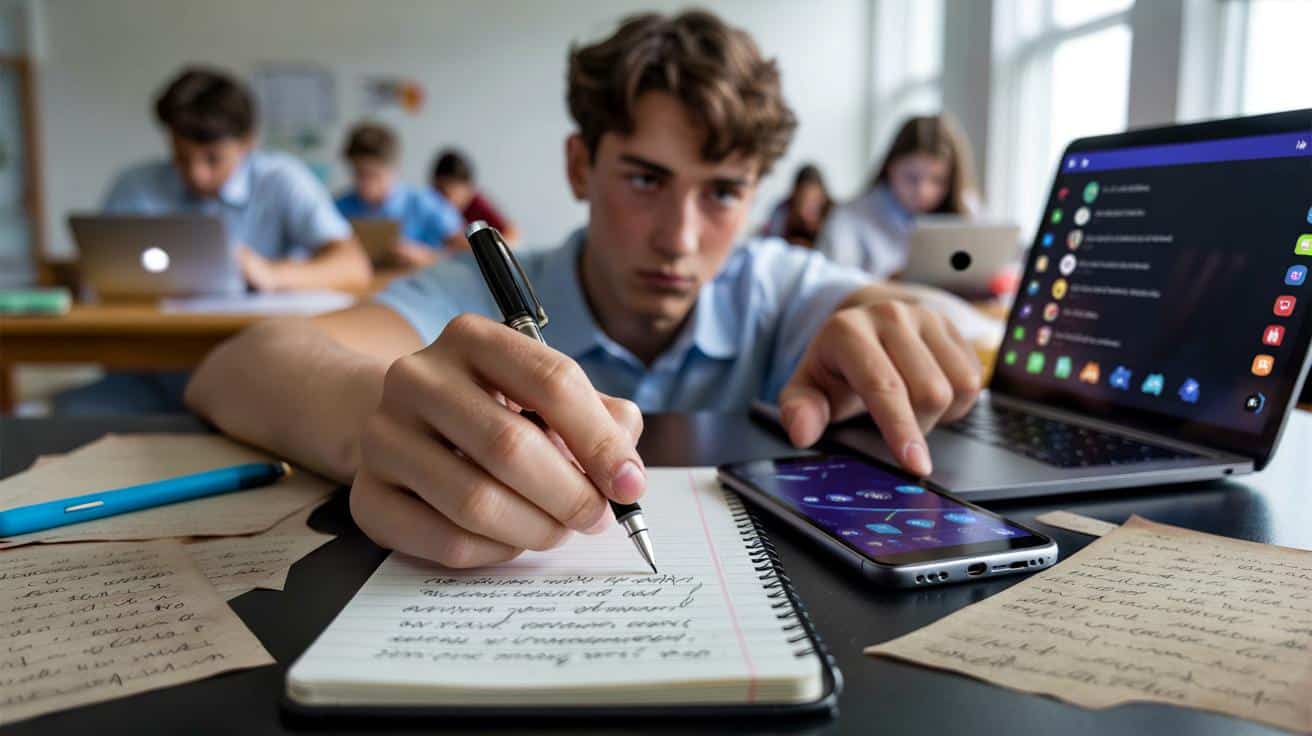
Messaging apps, social networks and learning platforms encourage short, clipped exchanges. Abbreviations, emojis and voice notes replace full sentences. The result is that handwriting becomes an occasional task rather than a routine skill.
- Class notes are typed, not written.
- Homework is submitted via online platforms.
- Family chats and friendships live in group texts, not letters.
- Even shopping lists and reminders sit in phone apps.
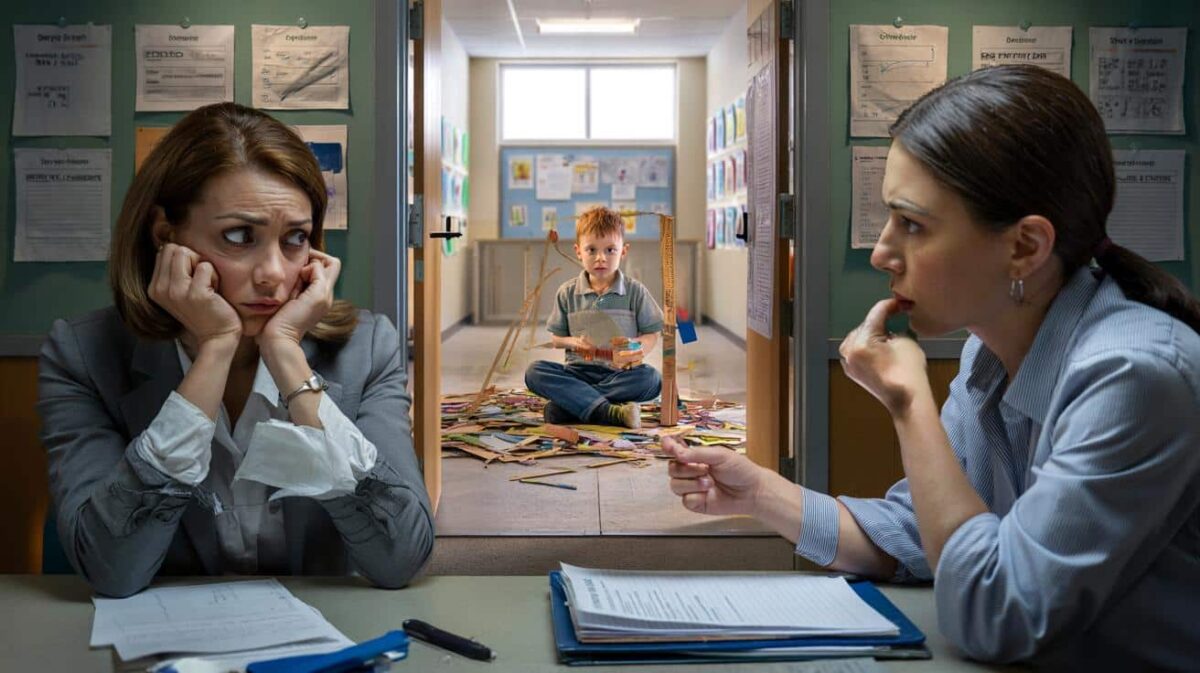
Teachers interviewed for international reports say many students now show awkward, slow and messy handwriting, even at university level. Some arrive in lecture halls without a pen at all, assuming a keyboard will do the job.
Short sentences, shaky structure
Academics such as Professor Nedret Kiliceri, cited in Turkish media, note that the problem goes beyond simple penmanship. Many students seem unsure of basic writing rules. They avoid long sentences, struggle to build paragraphs and often write in disconnected fragments.
➡️ You don’t realise it, but these 5 habits secretly make you seem unlikeable
➡️ If your bank card PIN is on this list, change it now: your account can be emptied
➡️ Goodbye hair dye for grey hair, this simple conditioner add-in restores natural colour
➡️ Why opening windows after showering matters more than extractor fans
➡️ Why gardeners hang cork stoppers on lemon branches
➡️ This small change in your cooking routine can make meals feel lighter and easier to digest
➡️ This dinner comes together naturally, without overthinking
➡️ According to psychology, why you feel exhausted even when you’re doing nothing
Instead of one paragraph weaving ideas together, teachers see a series of isolated sentences that read like social media posts.
Gen Z’s comfort with digital platforms shapes not just their handwriting but their entire approach to written communication. They are trained by apps to think in 140 characters, not in pages.
What handwriting does for the brain
Neuroscientists and educational psychologists argue that this shift carries hidden costs. Handwriting is not just a slower version of typing. It recruits different parts of the brain and creates deeper connections between movement, memory and meaning.
Memory, attention and understanding
When you write by hand, you must physically form each letter and word. That process takes longer, but it forces the mind to filter, summarise and organise. Several studies have found that students who take handwritten notes often remember and understand content better than those who type verbatim transcripts.
| Typing | Handwriting |
|---|---|
| Fast, often verbatim recording of speech | Slower, forces selection of key ideas |
| Encourages copying | Encourages processing and rephrasing |
| Less fine motor engagement | Strong link between hand movement and visual memory |
| Easy to edit and delete | Permanent, invites reflection before writing |
Researchers also link cursive and print handwriting with improved reading skills, spatial awareness and even emotional regulation. The disciplined, rhythmic motion of writing can anchor attention in a way a flickering screen rarely does.
The loss of handwriting is not only a change in style; it may be a shift in how the brain builds and stores knowledge.
How communication style is changing
Handwritten communication tends to be slower, more deliberate and more personal. Digital communication rewards speed, reaction and visibility. Gen Z is growing up inside that second environment.
From reflection to reaction
Think about writing a letter by hand. You choose paper, pick your words, maybe cross some out. You sense the weight of the message. By the time the letter is finished, you have re-read it several times.
Now compare that with firing off a message in a group chat. Thoughts appear as quickly as thumbs move. Typos can be fixed later. Emotional posts can be deleted or buried by new notifications.
Teachers report that many young people struggle when asked to produce longer, reasoned written work. Essays, reflective journals and exam answers demand a level of planning and cohesion that rapid-fire messaging does not train.
Why this matters beyond exams
The decline of handwriting affects more than school grades. It shapes how people present themselves, interpret subtle cues and build relationships.
The social and cultural loss
Handwritten notes carry tone in their loops and angles. A hurried scrawl feels different from a careful, flowing script. Cards, letters and annotations in books become personal artefacts that can be picked up years later.
Without regular handwriting, those traces fade. Communication becomes more standardised, filtered through fonts and screen sizes. Even signatures, once unique marks of identity, are turning into digital scribbles on glass.
As handwriting recedes, a layer of human texture in communication risks thinning out.
There is also a practical angle. Many legal and bureaucratic systems still rely on forms, signatures and quick handwritten notes. Losing fluency in this area can slow people down in everyday life, from filling in medical paperwork to leaving instructions in shared spaces.
Can gen z have both screens and script?
The situation is not fixed. Some schools are reintroducing handwriting practice alongside tablets. Others mix digital tools with pen-and-paper exams to keep both skills alive.
Realistic scenarios for the next decade
Several paths are emerging:
- Digital-dominant: Handwriting becomes rare, used mainly for signatures and occasional notes. Most communication is typed or spoken.
- Hybrid literacy: Students learn to switch between modes: keyboard for speed, handwriting for deep thinking and planning.
- Niche revival: Handwriting turns into a specialised skill tied to art, calligraphy and “slow communication”, similar to analogue photography today.
In a hybrid scenario, Gen Z and younger cohorts might reserve handwriting for tasks where it shines: brainstorming ideas, outlining essays, annotating texts or writing personal messages that carry more emotional weight.
Practical ways to keep handwriting alive
Parents, teachers and students who want to protect this skill do not need to abandon technology. Small, regular habits can sustain handwriting without turning it into a nostalgic burden.
- Use a paper notebook for at least one subject or project.
- Write a physical to-do list instead of using only apps.
- Keep a short handwritten journal a few times a week.
- Send cards or notes on birthdays and key events.
- Annotate printed articles or books with comments and questions.
These practices help the brain maintain the motor patterns and cognitive routines linked to handwriting. They also give young people a choice: not pen or phone, but both, each used where it works best.
Key concepts behind the debate
When researchers talk about “losing mastery of communication”, they rarely mean that Gen Z cannot communicate. The point is more specific. Many young people excel at rapid, multimodal interaction online, yet feel clumsy when asked to produce sustained, handwritten, structured text.
This split highlights two forms of literacy. One is functional digital literacy: navigating apps, platforms and instant messaging. The other is deep written literacy: shaping complex ideas into clear, extended language, often supported by the act of writing by hand. The tension between these two will shape education and work for years to come.