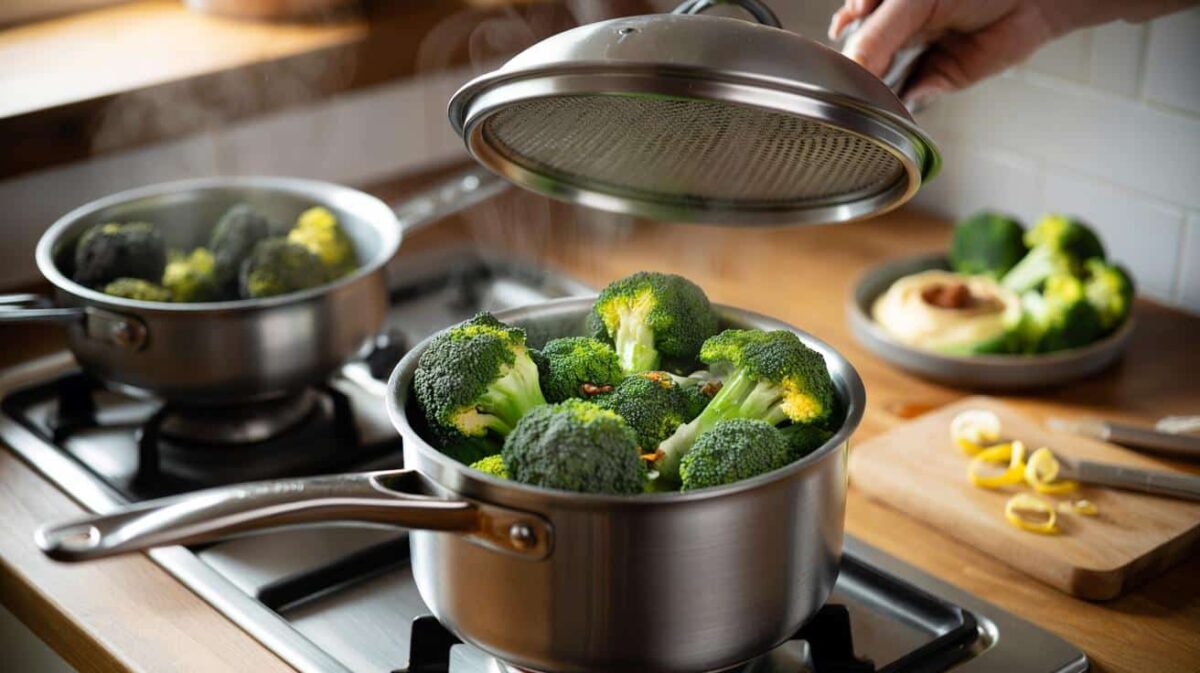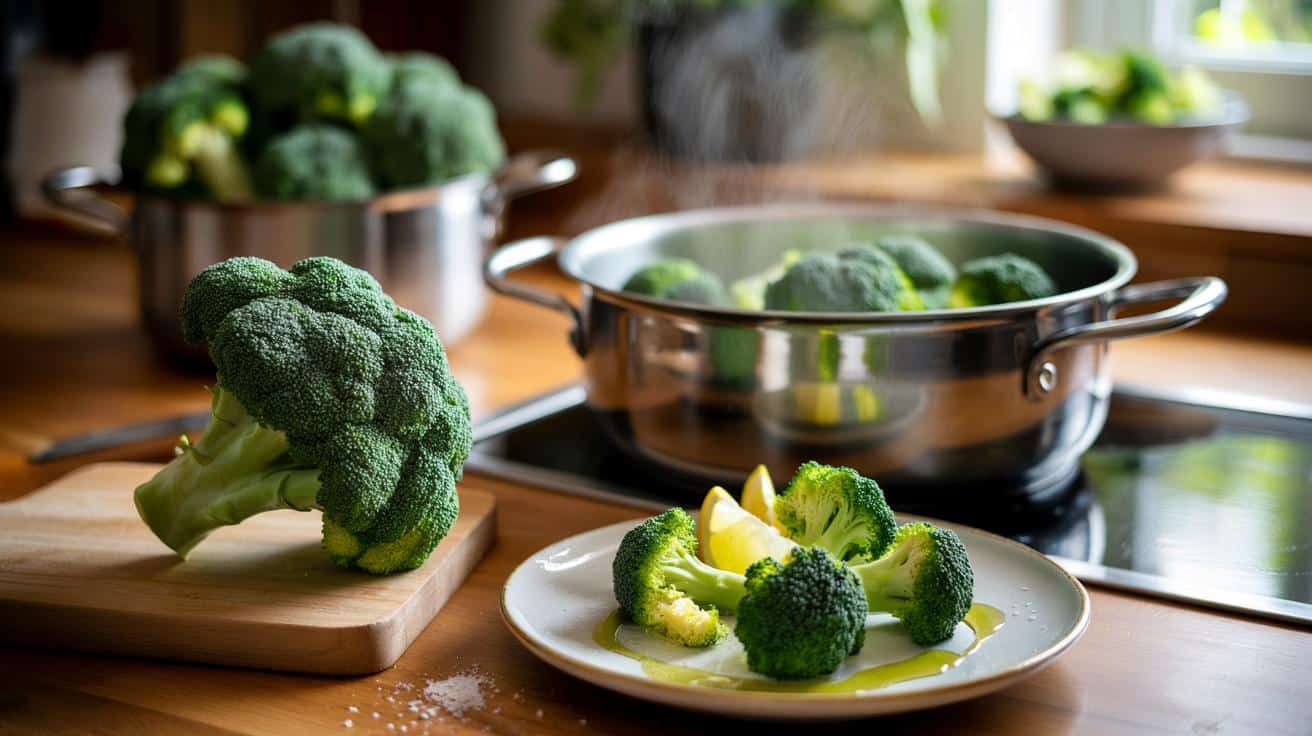
The broccoli was beautiful. Tight green florets stacked in a crate at the market, dew still clinging to the buds as if it had just crossed a field at dawn. I watched an older man grab two heads and mumble, half to himself, “Boiled or raw… that’s the question,” before dropping them into his basket like a small culinary dilemma he’d gladly postpone.
At the checkout, the young cashier leaned over to her colleague and confessed she microwaves her broccoli “until it surrenders.” He laughed, but there was a hint of guilt there too.
We all keep buying broccoli for the vitamins, without really knowing what we’re doing to them once the pan heats up.
The truth is, the best way to cook it is neither boiled nor raw.
Why boiling or eating it raw isn’t giving you the best of broccoli
Watch a pan of broccoli in rolling water for more than four minutes and you can almost see the vitamins leaving. The green brightens, then turns a tired khaki. The water goes from clear to faintly greenish, like a polite announcement that your antioxidants have migrated.
Boiling is the default for many kitchens. It feels safe, familiar, practical on a busy weeknight. Toss, cook, drain, done. But this simple move quietly strips away a good chunk of vitamin C and delicate antioxidant compounds.
You’re left with soft florets and a nagging feeling that your “healthy side” might not be as virtuous as you hoped.
On the other end of the spectrum, raw broccoli has become a sort of badge of honor in office lunch boxes. Tiny florets tossed into salads, dipped in hummus at meetings, crunched through in the name of wellness. It looks energetic, crunchy, virtuous.
Yet many people whisper the same confession: raw broccoli feels heavy, blows up the stomach, and somehow doesn’t get eaten as often as planned. The Tupperware comes home half full. The vitamins don’t help if the food stays on the plate.
One nutritionist I spoke with joked that “raw broccoli is the gym membership of vegetables: bought with good intentions, rarely used properly.”
➡️ A peek inside Physical Intelligence, the startup building Silicon Valley’s buzziest robot brains
➡️ €1600 for a sliding trainer: the newest, craziest indoor cycling trend
➡️ “I didn’t notice how irregular my days were”: until fatigue settled in
Science adds a twist to this everyday story. Boiling leaches water‑soluble vitamins and some antioxidants into the cooking water. Long, aggressive heat can denature the very enzymes that turn broccoli’s sulfur compounds into protective molecules like sulforaphane.
Raw broccoli technically contains everything… but your intestines don’t always cooperate. Light cooking can soften fibers, activate key enzymes, and make those compounds easier to access.
*The sweet spot sits somewhere in between: hot enough to unlock the goodies, gentle enough not to destroy them.*
The cooking method that protects vitamins: gentle steaming with one smart trick
Here’s the method many food scientists quietly swear by: short, gentle steaming. No deep pot of water, no swirling oil, no microwave marathon. Just a little steam hugging the florets.
Cut your broccoli into medium florets, roughly the size of two bites. Bring a small amount of water to a boil in a pot, add a steamer basket, and keep the lid on. Once the steam rises, place the broccoli in, cover, and cook 4 to 5 minutes, no more.
When a knife slips in but the stem still offers a tiny bit of resistance, pull it out right away. Rinse quickly under a splash of cold water or toss into a cool bowl to stop the cooking.
There’s a bonus step that changes everything for antioxidants. Before cooking, chop the broccoli and let it sit on the cutting board for about 30–40 minutes. It sounds strange. It also feels slightly annoying when you’re hungry.
During that short waiting time, an enzyme inside the plant (myrosinase) quietly works, transforming compounds into sulforaphane, a molecule linked to many of broccoli’s protective effects. Once that reaction is mostly done, the broccoli can better tolerate heat without losing its “superfood” profile.
Let’s be honest: nobody really does this every single day. But doing it even a few times a week already shifts the nutritional balance in your favor.
This is where a lot of people trip up. They steam broccoli for 10 or 15 minutes “just to be safe,” lift the lid, and find a mushy, olive‑green heap that reminds them of school cafeteria trays. The memory alone can kill any enthusiasm for healthy eating.
Be gentle. If you cook big batches for the week, keep them slightly under‑steamed, then reheat quickly in a pan with a spoon of water or a bit of olive oil. Long reheating sessions can undo your careful work.
“Broccoli doesn’t need punishment to be healthy,” laughs one dietitian. “It needs respect, a bit of timing, and a plate that you’re excited to eat from.”
- Steam 4–5 minutes, not more
- Rest chopped broccoli 30–40 minutes before cooking
- Cool quickly to stop cooking if you’re not serving right away
- Reheat briefly, not like a stew forgotten on the stove
- Add a fat source (olive oil, tahini, butter) to help absorb fat‑soluble compounds
Living with broccoli: from “good intentions” to a habit that actually lasts
There’s a quiet gap between what we read about nutrition and what happens at 7:45 p.m. on a Tuesday when everyone is tired. A method can be scientifically perfect and still die in front of an open fridge and an empty stomach. The best way to cook broccoli is also the one you’ll repeat without resentment.
So the question becomes less “What is the ultimate method?” and more “What small habit can I add without feeling like a health robot?” Maybe it’s buying broccoli once a week and steaming it while your pasta water heats up. Maybe it’s tossing those just‑steamed florets with lemon, garlic, and olive oil so they taste like something you’d eat even if vitamins didn’t exist.
You might start noticing details you ignored before. The way properly steamed broccoli stays bright and almost shiny. The way it still has a tiny crunch, instead of collapsing under your fork. The way kids at the table, or skeptical adults, will suddenly pick up a second piece without being asked.
That’s the subtle magic of a method that respects the vegetable. It doesn’t shout “I’m healthy!” from the plate. It just quietly becomes part of the meal, week after week, until broccoli isn’t a chore anymore.
Cooking for antioxidants is, in the end, a way of cooking for energy, for aging a bit more gently, for staying present in your own body a little longer.
Some readers will meticulously time their steaming, others will just stop boiling broccoli into oblivion. Both steps count. Even choosing to cook it “a little less than before” already changes the vitamin picture.
You might experiment: one evening lightly steamed, another evening mixed half‑raw, half‑steamed in a salad, another tossed at the last minute into a stir‑fry so it stays vivid and snappy. *Your kitchen becomes a small lab where the subject is simple: how to feel good tomorrow, without hating dinner tonight.*
That’s the deal broccoli offers us. Not perfection. Just a better balance between what we know, what we feel, and what actually lands on the fork.
| Key point | Detail | Value for the reader |
|---|---|---|
| Short steaming beats boiling | 4–5 minutes over steam preserves vitamin C and antioxidants better than boiling in water | More nutrients in the same portion, without changing what you buy |
| Rest after chopping | Let chopped broccoli sit 30–40 minutes so enzymes create protective compounds like sulforaphane | Boosts antioxidant power with zero special equipment |
| Texture and taste matter | Stopping cooking early and adding fat, lemon, or spices makes broccoli more appealing | Higher chance the whole family actually eats those vitamins |
FAQ:
- Is steaming really better than boiling for vitamins?
Yes. Steaming uses little water and gentler heat, so fewer vitamins leak out or break down. Boiling for several minutes can significantly reduce vitamin C and some antioxidants.- Do I have to let broccoli rest before cooking every time?
No, it’s not an absolute rule. Letting it rest 30–40 minutes after chopping helps form more sulforaphane, but if you skip this step, broccoli is still a very healthy choice.- Can I use the microwave to cook broccoli without losing nutrients?
Yes, if you cook it briefly with a small amount of water. Short microwave steaming (2–3 minutes) with a lid can preserve nutrients quite well. The risk comes when it’s overcooked.- Is raw broccoli healthier than cooked?
Raw broccoli keeps all its vitamin C but can be harder to digest and less pleasant for some people. Lightly cooked broccoli often offers a better balance of digestibility, antioxidants, and actual enjoyment.- What can I add to broccoli to boost its benefits?
Pair it with a source of healthy fat like olive oil, tahini, nuts, or a bit of butter to absorb fat‑soluble compounds. Adding mustard or raw cruciferous veggies can also bring in extra myrosinase enzyme.