The first time I saw someone microwave a lemon, I actually laughed. It was at a messy Sunday brunch in a too-small kitchen, the kind where the bin is overflowing and the cutting board is always slightly wet. My friend grabbed a rock-hard lemon from the bottom of the fruit bowl, popped it into the microwave, and pressed start like that was the most normal thing in the world.
Thirty seconds later, she sliced it open and squeezed it with two fingers. Juice poured out in a bright yellow stream, no effort, no grimacing, no wrestling with a dry citrus corpse.
The whole room went quiet for a second.
Sometimes a tiny trick feels like it changes the whole kitchen.
Why microwaving a lemon feels like cheating (in a good way)
There’s a specific kind of disappointment when you cut into a lemon, press down with your full body weight, and… nothing. Just a slight glisten, a reluctant drop, that dry sponge feeling. You were imagining a waterfall of juice for your vinaigrette, your tea, your cake batter. Instead, you’re left scraping with a fork, twisting, cursing quietly at a piece of fruit.
Microwaving the lemon flips that script. Suddenly the same tired lemon feels soft in your hand, almost like it’s exhaling. You slice it and the pulp looks glossy, alive again. You press gently and the juice comes out in a steady flow, no heroic grip required.
Let’s picture a real scene. You’re rushing through a weeknight dinner, pan sizzling, pasta water bubbling, phone buzzing on the counter. The recipe calls for “juice of one lemon,” as if all lemons were created equal. You cut yours, squeeze hard, and barely fill half a spoon.
You’re tempted to toss the whole thing and open a bottle of ready-made dressing. Instead, you throw the lemon in the microwave for 20 seconds. Same fruit, same recipe, same tired cook. When you pull it out, it’s warm to the touch and smells a little stronger. You cut, squeeze again, and this time the juice fills the spoon, then the second, then the third. Dinner is saved and it took less than a minute.
There’s a simple reason this works. Heat helps break down the tiny membranes inside the lemon that hold the juice. Those little juice-filled sacs soften when they’re warmed, so the liquid flows out more easily when you press. The rind also becomes more flexible, which means less resistance under your hand.
This isn’t magic, it’s just physics in a yellow jacket. A room-temperature lemon already gives more juice than a fridge-cold one, so a brief trip to the microwave just pushes the effect further. **You’re not changing the lemon itself, you’re changing how willing it is to share what it already has.** A 20–30 second burst is often all it takes to turn a stubborn lemon into a generous one.
➡️ Why varying the intensity and frequency of physical activity is better for your health
➡️ In The 80s everyone drank it, now it’s forgotten – and it quietly nourishes your gut
➡️ Twitter’s JavaScript roadblock: why you can’t use X.com without it
➡️ What does making your bed right after waking up mean, according to psychology?
➡️ €1600 for a sliding trainer: the newest, craziest indoor cycling trend
➡️ France and Germany plan a new “Airbus of military lasers” with MBDA & Rheinmetall joint venture
The exact method: from rock-hard lemon to juice fountain
Here’s the simple gesture that changes everything. Take your lemon and place it on the counter. Roll it firmly under the palm of your hand for 5–10 seconds, just enough to soften it slightly and break some of the inner fibers. You’ll feel it loosen as you roll.
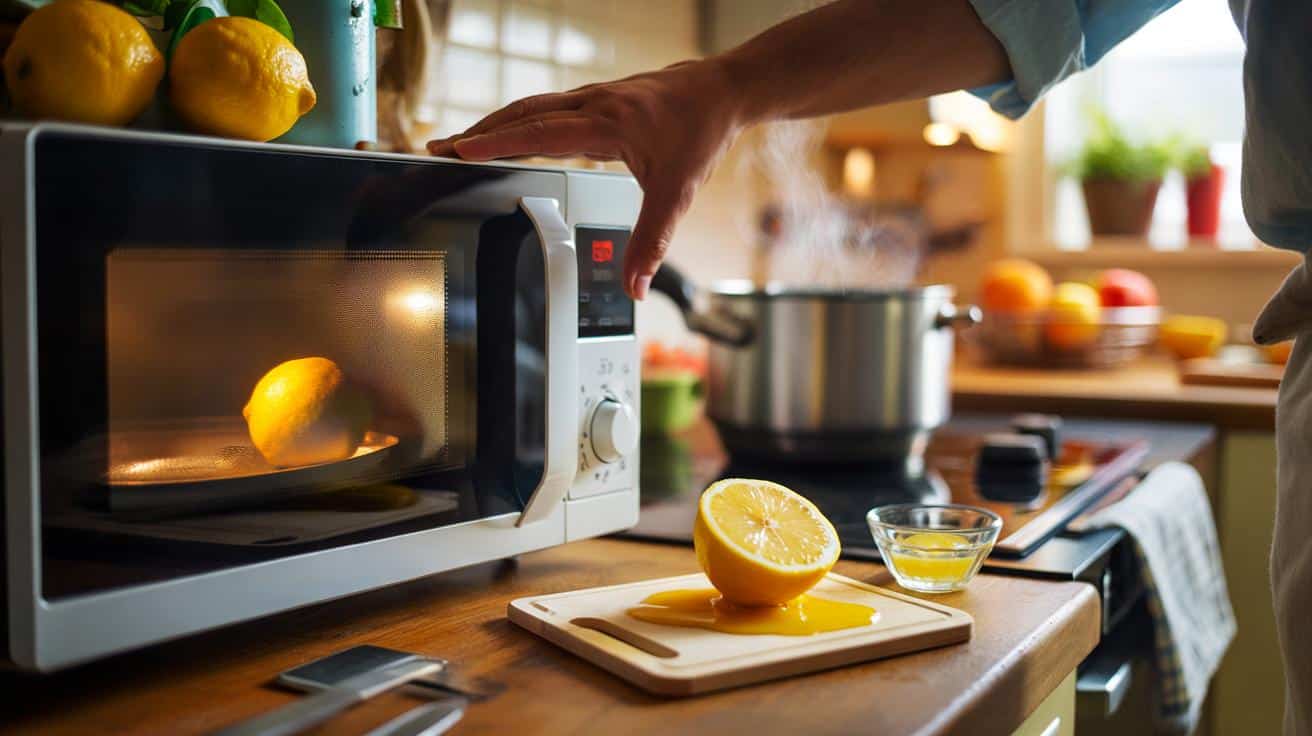
Then place the lemon in the microwave, whole and uncut. Heat it on medium or high power for about 15–20 seconds for a small lemon, around 25–30 seconds for a large one. When you take it out, it should feel warm but not hot. Slice it crosswise and squeeze: the juice should flow with very little effort. *It’s almost surprising the first time it happens.*
Here’s where most people trip up: they overdo it. They think “if 20 seconds is good, 60 seconds will be amazing.” That’s how you end up with a lemon that’s too hot to touch, slightly cooked, and with a sad, boiled smell. Short bursts are your friend.
Another common mistake is microwaving already-cut lemons. The exposed pulp can dry out or pop, and it’s just less pleasant to handle. Start with a whole fruit whenever you can. And be gentle with the squeeze. When the membranes are already softened, you don’t need to crush the lemon like stress relief putty. You can simply press, tilt, and let gravity and warmth do their quiet work.
“Once you’ve microwaved a lemon and felt how easily it gives up its juice, you start wondering why nobody told you this ten years earlier,” laughs Julie, a home cook who now does this every time she bakes. “It’s such a tiny thing, but it makes recipes feel more forgiving.”
- Microwave a whole lemon for 15–30 seconds, depending on size.
- Roll it lightly on the counter before heating to loosen the inside.
- Use it right away while still warm for maximum juice.
- Great for lemonade, salad dressings, marinades, and baking.
- **Skip long heating times** to avoid cooking or drying the fruit.
More than a hack: a small way to make the kitchen nicer to live in
There’s a quiet satisfaction in these tiny shortcuts. They don’t turn you into a chef, they don’t fix a burnt pan or an over-salted soup, but they shave off those little frustrations that chip away at your energy. One less thing to wrestle with on a Tuesday night when you’re cooking because you have to, not because you’re “experimenting” for fun.
*Let’s be honest: nobody really does this every single day,* but once you know it, it sits in the back of your mind, ready for the next dry lemon emergency. You start noticing other micro-habits that make cooking less of a battle and more of a flow: salting as you go, cleaning while something simmers, warming up citrus instead of fighting it cold from the fridge.
And this is where the trick grows beyond itself. You share it with a friend who’s struggling with homemade hummus that tastes flat, and you tell them, “Microwave the lemon first, then squeeze extra over the top.” You show your teenager how to do it so their lemon tea actually tastes like something. You remember it on holiday in a rental kitchen with blunt knives and weird pans, and suddenly you’re getting bright, sharp flavor from the only decent fruit in the place.
This small, slightly silly move becomes a kind of quiet ritual. A signal that you’re allowed to make life easier for yourself. A reminder that a lot of “kitchen talent” is just knowing a few clever shortcuts and not being too proud to use a microwave on a piece of fruit.
| Key point | Detail | Value for the reader |
|---|---|---|
| Microwaving boosts juice yield | 15–30 seconds of gentle heating softens membranes and rind | More juice from each lemon, less physical effort when squeezing |
| Use whole, uncut lemons | Roll on the counter, then heat the intact fruit | Better texture, cleaner flavor, reduced risk of drying or splattering |
| Short bursts beat long cycles | Avoid “cooking” the lemon by limiting time and checking warmth | Preserves fresh taste while still gaining all the juicing benefits |
FAQ:
- Question 1Can microwaving a lemon make it unsafe to eat?For a short burst, no. Microwaving a whole lemon for 15–30 seconds just warms it and softens the inside. As long as the fruit was fresh to begin with and you don’t scorch it, it stays perfectly safe.
- Question 2Will the microwave destroy vitamin C in the lemon juice?Heat does affect vitamin C over time, but here the exposure is very brief. A few seconds in the microwave has minimal impact, especially compared to cooking the juice or leaving it standing for hours.
- Question 3Can I do this trick with limes and oranges too?Yes. Limes respond really well to this method, since they’re often quite firm. Oranges and mandarins also get juicier and easier to peel after a short warming.
- Question 4What if my lemon was in the fridge—do I need to adjust the time?Cold lemons may need a bit longer, closer to 25–30 seconds, but it’s better to heat in 10-second bursts and check by touch. The goal is warm, not hot.
- Question 5Is there a way to get more juice without using a microwave?Yes, you can roll the lemon firmly on the counter, soak it briefly in warm water, or leave it at room temperature for a while. The microwave method is simply faster and more convenient when you’re in a hurry.