Behind the scenes in Paris, the new boss of the country’s powerful arms procurement agency is pushing for a faster, more aggressive approach to kitting out the French forces, while sending a strong signal of long-term business to defence manufacturers.
France shifts into high gear on rearmament
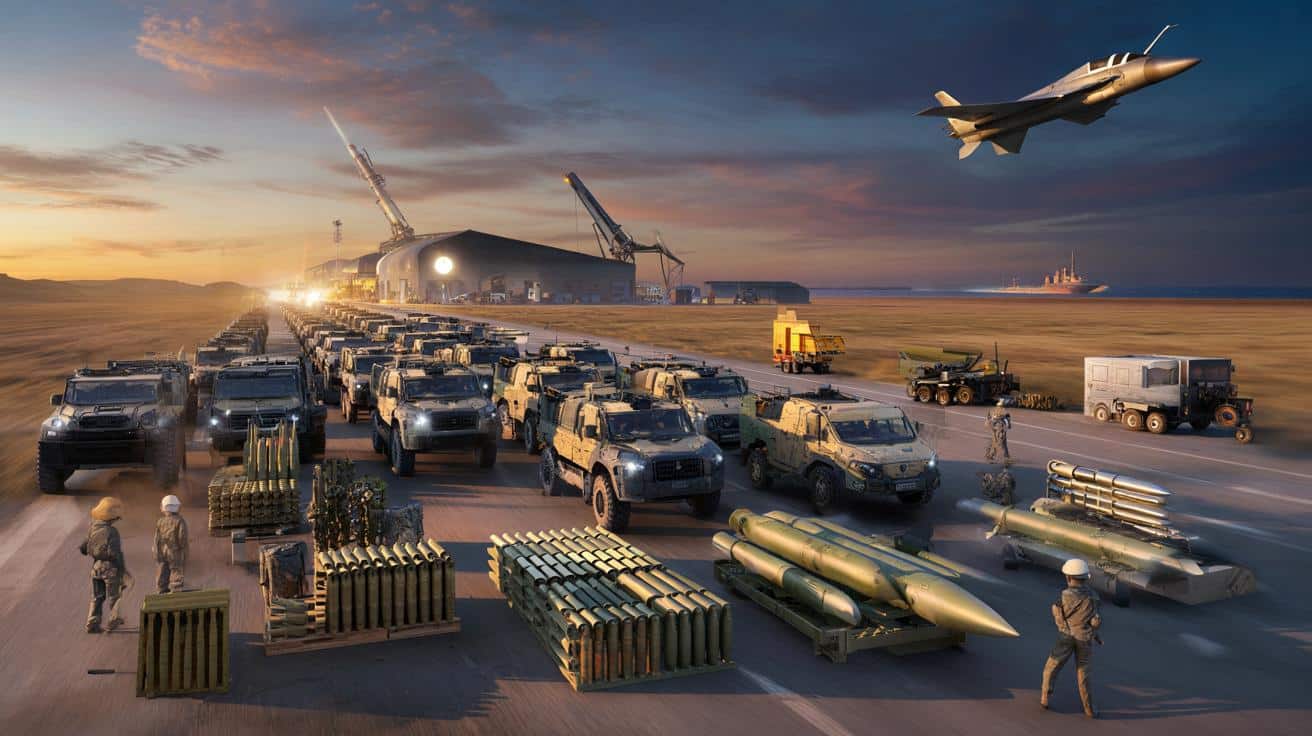
The French Direction générale de l’armement (DGA) – the state body that buys weapons for the armed forces – is entering a phase of accelerated rearmament. After a ramp-up in orders in 2025, the agency is preparing to place around €42 billion worth of contracts in 2026 for missiles, artillery shells, and new armoured vehicles such as the Griffon and Jaguar.
These purchases come on top of a surge already planned: €38 billion of domestic orders for 2025 and another €20 billion in export deals for French-made arms, according to figures presented by the new DGA chief, Patrick Pailloux. That means a total of €58 billion worth of contracts giving suppliers long-term visibility on workloads.
France’s defence buyers say they have never placed so many orders in such a short span, and they signal that the curve is still climbing.
Pailloux, who took over the DGA in November, describes his organisation as “the state’s biggest investor”. The mission he sets out is blunt: make sure the French armed forces have equipment that works, delivered fast enough to match the strategic context.
From Rafale jets to nuclear deterrence: what is already in the pipeline
Several flagship projects are already absorbing large chunks of France’s defence budget. In 2025, major contracts include the launch of the future aircraft carrier, known as PANG (porte-avions de nouvelle génération), and a new phase in the modernisation of the M51 submarine-launched ballistic missile, which underpins the ocean-based leg of France’s nuclear deterrent.
On the export side, around €20 billion in recent deals includes new orders for Rafale fighter jets, a central pillar of the French aerospace and defence industry. These exports indirectly support domestic rearmament, as they keep assembly lines warm, stabilise employment and sustain research and development.
Each Rafale sold abroad helps maintain skills and production capacity that France can tap when it needs to re-equip its own forces.
2026: a bumper year for land forces
While aircraft carriers and nuclear missiles grab headlines, a large share of the 2026 contracts is expected to focus on land warfare capabilities. French forces are set to bulk up stocks of:
➡️ Informant told FBI that Jeffrey Epstein had a ‘personal hacker’
➡️ Have you ever tried cloud eggs? This light way to cook them
➡️ Radioactive hybrid boars are thriving in Fukushima. Now scientists finally know why
➡️ Evicted after $22,000 in unpaid rent, a tenant leaves behind a massive aquarium “and a hefty bill”
➡️ Neither boiled nor raw : the best way to cook broccoli for maximum antioxidant vitamins
➡️ Here the 2026 Winter Olympics began and here ends the story of a legend of Italian stadiums
- Missiles for air defence and ground combat
- Artillery shells for high-intensity conflict
- Griffon multi-role armoured vehicles for troop transport and support
- Jaguar reconnaissance and combat vehicles
These programmes tie directly into lessons drawn from recent conflicts, especially in Ukraine, where artillery consumption and armoured vehicle losses have reached levels unseen in decades. For Paris, that has turned ammunition stockpiles and robust armoured fleets into urgent priorities rather than long-term “nice to have” projects.
“Short-circuiting” procedures: why France wants to go faster
The most striking shift is not just in how much France intends to buy, but in how it wants to buy it. Pailloux has made it clear that his goal is to “short-circuit” or bypass some of the traditional administrative loops that slow procurement down.
French defence contracts have long been criticised for their complexity and length, sometimes taking years to conclude from first requirement to signed deal. In a more volatile security environment, that rhythm no longer matches operational needs.
The DGA wants to compress decision-making cycles, cut layers of validation, and move from multi-year hesitations to firm, predictable orders.
The approach mirrors moves in other European countries to adopt “war economy” postures, with simplified rules to secure stockpiles of ammunition, spare parts and critical weapons systems quickly.
Giving industry clearer, longer-term visibility
Another key message from the DGA is predictability. By announcing multi-year order volumes – such as the €58 billion spread across 2025 domestic and export deals, plus the 2026 surge – French authorities are trying to reassure defence companies that investments in extra staff, new production lines or machine tools will be worth it.
For manufacturers, this means more than just comfort. It shapes decisions on whether to reopen dormant artillery shell lines, increase missile output, or boost capacity for armoured vehicles like Griffon and Jaguar.
| Year | Planned domestic orders | Export orders (approx.) | Key programmes |
|---|---|---|---|
| 2025 | €38 billion | €20 billion | PANG carrier, M51 modernisation, Rafale exports |
| 2026 | ~€42 billion (target) | Not yet specified | Missiles, shells, Griffon/Jaguar orders |
Innovation from the ground up: regiments building their own solutions
Acceleration is not only happening in Parisian offices. Some French army units are experimenting directly with new technologies rather than waiting for large centralised programmes to deliver.
The 3rd army combat helicopter regiment, for example, is testing different types of drones that were developed or adapted in-house. This bottom-up innovation approach reflects a broader trend: units using commercial technologies, fast prototyping and field feedback to shape what they actually need.
Frontline regiments are no longer just clients; they are becoming co-designers of future military kit.
The DGA leadership appears keen to align with that shift, using simplified procedures to integrate promising solutions faster, instead of letting them get bogged down in multi-year bureaucratic studies.
What this means for Europe’s defence landscape
France’s push carries consequences beyond its own borders. As one of Europe’s main military powers and a nuclear state, its procurement choices help set benchmarks for the rest of the EU and NATO allies.
More missiles and artillery shells, plus modern armoured vehicles, expand the country’s ability to sustain high-intensity operations, from Eastern Europe to the Sahel or other crisis zones. It also strengthens France’s voice in debates over joint European procurement and shared industrial capacities.
At the same time, a heavy national push can compete with, or on the contrary support, EU-level efforts to pool demand. If French factories run at higher rates, they might later supply European partners facing similar shortages in ammunition or armoured platforms.
Risks and trade-offs of a faster arms shopping spree
Speeding up procurement and “short-circuiting” procedures carries obvious benefits, but also some clear risks. Faster decisions can help soldiers get vital gear on time, yet they can also reduce the space for debate on cost, technical choices or long-term dependence on certain suppliers.
One concern often raised by defence economists is the danger of locking in expensive technologies quickly, then discovering later that they are harder to maintain or upgrade. Oversight becomes more challenging when programmes move fast and political pressure adds urgency.
There is also the budgetary angle. Even if funds are allocated through France’s multi-year military planning law, unexpected overruns in major projects such as the PANG carrier or M51 modernisation could force trade-offs against more “ordinary” but crucial purchases like basic ammunition or spare parts.
Key terms and what they mean in practice
For readers less familiar with French defence jargon, a few concepts help put these moves in context:
- DGA (Direction générale de l’armement): the state body that designs, tests and buys weapons and major systems for the French armed forces. It manages everything from submarines to rifles.
- PANG: the future French aircraft carrier intended to replace the Charles de Gaulle around the late 2030s. It will be nuclear-powered and capable of operating next-generation fighter jets.
- M51 missile: a submarine-launched ballistic missile forming part of France’s nuclear deterrent. Modernisation covers guidance, range, and compatibility with upgraded submarines.
- Griffon and Jaguar: new-generation armoured vehicles for the French army. Griffon transports troops and provides support; Jaguar is designed for reconnaissance and anti-armour missions.
Seen together, these elements show a France that is not only buying more kit, but also trying to overhaul the way it equips its forces. The combination of long-term visibility for industry, accelerated procedures, and experimentation in frontline units suggests a defence model that is shifting from slow, exhaustive planning towards a more reactive, conflict-driven rhythm.
If that rhythm holds through 2026 and beyond, the French defence sector could emerge with stronger industrial capacity and a more combat-ready army, but also with tougher questions about how fast is too fast when spending tens of billions on weapons.