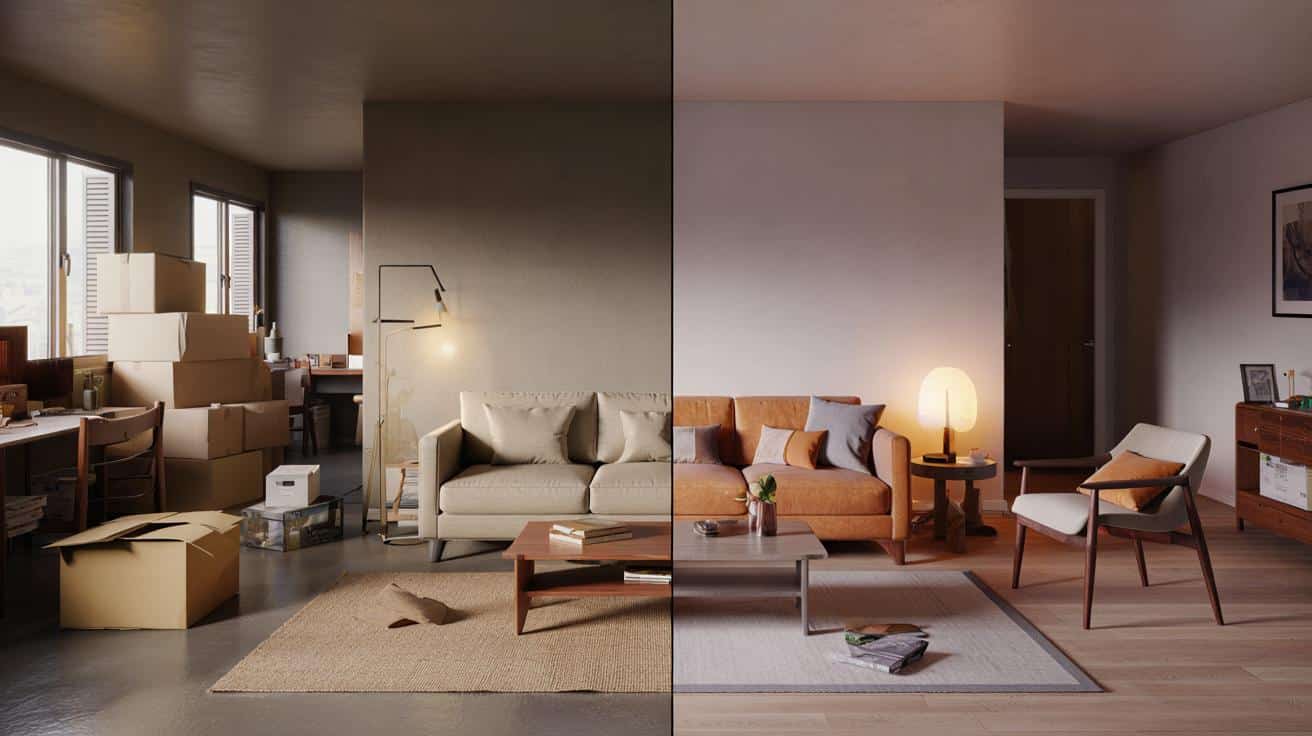
The delivery guy had barely left when the panic started. Cardboard boxes everywhere, a brand-new beige sofa squatting in the middle of the living room like an elephant you couldn’t return, and that sinking feeling in your stomach: “Why doesn’t this look like the Pinterest board?”
You walk around the room, trying to convince yourself it will “come together,” but deep down you know you rushed it. You clicked “order” on half the internet before the paint was dry.
The truth hits later, usually with your next bank statement.
Fast decorating, slow regret
Walk into almost any rushed apartment and you can feel it before you see it. The too-small rug floating in the center of the room. The random cushions that don’t quite go with anything. The dining table you bought in a hurry because guests were coming, and now you secretly hate it.
This is what happens when we treat interior design like a 24-hour delivery service instead of a long game.
A friend of mine moved into a new-build flat and decided she wanted it “done” in one month. She ordered a full living-room “set” from one website: sofa, coffee table, TV unit, shelves. The photos looked coordinated, the price seemed fair, and she could tick “decorating” off her list.
Six months later, the veneer on the coffee table was peeling, the sofa cushions had collapsed, and the layout didn’t work with how she actually lived. She ended up selling half of it on a second-hand app, losing hundreds for the privilege of starting again.
That’s the hidden bill of fast decorating. You pay for the stuff, then you pay for your mistakes.
Going slow flips the equation. When you wait, you watch how light moves through the room, you notice where you naturally sit, where bags land, where you drop your keys. You learn your own habits before you buy the objects that are supposed to fit them.
Financially, that means fewer impulse buys, fewer “good enough for now” pieces, and far fewer replacements. Patience sounds boring. On a bank statement, it looks like savings.
The slow-design method that actually works
Start with what designers call “the envelope” and almost no one in real life does: walls, floors, lighting. Not the cute side tables, not the cushions, not the framed prints you’ve been eyeing.
➡️ €1600 for a sliding trainer: the newest, craziest indoor cycling trend
➡️ You don’t need to be an expert to make this foie gras: I use my microwave and it costs me far less
➡️ India watches nervously as its biggest rival moves to buy 50 new warships
➡️ Radioactive hybrid boars are thriving in Fukushima. Now scientists finally know why
➡️ From Internship To Impact How Tech Careers Are Launched
➡️ Starlink introduces portable satellite internet service: no setup or new handset necessary
Live in the space for a few weeks with almost nothing new. Borrow a lamp if you have to. Use a folding table. Notice where you wish you had more light at night. Notice where you naturally reach for a surface to put down coffee or a laptop. Then write that down, literally.
Most people do the exact opposite. They buy the decor first, then try to force the room to make sense around it. A giant corner sofa that blocks the balcony door. A statement pendant that looks amazing on Instagram and way too low above your own head.
The slow way asks for a little discomfort at the beginning. A living room that feels incomplete. A bedroom with just a mattress, a lamp, and your phone on the floor for a while. It’s not glamorous, but it prevents those expensive, rushed choices that look good for three weeks and then annoy you for three years. *You’re buying time to make fewer, better decisions.*
There’s also the emotional side, the one nobody talks about when they’re sharing “after” photos. We’ve all been there, that moment when you realise you bought something mostly because you were stressed, or lonely, or tired of feeling like you were “behind” on adult life.
Let’s be honest: nobody really measures their room twice and draws a little plan every single day. That’s fine. What helps is one simple slow-design rule: **never buy a big piece on the same day you first see it**. Take a photo, go home, tape its outline on the floor, walk around it for 24 hours. If it still feels good when the mood passes, that’s your sign.
“A house is a work in progress, not a weekend project. When you rush, you decorate your anxiety. When you wait, you decorate your life.”
- Buy in stages, not in sets
Start with core pieces you truly need. Add layers (textiles, lighting, accessories) slowly so you can adjust as you go. - Test before you commit
Use painter’s tape to map furniture, sit on it in-store, or order fabric samples. One small test can save one big regret. - Track your “almost buys”
Keep a note on your phone of things you nearly bought. If you still love them in 30 days, only then consider spending. - Spend more where you touch daily
Sofa, mattress, desk chair. Go cheaper on shelves, decor, and anything that’s mostly visual. - Allow empty space
An unfinished corner is not failure. It’s room for a better, later decision.
Let your home grow with you
The most beautiful homes rarely look “done.” They look like they’ve been lived in, added to, edited over time. There’s the chair picked up from a flea market on a rainy Sunday, the lamp a friend passed on, the artwork that only arrived when you finally knew what you wanted on that wall.
Slow design respects the fact that you are still changing. Your tastes shift, your work routine changes, your family grows or shrinks. A home that took its time can flex with you. A home you rushed is usually made of brittle choices.
When you stop racing to the finish line, you give yourself permission to experiment. You might discover you love a bolder color than you thought, or that you actually prefer a small, intimate dining table over a giant one. You avoid repainting the whole place three times because you chose the first shade that popped up on a website.
Slowing down also redefines what “worth the money” means. Maybe that sofa you truly love costs more, but you’ve waited, saved, and tested it. You’re not paying to calm a panic or fill a silence. You’re paying to support the life you actually live, in a space that’s growing at your own pace.
| Key point | Detail | Value for the reader |
|---|---|---|
| Plan the room before buying | Observe light, movement, and habits for a few weeks | Reduces expensive layout mistakes and replacements |
| Buy fewer, better pieces | Invest in daily-use items, go simple on the rest | Saves money long term by avoiding cheap, short-lived furniture |
| Embrace an “unfinished” home | Add decor and details slowly as your life evolves | Creates a space that feels personal, calm, and financially sustainable |
FAQ:
- Question 1How long should I wait before buying big furniture for a new place?
- Question 2Isn’t slow decorating more expensive because I’m buying higher-quality items?
- Question 3What’s the first thing to invest in if my budget is tight?
- Question 4How do I resist impulse buys when I’m tired of my current space?
- Question 5Can a rented apartment really benefit from slow interior design?