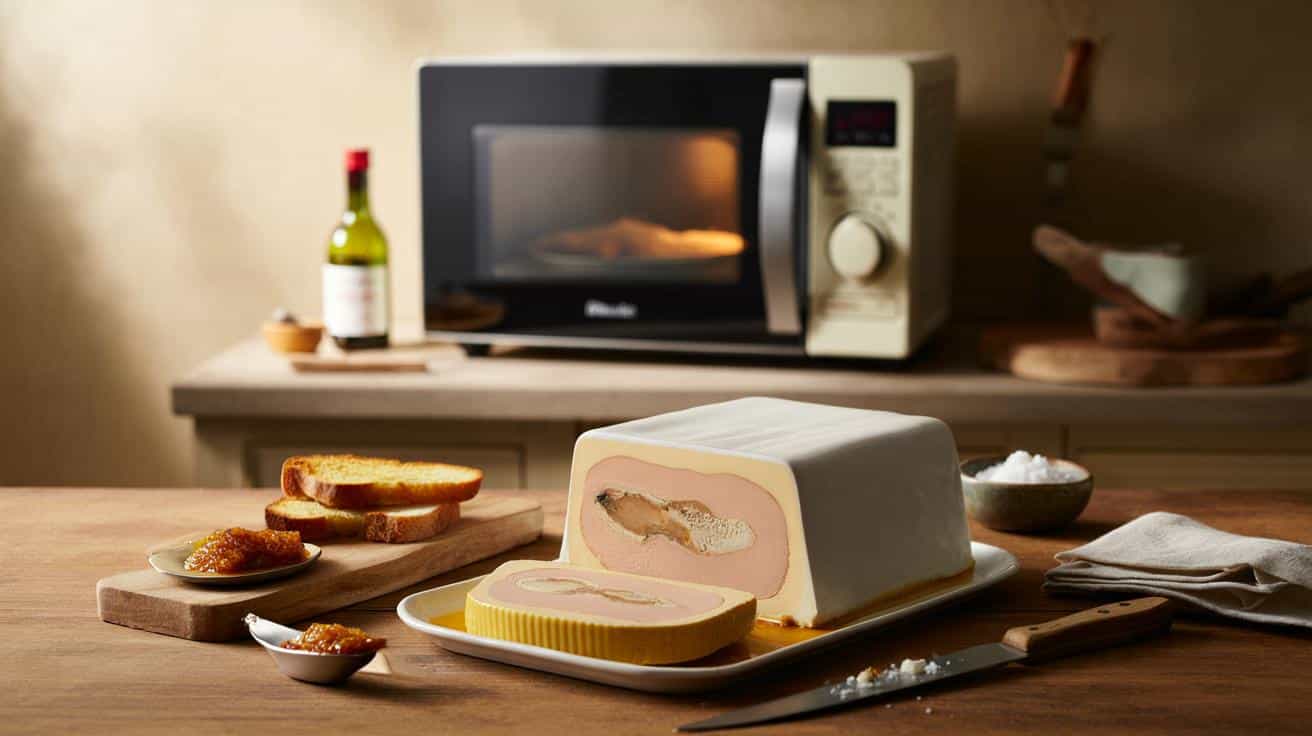
Instead of splashing out on a pricey terrine from a caterer, some home cooks are quietly using their everyday microwave to prepare festive foie gras. The method looks almost suspiciously easy, yet keeps circulating in French cooking communities for one reason: it works, even when you’re a beginner.
Foie gras without the chef: what this method changes
Traditional foie gras terrine can feel intimidating. It comes with talk of bain-marie, precise oven temperatures and that dreaded word, “dénervage” – removing the veins from the lobes. Many people simply give up and buy something ready-made.
This microwave method flips that script. You start with a single raw duck foie gras lobe, around 500 g, and rely on short bursts of heat instead of long, technical cooking. No water bath, no thermometer, no cast-iron casserole.
At its core, the recipe is: season, rest, cook in the microwave in very short intervals, then chill for at least two days.
The promise is not to obtain Michelin-star perfection, but a generous, homemade terrine that looks impressive on the Christmas table and costs noticeably less than a catered version.
Step-by-step: from raw lobe to festive terrine
1. Choosing and prepping the foie gras
For this method, you need a raw duck foie gras (around 500 g). In French supermarkets, it’s often sold vacuum-packed in the run-up to Christmas. In English-speaking countries it may be found at specialist butchers or online.
Before anything else, the lobe is soaked in cold water with coarse salt for about an hour. This helps draw out traces of blood and impurities, giving a cleaner colour and taste. Once drained, it’s patted very dry with paper towel.
The next step is the one that usually scares beginners: vein removal. In practice, it’s less dramatic than it sounds. With a small, sharp knife, you gently open each lobe and follow the main veins, easing them out rather than hacking away.
The goal isn’t surgery-level perfection, just removing the thickest veins so they don’t appear in the slice.
➡️ SpaceX in merger talks with other Musk companies ahead of IPO
➡️ Radioactive hybrid boars are thriving in Fukushima. Now scientists finally know why
2. Seasoning and marinating
Once the lobe is reasonably cleaned, it’s time to season. A typical ratio is about 3 g of fine salt per 500 g, plus freshly ground pepper. Some home cooks like to add a pinch of sugar or four-spice, but the basic version stays minimal.
The seasoned pieces are then packed tightly into a small ceramic terrine or dish. The tighter the fit, the nicer the slice later. Two tablespoons of sweet wine – often Monbazillac, Sauternes or white Port – are poured over the top.
- Foie gras: about 500 g of raw duck foie gras
- Seasoning: fine salt, pepper, possibly a pinch of sugar or spices
- Liquid: 2 tablespoons of sweet white wine or white Port
- Equipment: microwave, bowl, knife, small terrine dish
The terrine rests in the fridge for at least an hour so the flavours start to penetrate. Before cooking, it should return to room temperature so the heat circulates more evenly.
The microwave trick: short bursts, close watching
The key to this method is a straightforward rule: about 20 seconds of microwave cooking per 50 g of foie gras, divided into several short bursts. For a 400 g piece, that translates to around 2 minutes 20 seconds total, slightly more for 500 g.
You don’t run the microwave for that total time in one go. You cook for 20 seconds, stop, look, and repeat. After each interval, you check how the fat is melting around the edges and gently rotate the dish if needed.
When a knife tip inserted in the centre comes out warm but not piping hot, you’re close to a classic “mi-cuit” foie gras texture.
Every microwave behaves differently, which is why the stop-start rhythm matters. It reduces the risk of overcooking and gives you a chance to adapt. If the fat starts to boil vigorously, you shorten the next interval. If nothing seems to happen, you lengthen it very slightly.
Why it’s cheaper than buying a festive terrine
In France, ready-made foie gras terrines from caterers or premium brands are often sold in small quantities at high prices, especially before Christmas. A whole homemade terrine based on a 500 g lobe tends to cost less per portion, even with decent-quality foie gras and a small bottle of sweet wine.
You also sidestep the long ingredient lists that sometimes appear on industrial products: preservatives, antioxidants, flavouring agents. At home, the list is short and clear: foie gras, salt, pepper, maybe a splash of alcohol.
For the price of a small shop-bought block, you often get a generous terrine that easily feeds six to eight people as a starter.
For households trying to keep a festive feel on a tighter budget, this can make the difference between skipping foie gras altogether and serving it proudly as the opening dish.
Small gestures that make a big difference
Choosing the right dish and texture
A compact terrine dish helps the foie gras stay nicely packed. Large containers create gaps and uneven slices. The tighter the mass, the cleaner your presentation when you cut it.
Texture is mainly managed through cooking time and resting. Shorter total time and a slightly warm knife test give you a soft, mi-cuit result. Longer intervals and a very hot centre lead to a firmer, fully cooked foie gras, which some people prefer for storage.
The 48-hour patience test
Once the cooking is done, there is still one non‑negotiable stage: the long rest. The terrine should cool to room temperature, then spend at least 48 hours in the fridge. During this time, the fat firms up, aromas settle, and the slices hold together properly.
Serving it too early often leads to crumbly slices and muted flavour; the wait genuinely pays off.
Many cooks even prepare it three or four days in advance. This spreads out the Christmas workload and calms the last‑minute rush in the kitchen.
Serving ideas, safety and a few clarifications
When you’re ready to serve, unmoulding is optional. Some people simply slice straight from the dish. Others tip the terrine out after briefly dipping the base in hot water to loosen the fat. A hot, thin knife, cleaned between each slice, gives the neatest result.
Classic accompaniments include toasted country bread, brioche or a lightly sweet bread with dried fruit. A small amount of fig or onion chutney works, but the microwave method already produces a fairly rich, aromatic foie gras, so restraint helps avoid overpowering it.
Because this recipe often produces a “mi-cuit” texture, storage needs attention. The terrine should be kept in the coldest part of the fridge and consumed within a few days. Wrapping it tightly and covering the surface with its own fat layer helps limit oxidation.
One term that can cause confusion is “mi-cuit”. It doesn’t mean undercooked in a risky way, but partially cooked at a lower core temperature than canned foie gras. That translates to a more delicate texture and a shorter shelf life, not something that can sit months in a cupboard.
For those worried about food safety, using very fresh foie gras from a reliable source and respecting fridge times and temperatures matters more than the presence or absence of a bain-marie. If in doubt, aim for a slightly firmer cook and eat the terrine quickly rather than storing it for a long period.
Beyond Christmas, this shortcut technique can be reused for New Year’s Eve or a winter dinner party. Once you’ve tried it once, the fear factor drops, and you can start tweaking: a different sweet wine, a touch of Armagnac, or a little spice blend. The core idea stays the same: the microwave isn’t just for reheating leftovers, it can quietly turn a luxury ingredient into an accessible, homemade centrepiece.