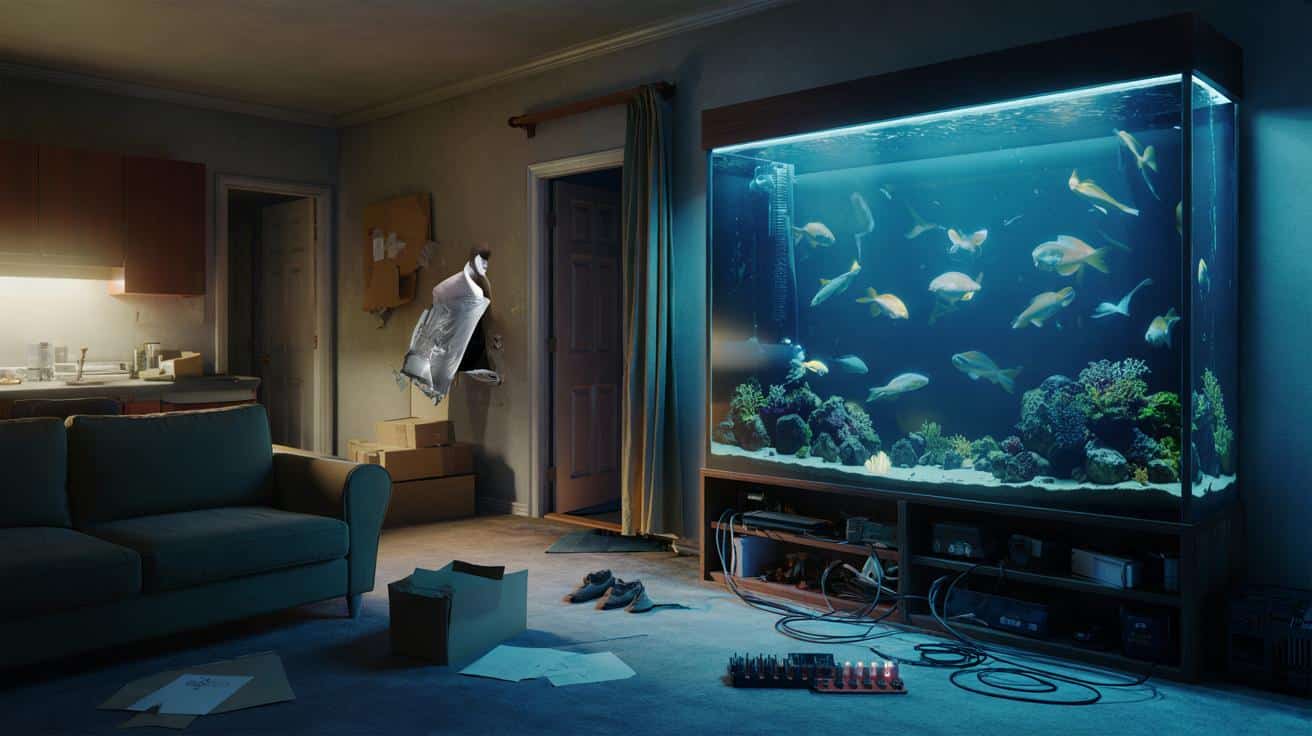
The landlord pushed open the apartment door expecting dust, maybe a forgotten mattress, the usual leftovers of an eviction. What he found instead was a blue glow pulsing in the dark living room, like a nightclub trapped in a glass box. Against the wall, taller than him and almost as long as the sofa, stood a massive aquarium. Pumps humming, water still clear, plastic corals waving in the weak current. No tenant. No rent paid for months. Just this giant, living object silently racking up the power bill.
On the kitchen counter: a crumpled notice of $22,000 in unpaid rent, and a scribbled Post-it saying, “Sorry, I had to go.”
The fish, the glass, the wires, the smell of warm water and algae.
And a very expensive question: who pays for all this?
When unpaid rent ends in a flood of problems
Evictions are rarely clean stories. Most of the time, they’re a mix of unpaid bills, broken trust, and awkward silence in the hallway. In this case, the silence was broken only by the bubbling of filters and the faint buzz of fluorescent lights. The tenant was gone, but the 400-gallon aquarium stayed, anchored to the floor like a ship that never left port.
The landlord had expected to change the locks and repaint the walls. He hadn’t planned on becoming the accidental owner of a mini-ocean, complete with exotic fish, a custom-built stand, and equipment worth more than a used car.
Neighbors said the tank had arrived during the pandemic. A slow, careful installation that took half a day and three delivery guys. “He said it was his therapy,” one of them remembered later. The tenant started staying home more, the lights from the aquarium turning the living room into a kind of glowing cave every evening.
Rent payments became irregular. Then they stopped. By the time the legal eviction process made its way through the courts, the unpaid balance hit $22,000. When the bailiff finally came, the tenant disappeared in a hurry, leaving the one thing too big, too fragile, and too expensive to move.
Legally, that giant aquarium became part of the headache. Someone had to keep the fish alive, deal with the huge weight pressing on the floor, and handle the risk of a leak that could soak the apartment below. Not to mention the electric bill ticking away with each passing day. A large saltwater setup can easily swallow hundreds of dollars a month in power and maintenance.
This isn’t just a quirky story about a forgotten pet project. It exposes a blind spot in many leases: what happens when a passion — an aquarium, a piano, a home gym — stays behind, long after the tenant has gone and the rent debt keeps growing?
➡️ €1600 for a sliding trainer: the newest, craziest indoor cycling trend
➡️ 2,400-year-old Hercules shrine and elite tombs discovered outside ancient Rome’s walls
➡️ I tried this comforting dish and knew I’d make it again
➡️ Have you ever tried cloud eggs? This light way to cook them
➡️ A peek inside Physical Intelligence, the startup building Silicon Valley’s buzziest robot brains
The hidden cost of “just one more hobby” in a rental
Setting up a huge aquarium in a rented home feels simple in the beginning. You measure the wall, browse online forums, watch dreamy videos of coral reefs and shimmering fish. Delivery day feels like Christmas: bags of water, boxes of equipment, sturdy cabinets. You sign a receipt, plug everything in, and suddenly the place feels alive.
The problem starts the day money gets tight. Fish food, water changes, special lights, filters, medicine. The tank doesn’t care that your hours were cut or that your car broke down. It keeps needing, quietly and relentlessly.
There’s a kind of slow creep. First, you delay that water change. Then you skip the expensive test kits “just this month.” You tell yourself you’ll get back on track when the next paycheck arrives. Meanwhile, that rent bill grows. Late fees slip in. Communication with the landlord gets awkward, then tense.
By the time an eviction notice hits the door, the tank has become both a comfort and a chain. Moving a 400-gallon aquarium isn’t like packing a box. You need time, strong arms, a vehicle, containers for the fish, a new place willing to host that much weight. When your life is already in pieces, it’s often the tank that stays behind.
From the landlord’s side, the picture is just as tricky. A giant aquarium can crack floors, overload weak structures, and push up insurance risks. When it’s abandoned, draining and removing it can cost thousands, especially if professionals are called to safely relocate living animals. Someone has to decide: keep the fish, rehome them, or call animal services.
Let’s be honest: nobody really reads the “no major alterations or heavy installations” clause like it means “no personal sea-world attached to your living room.” Yet that’s exactly what it can mean in the eyes of an insurer or a judge. *Behind every dreamy Instagram tank, there’s a practical question nobody likes to ask: what happens if I can’t stay?*
How to avoid turning a dream aquarium into a legal nightmare
The first real defense is before you even fill that tank with water. If you rent and you have a big hobby — aquarium, reptiles, recording studio, home gym — talk to your landlord before going big. Show photos, explain the weight, the setup, the potential noise. Ask plainly what’s allowed in the lease and what crosses the line.
It feels uncomfortable in the moment. Yet that uncomfortable email today can save you thousands and a world of drama later, especially if money trouble ever hits and you need to move quickly.
Another key move: match your hobby to your financial reality, not to your fantasy. A 50-gallon tank can be beautiful and manageable, while a 400-gallon monster can quietly eat the same money you’d need to keep up with rent. We’ve all been there, that moment when a hobby is the only thing still bringing you joy, and you throw money at it because everything else feels like it’s falling apart.
The line is crossed when the hobby starts competing with the roof over your head. When late rent letters are stacking up but the fish are getting brand-new LED lights, something in the priorities is upside down. And that’s not about shame — it’s about survival.
“I walked into that apartment and the first thing I thought was: those fish are healthier than the tenant’s finances ever were,” the property manager said later. “The tank was spotless. The rent ledger wasn’t. I ended up paying a specialist to rehome the animals. The final bill? Close to $3,000, on top of the $22,000 he already owed.”
- Ask your landlord in writing before installing heavy or complex equipment.
- Calculate monthly costs of your tank: electricity, water, food, maintenance.
- Keep an emergency fund for at least two months of hobby expenses.
- Have a “rapid exit” plan for pets: contacts, containers, and a backup home.
- Downsize instead of abandoning: sell or swap equipment while you still can.
Why this story hits a nerve far beyond one abandoned tank
This eviction with its giant glass witness says something raw about how we live today. Many tenants are just one job loss or medical bill away from falling behind. At the same time, hobbies, pets, and projects are often the only anchors people cling to when life gets unstable. An aquarium becomes a quiet world you can control when the rest feels chaotic.
When that world is left behind, glowing in an empty room, it exposes a tougher truth: leases, rights, responsibilities, animals, money — they’re all tangled together, and nobody really teaches us how to handle that mix.
The landlord in this story ended up as caretaker, not just creditor. He had to think about fish welfare, floor damage, and neighbors downstairs, all while staring at a $22,000 hole in his accounts. Yet it’s hard to paint the tenant as a simple villain. Behind that unpaid rent, there may have been loss, illness, depression, or pure exhaustion.
Stories like this live in a grey zone where nobody fully wins. They ask a quiet question of anyone renting today: how big is too big, when your home isn’t really yours, and your stability is on a month-to-month thread?
Maybe that’s where the real conversation begins. About leases that clearly address large installations, about landlords who ask questions before things go wrong, about tenants who build hobbies with an exit strategy, not just a shopping list. About social safety nets, too, and the feeling that you shouldn’t have to choose between mental health and financial survival.
That aquarium will eventually be drained, the room repainted, a new tenant moved in. The fish will swim somewhere else, or not. The unpaid rent will stay in a file. What remains, especially for anyone who has ever juggled bills and small joys, is a lingering thought: when money runs dry, what do we really leave behind — and at what cost?
| Key point | Detail | Value for the reader |
|---|---|---|
| Heavy hobbies in rentals carry hidden risks | Large aquariums and similar setups can damage property, raise costs, and create legal issues when tenants leave | Helps renters rethink the scale of their projects before committing |
| Communication can prevent expensive surprises | Clear written agreements with landlords about big installations and pets | Reduces conflict and unexpected bills for both sides |
| Have an “exit plan” for your passions | Backup homes, resale options, and a realistic budget if you need to move fast | Protects both emotional investment and financial stability |
FAQ:
- Question 1Who is legally responsible for an abandoned aquarium after an eviction?
- Question 2Can a landlord refuse a large aquarium in a rental property?
- Question 3What costs should tenants expect when running a big tank?
- Question 4What should I do with my aquarium if I know I might be evicted?
- Question 5How can landlords protect themselves from similar situations?