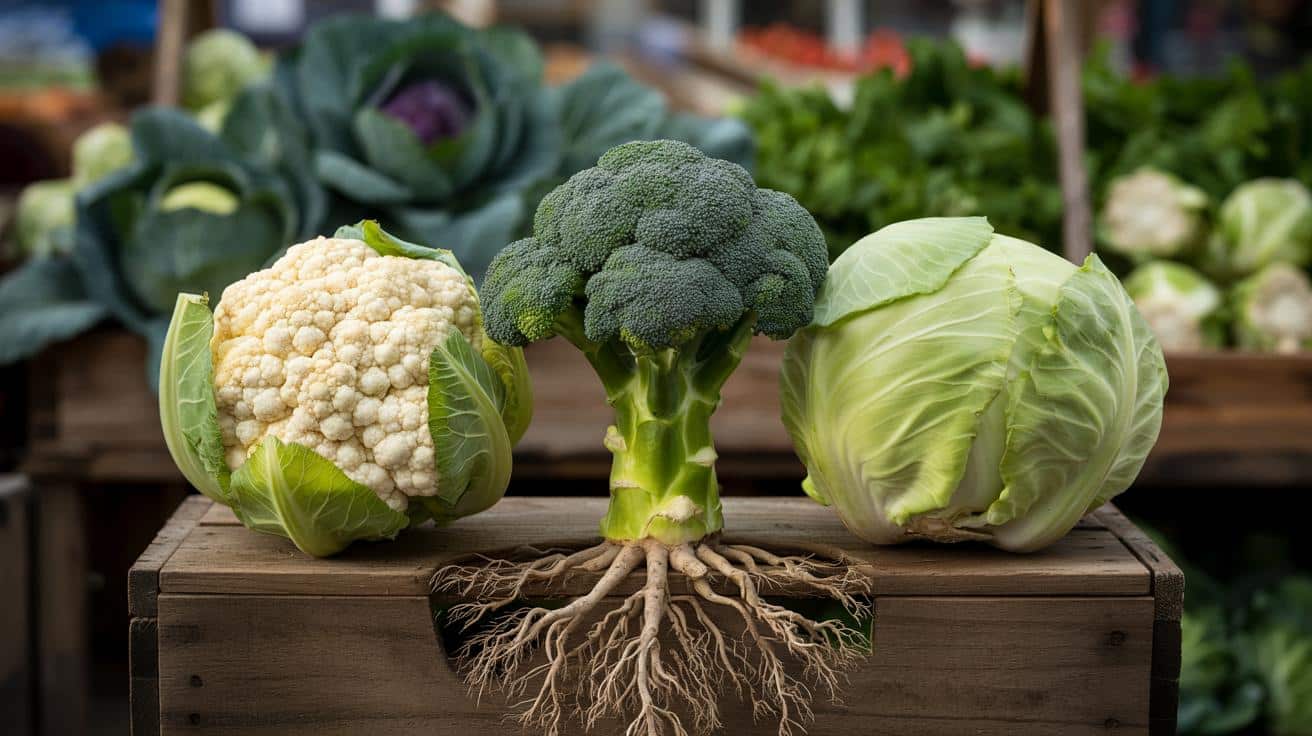
The man at the vegetable stall stares at the crate, eyebrows slightly furrowed. In one corner, tight white heads of cauliflower. Next to them, dark green broccoli. A little further down, a pile of pale cabbage, leaves loose and squeaky under the fingers. Three different shapes, three different prices, three different recipes in his head. He hesitates, picks one up, puts it down again, like he’s negotiating with three distant cousins.
Then the stallholder drops the small bomb: “You know these all come from the same plant family, right? Basically the same thing, just raised differently.”
The man laughs politely, but you can tell he doesn’t really believe it.
Same plant, really?
One plant, three “personalities” on your plate
If you grew up thinking cauliflower is the shy kid, broccoli the sporty one and cabbage the old aunt who smells a bit strong when cooked, you’re not alone. Our brains love to sort foods into completely different boxes. The colors, textures and even the recipes push us to see three separate worlds.
What almost nobody imagines is that cauliflower, broccoli and cabbage are just three faces of one single species: *Brassica oleracea*.
Same wild ancestor, same species name on the botanist’s label. Just a long, patient game of human selection.
Picture a windy cliff somewhere on the Atlantic coast, centuries ago. A scraggly wild plant clings to the rocks, leaves thick and a little waxy, trying to survive the salty spray. That’s the original Brassica oleracea, the tough little ancestor of half our winter vegetables. Farmers noticed some plants with bigger leaves and saved those seeds. Others had thicker stems, or tighter clusters of buds. Year after year, they picked their favorites and replanted only those.
Slowly, almost invisibly, that single coastal plant began to split into “characters” we now call cabbage, kale, broccoli, cauliflower, Brussels sprouts.
What changed was not the species, but the part humans decided to pamper. For cabbage, farmers selected plants with big, overlapping leaves that wrapped into a tight ball. For broccoli, they favored thick stems and dense clusters of flower buds. For cauliflower, they pushed selection further, amplifying those pale, compact curds that are actually flower structures gone a bit wild.
Genetically, they’re close enough to cross and create hybrids. On the plate though, they’ve become separate “identities”, with different smells, textures and reputations. Our shopping habits have followed the story, without ever seeing the common root.
How to “hack” the Brassica cousins in your kitchen
Once you know they’re all the same species, something interesting happens in the kitchen. You start seeing patterns. You notice that cabbage, broccoli and cauliflower react almost the same way to heat, salt, fat and acid. That opens the door to a simple trick: think in “methods” instead of recipes.
Pick one technique — roasting, stir‑frying, slow braising — and rotate it across the three. Same base, different mood. Olive oil, salt, high oven for 20 minutes? Works on all three. Thin slices in a hot pan with garlic and soy sauce? Same story.
The big mistake many home cooks make is treating cauliflower as a “special occasion” vegetable, broccoli as a sad side, and cabbage as a last resort for soup. Then bags rot in the fridge and we feel guilty throwing them away. We’ve all been there, that moment when you find a forgotten half‑cabbage, grey at the edges, and quietly slide it into the trash.
One small shift helps: stop asking “What recipe for broccoli?” and start asking “What do I feel like doing to vegetables tonight — crunch, creaminess, or char?” The choice of Brassica comes second.
“Once people understand that cauliflower, broccoli and cabbage are variations on the same plant, they relax,” explains a Paris‑based cooking teacher I spoke with. “They realize they don’t need three different skill sets, just one base approach they can adapt.”
- Roast: Toss any of the three with oil, salt, and paprika. High heat, edges browned, inside tender.
- Slice raw: Shave cabbage or very young broccoli stems into salads with lemon and nuts.
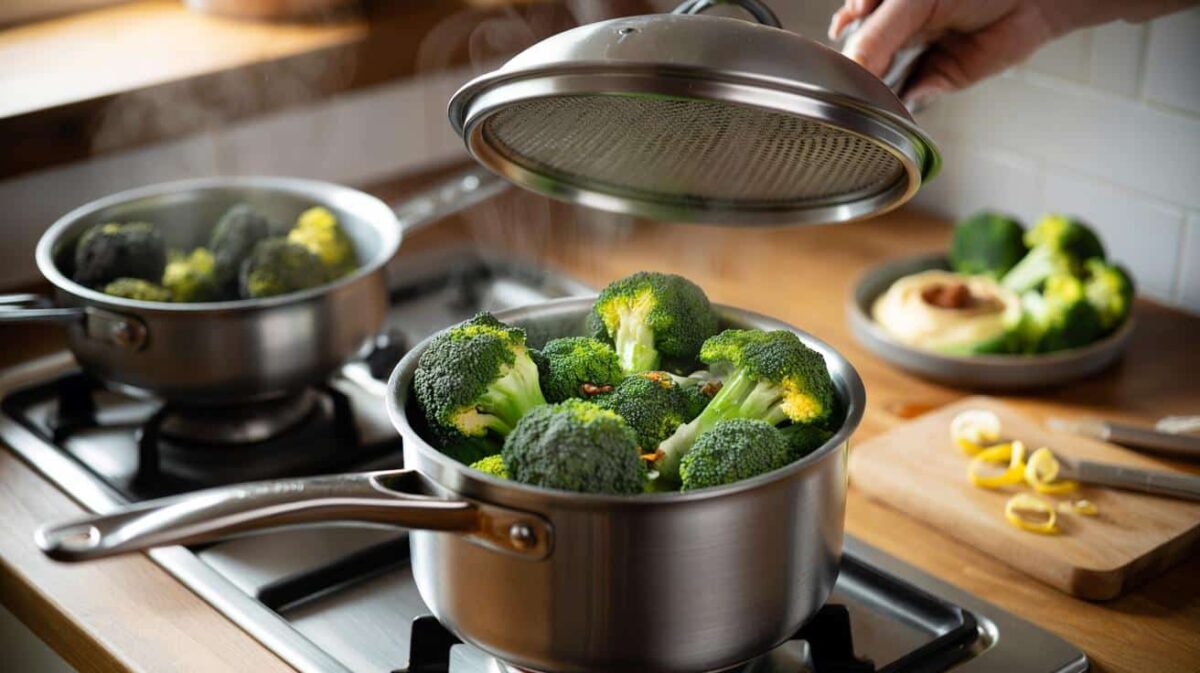
- Quick steam then sear: Briefly steam florets, then finish in a pan with butter and herbs.
- Comfort braise: Slow‑cook cabbage wedges or chunky cauliflower in tomato or coconut milk.
- Mix and match: Combine all three on the same tray — they cook at almost the same rhythm.
Seeing the hidden family in your shopping basket
Once you know they’re cousins, supermarket aisles look different. That “rainbow” of vegetables suddenly has invisible family ties. A head of cabbage becomes cheaper broccoli for soups. A big cauliflower doubles as a base for a creamy, low‑effort mash. Those broccoli stems you thought were trash turn into crunchy slivers in a salad.
*You start buying the plant, not the marketing around it.*
Let’s be honest: nobody really does this every single day. Sometimes you’re tired, you grab the same old bag of florets and a jar of sauce and call it dinner. Still, the idea lingers in the back of your mind: these three are interchangeable more often than not. That knowledge makes you a little freer.
You burn the broccoli? Switch to chopped cabbage from the fridge and use the same pan, same seasoning. The dish survives. So does your evening.
Something else shifts too: respect. When you realize that centuries of human patience turned a salty cliff weed into **cauliflower, broccoli and cabbage all at once**, there’s a quiet wow that settles in. This is slow, collective genius, not just “cheap veg for winter stews”. You might feel more inclined to buy the slightly ugly head, the one with a bruise, because you know what it’s capable of.
And maybe you talk about it at dinner, just once. “Did you know these are all the same plant?” Someone looks at their plate differently. The story travels on.
➡️ Have you ever tried cloud eggs? This light way to cook them
➡️ SpaceX in merger talks with other Musk companies ahead of IPO
➡️ With its 337 metres and 100,000 tonnes, the world’s largest aircraft carrier rules the oceans
➡️ France and Germany plan a new “Airbus of military lasers” with MBDA & Rheinmetall joint venture
➡️ What does making your bed right after waking up mean, according to psychology?
| Key point | Detail | Value for the reader |
|---|---|---|
| One species, many shapes | Cauliflower, broccoli and cabbage are all Brassica oleracea, selected for different plant parts | Changes how you think about variety and makes vegetables feel less intimidating |
| Shared cooking logic | Same basic reactions to roasting, steaming, stir‑frying and braising | Simplifies everyday cooking and cuts down on food waste |
| Flexible shopping mindset | Swap one for another in many recipes and use “whole vegetable” (including stems) | Saves money, increases creativity and reduces fridge guilt |
FAQ:
- Are cauliflower, broccoli and cabbage really the same plant?Yes. Botanically, they are all varieties of the species Brassica oleracea, developed over centuries through selective breeding.
- Can I swap broccoli and cauliflower in recipes?Often yes. In roasting, soups, gratins or curries, you can switch them with minimal changes to cooking time or seasoning.
- What about cabbage — can it replace broccoli?In many stir‑fries, soups and braises, sliced cabbage works well instead of broccoli, though it brings a softer texture and sweeter flavor.
- Is one of them healthier than the others?All three are rich in fiber, vitamins C and K, and protective plant compounds. The exact profile varies, but they’re all nutrition powerhouses.
- Why do they look and taste so different if they’re the same species?Humans selected different traits: tight leaves for cabbage, big flower buds for broccoli, dense white curds for cauliflower. Those choices shaped appearance and flavor over many generations.