On a Tuesday night in a cramped kitchen, a pan of broccoli was dying a slow, gray death.
The cook – tired, hungry, scrolling recipes with one hand – kept letting it boil “just one more minute”. By the time the pasta was al dente, the broccoli looked like something fished out of a school canteen tray in the 90s.
He pushed it around his plate and thought, not for the first time: “Why do I even bother buying this stuff?”
The funny thing is, that sad, overcooked broccoli had started the day as a vitamin bomb.
Somewhere between the cutting board and the fork, the nutrients quietly slipped away.
Why boiled vs raw broccoli is a false dilemma
Ask five people how they eat broccoli and you’ll probably get two camps: team raw and team boiled-to-death.
One will brag about crunching it with hummus, the other will defend their “soft so it’s easier to digest” approach.
Both think they’re doing the right thing.
Both are losing a good chunk of the famous antioxidant vitamins that give broccoli its superhero reputation.
Take vitamin C, for example. Broccoli is full of it when it’s fresh and bright green on your cutting board.
Drop it in a pot of water for ten minutes and a large part of that vitamin C literally leaks into the cooking water.
On the other hand, eating it totally raw isn’t the miracle solution either.
Some protective compounds are better absorbed once the cell walls have been slightly softened by heat.
The science is fairly clear on this point. Long boiling is one of the worst ways to preserve broccoli’s antioxidant vitamins because vitamins C and some B vitamins are both heat-sensitive and water-soluble.
They hate heat and they love water, which is a terrible combo in a deep pot.
Raw broccoli keeps more vitamin C, but your body doesn’t necessarily access all the phytonutrients locked inside those firm florets. *A small amount of gentle heat can actually unlock more of the famous sulforaphane and carotenoids.*
The real question isn’t “raw or boiled?”.
It’s “what’s the gentlest way to warm broccoli without wrecking its chemistry?”.
➡️ Before Trees, Earth Was Ruled By Giant Life Forms That Seem From Another World
➡️ Microwaving a lemon : A simple kitchen trick you’ll keep using
➡️ Radioactive hybrid boars are thriving in Fukushima. Now scientists finally know why
➡️ I tried this comforting dish and knew I’d make it again
➡️ SpaceX in merger talks with other Musk companies ahead of IPO
The cooking method that protects broccoli’s vitamins best
The answer that keeps coming back, study after study: light steaming.
Not drowning, not frying in scorching oil, not forgetting it under the grill.
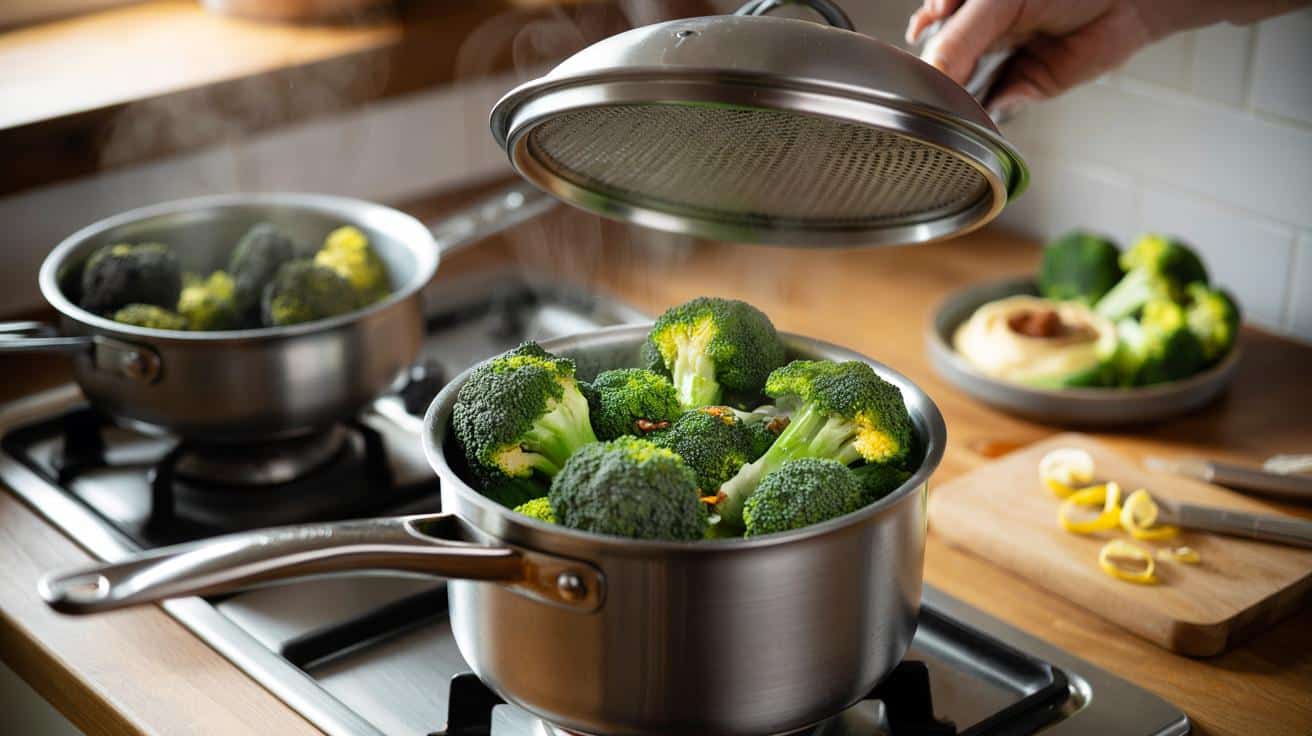
Steaming means the broccoli sits above a small amount of simmering water, touched only by steam.
Heat is softer, contact with water is minimal, and cooking time can be very short.
For broccoli, the sweet spot many nutrition researchers land on is around 3 to 5 minutes of steaming.
Just enough to turn it bright green and slightly tender, not enough to sag into khaki mush.
Picture this: you toss florets into a basket over simmering water, set a timer for 4 minutes, and step away to grate a little garlic or squeeze a lemon.
When the timer rings, the broccoli is vivid, still holds its shape, and has that pleasant snap when you bite it.
You drizzle it with olive oil, a pinch of salt, maybe a few chili flakes.
Suddenly it looks like something you’d actually want to eat, not swallow out of guilt.
We’ve all been there, that moment when a “healthy” side looks so sad you’d rather reach for bread instead.
The explanation is surprisingly logical. Short steaming limits three main sources of nutrient loss.
First, less direct contact with water means fewer vitamins dissolving and running down the drain.
Second, the lower, more controlled heat reduces breakdown of delicate antioxidants like vitamin C.
Third, the short time helps keep the natural enzymes that activate sulforaphane from being completely destroyed.
Some research even suggests that **lightly steamed broccoli can offer more usable antioxidant power than raw**, because the plant’s structure is partly opened up but not yet damaged.
Plain truth: your broccoli doesn’t need a spa day, it just needs a quick, hot shower.
How to steam broccoli “just right” at home
You don’t need a fancy steamer to do this.
A simple saucepan with a metal colander or a steamer insert works just fine.
Cut the broccoli into equal-sized florets so they cook at the same speed.
Pour a small amount of water into the pan (about 2–3 cm), bring it to a gentle simmer, place the florets in the basket above the water, cover, and start the countdown.
At 3 minutes, check the color and texture with the tip of a knife.
If it’s bright green and offers light resistance, you’re done. If you like it a bit softer, push to 4 or 5 minutes, but no more.
A common mistake is to walk away and only come back when you smell a slightly sulfurous odor.
At that point, the broccoli is already overcooked and those precious antioxidant vitamins are literally evaporating.
Another trap: keeping the lid off because you’re afraid it will overheat.
Lid on, short time – that’s the whole game.
And let’s be honest: nobody really does this every single day.
Sometimes you’ll forget the timer, sometimes the phone will ring, sometimes the pan will bubble a bit too hard.
That’s okay. The point isn’t perfection, it’s moving away from the ten-minute boil you learned as a kid.
“The best cooking method is the one you can actually repeat without hating your life,” laughs a dietitian I spoke with, who admits she steams a big batch of broccoli once and reheats it gently for two or three meals.
To keep things simple, many people find it easier to have a small routine:
- Steam broccoli for 3–5 minutes, then plunge quickly into cold water if you want to stop the cooking.
- Toss with olive oil, lemon juice, and a pinch of salt right away to boost flavor and antioxidant synergy.
- Reheat leftovers quickly in a pan with a splash of water, just until warm, not sizzling.
One more quiet trick: combining steamed broccoli with fat sources like olive oil or a few nuts can help your body absorb fat-soluble antioxidants such as vitamin K and carotenoids.
You’re not just preserving vitamins, you’re helping your body actually use them.
Beyond steamed: small tweaks that make broccoli worth craving
The real secret to eating more broccoli isn’t a lab-perfect method.
It’s wanting to come back to it, week after week, without feeling punished.
Once you’ve nailed a fast steam, you can play. A minute in a hot pan with garlic and chili after steaming, a spoon of soy sauce and sesame oil, a shower of grated Parmesan or toasted almonds.
Suddenly that “healthy side” looks like something you’d post in a group chat.
Broccoli is often treated like medicine: bitten, chewed, endured.
Yet this vegetable is one of the most generous in antioxidant vitamins, fiber, and protective compounds for the heart, eyes, and immune system.
Keeping the cooking light is your way of honoring that potential.
Some evenings you’ll grab it raw with a dip, other days you’ll steam it, or toss barely-steamed florets into a warm salad or grain bowl.
**The real win is variety and repetition, not nutritional perfection.**
Your body benefits from what you eat most of the time, not from the one flawless meal you cooked last month.
| Key point | Detail | Value for the reader |
|---|---|---|
| Best method | Light steaming for 3–5 minutes above simmering water | Preserves more vitamin C and antioxidants than long boiling |
| Texture cue | Bright green color, tender but still slightly firm | Simple visual sign that vitamins are better protected |
| Flavor boost | Add olive oil, lemon, herbs, nuts or cheese after cooking | Makes broccoli enjoyable enough to eat regularly |
FAQ:
- Question 1Is steamed broccoli really better than raw for antioxidants?Yes, when lightly steamed, broccoli can offer more accessible antioxidants than raw, because gentle heat softens cell walls and activates certain compounds without destroying vitamin C.
- Question 2How long can I steam broccoli before losing too many vitamins?Ideally 3–5 minutes. Beyond 7–8 minutes, vitamin C and some B vitamins drop sharply and the color starts to dull.
- Question 3Is microwaving broccoli a good option?Microwaving with a little water in a covered dish can be quite protective, as cooking times are short and there’s little contact with water, as long as you don’t overcook it.
- Question 4What about roasting broccoli in the oven?Roasting at high heat gives great flavor and crispy edges, but it can reduce vitamin C more than steaming. It’s a good option for variety, not for daily “maximum vitamin” cooking.
- Question 5Can I cook broccoli ahead and still keep the vitamins?Yes, if you lightly steam it, cool it quickly, and store it in the fridge. Reheat gently (pan or microwave) until just warm, not piping hot, to limit extra nutrient loss.