Many homes feel cold even before the snow falls.
Across the UK and US, households are looking for ways to feel genuinely warmer indoors without cranking the thermostat to painful levels. Physics offers a few surprisingly simple levers: block the leaks, push more heat into the room instead of the walls, and use the warmth you’re already producing in smarter ways.
Why your home feels cold even when the heating is on
When you feel chilly at home, it is not only about the number on the thermostat. Three things shape your comfort: the air temperature, the temperature of the surfaces around you, and how much air is moving.
Thin windows, gaps under doors and icy floors all make your body work harder to stay warm. Your skin “reads” cold surfaces and draughts as a threat and sends a signal: grab a jumper or turn up the heating.
By working with conduction, radiation and convection – the three basic ways heat moves – you can gain several degrees of comfort without touching the boiler settings.
The three low‑tech tactics below are not magic. They simply stop heat escaping too fast, redirect what you already pay for, and add small but cumulative sources of warmth.
1. Seal smartly so the heat actually stays inside
Heat loves an easy escape route. Cracks around windows, warped doors and gaps in floorboards act like open invitations to cold air. Studies in Europe suggest that up to a third of heat loss in some older homes comes from these tiny leaks.
This is classic heat conduction and air infiltration: warm indoor air meets a cold surface or slips out through a gap, and your boiler has to replace it again and again.
Cheap fixes that can cut heat loss fast
- Stick self-adhesive foam or rubber seals around leaky windows and exterior doors.
- Use draught excluders, “door snakes” or even a rolled towel at the base of doors, especially at night.
- Hang thick curtains over windows and, where possible, over front doors as an extra thermal barrier.
- Lay rugs on bare or tiled floors in living rooms and bedrooms where you sit for long periods.
These are small jobs, but the sensory effect is big. A thick rug, for instance, can lift the temperature you feel at foot level by up to a couple of degrees in a poorly insulated room. Your body interprets “warm feet” as “the room is OK”, so you are less tempted to raise the thermostat.
Cutting draughts changes how warm a room feels long before you notice a big shift on the thermometer.
➡️ “I’m over 60 and sitting hurt my back”: the posture fix that mattered most
➡️ Got an Annoying Twitch? Here’s What to Consider Before You Think The Worst : ScienceAlert
➡️ I realized my home needed fewer rules, not more cleaning
➡️ Why gardeners hang cork stoppers on lemon branches
➡️ Heating: the 19°C rule is outdated: experts reveal the new recommended temperature
Draught proofing carries one caveat: never block purpose-built ventilation grilles for gas appliances, boilers or stoves. Those vents are there for safety, not comfort.
2. Use aluminium foil to push more radiator heat into the room
Standard radiators are badly named. They do not just radiate heat; they also warm air that flows around them. A big chunk of this warmth, though, heads straight into the wall behind, especially in older solid-brick properties.
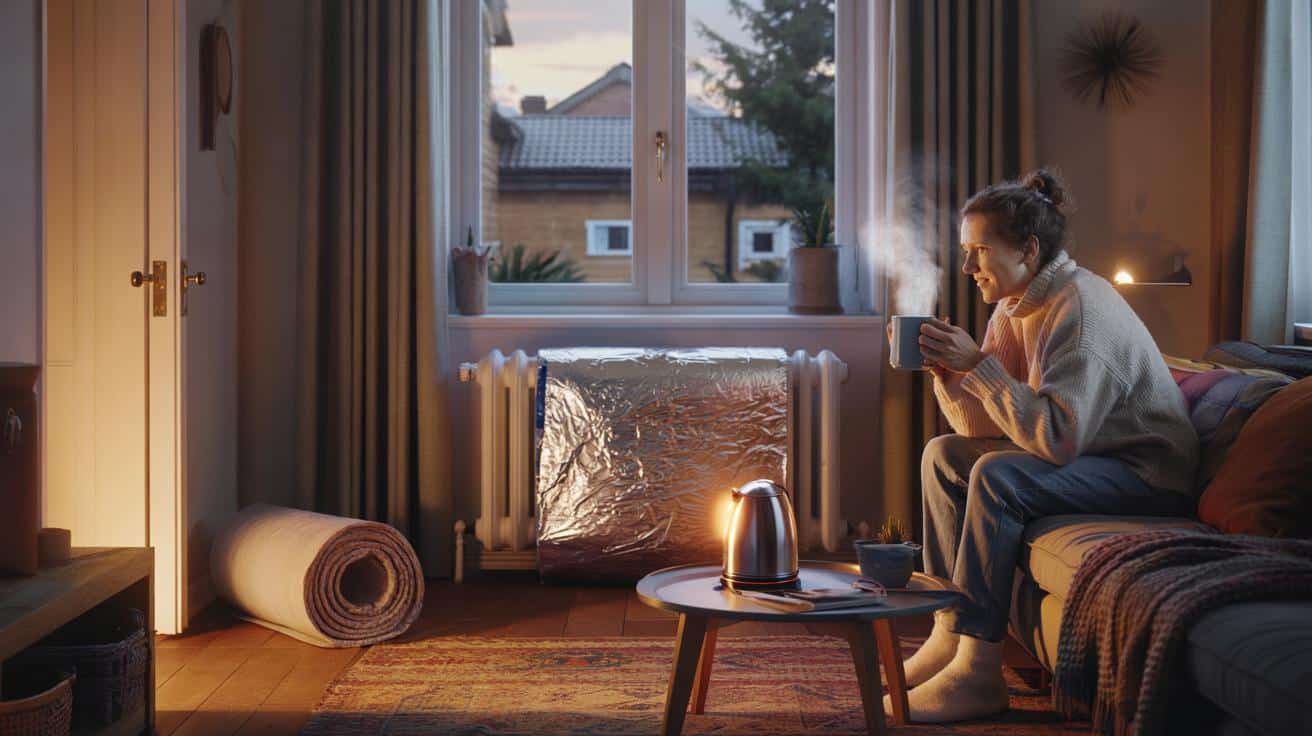
That is where aluminium foil comes in. Shiny aluminium reflects heat radiation rather than absorbing it. Positioned correctly, it sends warmth that would vanish into the wall back towards the room.
How to build a DIY heat reflector
You do not need specialist gear. A simple homemade panel works in many cases:
- Measure the width and height of the radiator section that faces the wall.
- Cut a piece of cardboard slightly smaller than that area.
- Wrap the cardboard in kitchen aluminium foil, shiny side facing outwards.
- Slide the panel down behind the radiator, leaving a small gap so air can still circulate.
A well-placed reflector can reduce heat lost through an external wall and nudge more warmth into the living space for the same boiler setting.
Commercial reflector panels, often using foil on foam or plastic sheets, follow the same principle and are more durable. Prices range from a few pounds or dollars per radiator for basic kits to more elaborate systems for whole walls.
When foil helps – and when it does not
Foil reflectors work best in these situations:
- Radiators fixed to uninsulated external walls.
- Narrow rooms where radiators sit close to sofas, desks or beds.
- Older hot-water radiators operating at moderate to high temperature.
There are cases where you should skip the hack:
- Very modern low-temperature radiators designed with built‑in reflectors.
- High‑humidity rooms like poorly ventilated bathrooms, where condensation may damage foil and walls.
- Situations where the foil would touch electrical elements or obstruct thermostatic valves.
Always keep the foil and any cardboard away from direct flame or electric heating elements. The goal is to redirect heat, not create a fire risk.
3. Harness human and domestic heat, from bodies to kettles
Every person sitting quietly in a room acts like a small heater, giving off around 80 to 100 watts of heat. When several people gather in one space, or you are cooking, the combined effect on temperature and comfort is far from negligible.
The trick is to help that warmth stay where you need it instead of letting it vanish into unused corners of the house.
Concentrate life in fewer rooms on cold days
On the coldest evenings, many households already do this instinctively: everyone ends up in the living room or kitchen. From a physics perspective, that instinct is spot on.
- Close doors to unused rooms so your heating – and your body heat – is not wasted.
- Spend more time in one or two “core” rooms that you heat to a comfortable level.
- Use throws and cushions on chairs near external walls to cut that “cold wall” sensation.
Several bodies, a pot simmering on the stove and a closed door can lift the temperature of a medium-sized room by a couple of degrees across an evening.
The kettle trick: small energy, big impact
Hot drinks do two jobs at once: they warm your hands and core, and they push a little extra heat into the room. An electric kettle is usually one of the most efficient ways to heat water, especially compared with an oversized pan on a hob.
Energy agencies in Europe estimate that an efficient kettle can use up to around a third less energy than bringing the same amount of water to the boil on many traditional stoves, provided you only heat what you need.
A few rules keep that advantage real:
- Fill the kettle with only the amount of water you plan to use.
- Descale it regularly; limescale acts as insulation on the element, making it work harder.
- Use the hot water quickly, for tea, soup or pre-warming a mug or hot water bottle.
Leaving boiled water to cool inside the kettle wastes the energy you just used. Pouring it into a thermos or using it right away makes that brief burst of electricity more worthwhile.
How much difference can these three tricks make?
No single tip will turn a draughty Victorian terrace or an American farmhouse into a low‑energy eco‑home. The gains appear when you stack them together.
| Action | Typical benefit |
|---|---|
| Draught proofing windows and doors | Less cold air movement, feeling of extra warmth of 1–3°C in living zones |
| Foil behind radiators on external walls | More heat directed into the room, lower boiler run time for same comfort |
| Grouping activities + efficient kettle use | Local temperature boost and better personal warmth from hot drinks and food |
In a typical two‑bed flat with basic insulation, energy agencies suggest that these modest tweaks, used together, can cut heating demand by several percent while delivering a noticeable comfort lift. That might sound small, but over a long winter and at current gas or electricity prices, it can mean real money.
Key concepts worth unpacking briefly
Three pieces of physics sit behind all this:
- Conduction: heat moving through solid materials, like a warm room losing energy through a cold wall or window frame.
- Convection: warm air rising and cold air sinking, creating currents that you feel as draughts.
- Radiation: heat travelling in waves, for example from a radiator or a person’s body to nearby surfaces.
Aluminium foil mainly plays with radiation, bouncing heat waves back into the room. Draught proofing acts on conduction and convection, stopping cold air entering and warm air leaking out. Human bodies and hot kettles add their own radiation and warm up the surrounding air through convection.
Practical winter scenarios at home
Picture a typical January evening. Outside, it is close to freezing. Indoors, you set the thermostat to 19°C. With bare floors, unsealed windows and radiators pushing half their heat into the wall, the room might still feel like 16–17°C on your skin.
Now imagine the same room where gaps are sealed, a rug covers the cold tiles, foil reflectors sit behind the radiators, and the family gathers in the living room instead of spreading through the house. The thermostat still reads 19°C, but your body reads something closer to 20–21°C. That is the difference between reaching for an extra jumper and feeling fine with the one you already wear.
None of these measures replace serious insulation or modern heating systems. They do, though, offer quick wins for winter 2025 that you can put in place over a single weekend, with cardboard, foil, a kettle and a bit of tape – and they make each unit of energy you pay for work harder for you.