m., the bedroom looks like a clothing crime scene. One shoe under the bed, three shirts on the chair, a pile of “maybes” sliding off the duvet. The clock on your phone jumps five minutes while you stare at your closet, not actually seeing anything. You’re not trying to be late. You just can’t find the one outfit that feels right.
Half the wardrobe is stuff you wear once a month. The other half is crushed together on mismatched hangers, hiding the pieces that actually work. Somewhere between “I have nothing to wear” and “I own too many clothes” lies the real problem: chaos disguised as choice. On a weekday morning, that chaos costs you energy you haven’t got yet.
Now imagine opening the same door and knowing, in under 30 seconds, what you’ll put on. No drama. No avalanche. Just one simple visual cue.
Why your current closet secretly drains your energy
The first thing to understand: your closet is not just storage, it’s a decision machine. Every hanger, every shelf, every pair of jeans is a question your brain has to answer before coffee. Too many questions, and you hit decision fatigue before you even leave the house. That’s why the wardrobe that “worked fine” five years ago suddenly feels exhausting when life speeds up.
Clothes you don’t wear anymore still hang there, whispering little shoulds. The blazer you keep “just in case”. The jeans that might fit again “one day”. All those maybes clog the view of your reliable go-tos. Morning you doesn’t need maybes. Morning you needs obvious, easy yeses.
Think about the last time you got dressed in under three minutes and felt good. Odds are, it wasn’t about having more options. It was about instantly spotting the right few.
A styling coach I spoke to in London keeps a photo on her phone of a client’s closet before and after a real clear-out. In the “before” shot, you can’t even see the back wall. Clothes are jammed in; shoes are stacked two deep. In the “after”, there’s breathing space between hangers. Colours are grouped. Shoes line up in a single clean row. The client’s first comment? Not “it looks nice”. It was: “I feel calmer just looking at it.”
There’s actual data behind that feeling. Researchers at Princeton University found that physical clutter in your environment competes for your attention, making it harder for your brain to focus. Translate that to your wardrobe: every extra shirt your eye has to scan slows you down. The fewer visual distractions you face at 7 a.m., the faster you can get to “I’m ready”.
This isn’t about becoming minimalist overnight or throwing away half your clothes. It’s about designing your space so the path of least resistance is also the path that makes you feel sharp, comfortable, and like yourself.
When your closet is unfiltered, your brain has to work overtime just to ignore things. It’s like scrolling past ten shows on Netflix you’re not in the mood for before you find the one you want. That constant micro-sorting eats into your limited morning willpower. *No wonder getting dressed feels heavier than it should.*
➡️ Psychologists agree: “Life feels lighter the day you stop measuring your worth by this”
➡️ What are the health benefits of cucumber?
➡️ How changing when you check messages improves focus without missing anything important
➡️ The subtle difference between mental rest and mental avoidance
➡️ This Ancient Deadly Disease Is Growing More Resistant To Antibiotics, And Experts Are Worried
Once you remove that noise, your brain can switch from “What on earth do I wear?” to “Which of my three go-to looks fits today?”. You’re not losing freedom, you’re removing friction. Think of your wardrobe as a curated menu rather than a chaotic buffet. Same ingredients, different experience.
Setting up a closet that practically gets you dressed for you
Start with one ruthless but very practical rule: everything you can’t get dressed from in five minutes or less lives outside your main line of sight. That doesn’t mean it leaves your life. It just leaves your morning. Take everything out of the wardrobe and sort into four clear piles: “Wear weekly”, “Wear monthly”, “Occasion”, and “Not sure”. Only the first pile earns prime space.
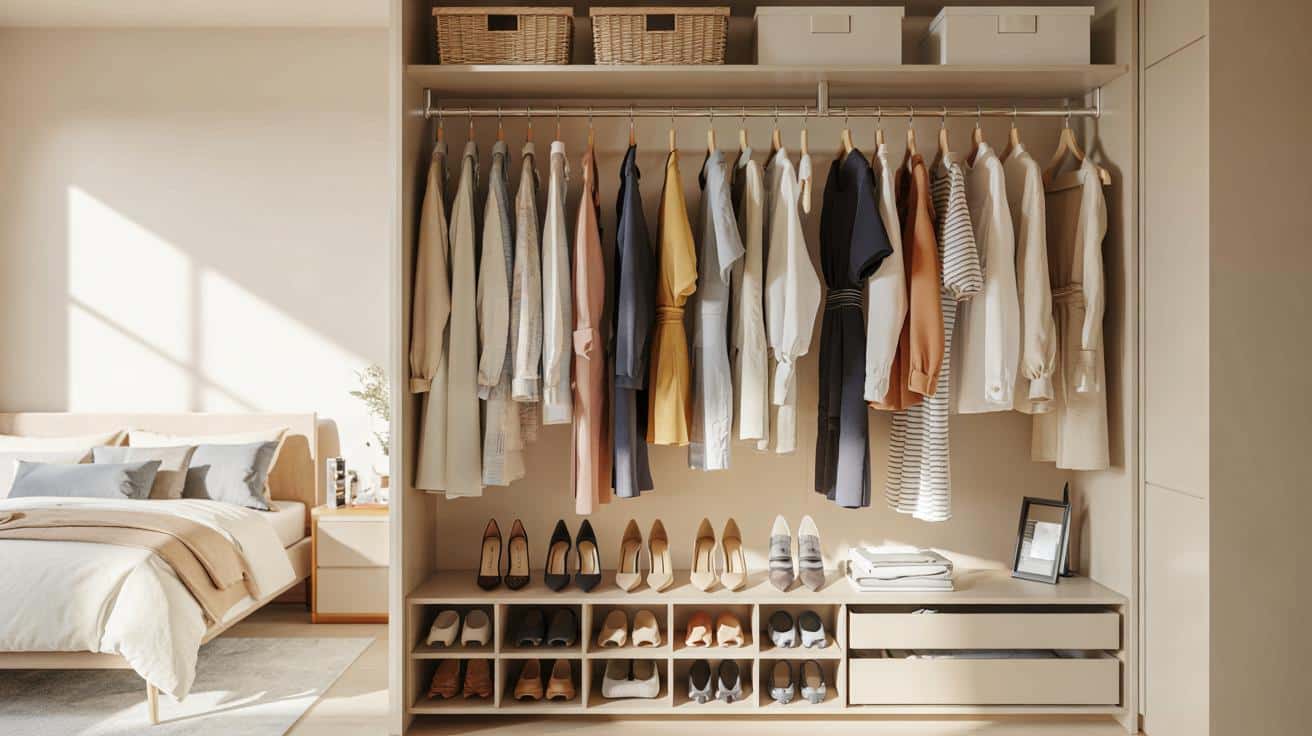
Hang your weekly items at eye level, grouped by type: all shirts together, all trousers together, all dresses together. Within each group, move from light to dark or casual to smart. This turns your rail into a visual map your sleepy brain can read in seconds. Off-season or occasion pieces can go higher up, on a separate rail, or even in a different cupboard. They’re still there, just not shouting at you at 7 a.m.
On a grey Tuesday, you want to see the buildable pieces, not the sequin dress you last wore in 2019.
Here’s where a simple “outfit zone” can change your mornings. Take 20cm of rail space near the front and dedicate it to pre-built outfits. Not Pinterest-perfect flat lays, just three to five combinations you know you feel good in. Jeans + striped tee + blazer. Black trousers + soft knit + loafers. Hang each mini-outfit together, or put a tag on hangers that belong to the same look.
On Sunday night, move those outfits into the zone. You don’t have to plan the whole week, just give future-you a handful of easy wins. On Thursday, when the alarm goes off after a rough sleep, your only job is to slide the first outfit off that section. No thinking, just dressing. On days you have more time or headspace, the rest of the wardrobe is still there to play with.
Real talk: this works even if you hate “planning outfits”. You’re not freezing your style forever, you’re just setting a low bar for bad mornings.
Once the framework is in place, the details do the heavy lifting. Use consistent, slim hangers so clothes sit at the same height and nothing gets visually lost. Put everyday shoes in an open, single layer rack rather than in boxes; seeing them speeds up decisions. Store underwear and socks in shallow drawers or baskets, divided into simple categories like “neutrals”, “sports”, “cosy”. Fewer layers to dig through means less time wasted.
“The goal isn’t a perfect closet,” says personal organiser Hannah Miles. “It’s a closet that forgives you on the mornings you’re tired, late, or just not in the mood. That’s when good systems quietly save your day.”
We’ve all had that moment where we’re half-dressed, already late, and realise the only clean top needs ironing. This is where small, forgiving habits beat grand intentions. Keep a tiny “urgent fixes” station nearby: a handheld steamer, a lint roller, a sewing kit with pre-threaded needles. Soyons honnêtes : personne ne fait vraiment ça tous les jours, but when a button pops at 7:10 a.m., you’ll be grateful it’s there.
- Colour-code just your tops from light to dark to create instant outfit anchors.
- Rotate hangers backwards for items you haven’t worn in three months, then move them out of prime space.
- Keep a small basket labelled “On Repeat” for clothes you wear, air out, and rewear before washing.
- Use hooks on the inside of the door for tomorrow’s outfit so the rail stays calm.
Let your wardrobe evolve with your actual life
A truly effortless morning routine isn’t built once. It flexes as your life, body, and taste shift. The job that required five blazers might quietly turn into one that lives on video calls in a jumper. Children arrive, and suddenly breathable fabrics outrank dry-clean-only pieces. Your closet has to keep up with the season of life you’re in, not the one you left three years ago.
One simple ritual changes everything: a ten-minute “closet check-in” on the first Sunday of every month. Nothing dramatic. Open the doors, scan quickly, and pull out anything you haven’t reached for, anything that doesn’t fit right now, anything that feels like a costume. Those pieces can move to a labelled box under the bed or the top shelf: “Later / Not sure”. You’re not breaking up, just taking space so your daily view reflects who you are this month.
Notice which items you keep rescuing from the wash basket. That’s your real wardrobe talking. Those are the colours, cuts, and fabrics your body actually loves. Let them set the tone for future shopping rather than the fantasy version of you who exists only in fitting rooms.
Morning ease isn’t just about shaving minutes off the clock. It changes how you step into your day. When you’re not battling a tangled rail or wrestling with trousers that almost fit, your head is free for more interesting things. Conversations on the commute. A proper breakfast. A quiet thought that doesn’t involve socks.
Some people find that once their closet stops shouting at them, they naturally start experimenting again. With the chaos gone, you can play. Try that bold shirt with the jeans you usually save for Fridays. Swap trainers for boots on a whim. Your wardrobe becomes less of a storage unit and more of a toolkit you actually enjoy using.
There’s also a subtle knock-on effect. When picking an outfit feels easy, you’re less tempted to doom-scroll for twenty minutes in your towel, hoping “inspiration” will appear. You know exactly where your reliable outfits live. You know what fits your real life. And that quiet confidence, repeated morning after morning, slowly rewires how you see yourself.
| Point clé | Détail | Intérêt pour le lecteur |
|---|---|---|
| Filtrer la vue principale | Garder à hauteur d’yeux seulement les vêtements portés chaque semaine | Réduit la fatigue mentale et accélère le choix d’une tenue |
| Créer une “zone d’outfits” | Réserver quelques centimètres de penderie à 3–5 tenues prêtes à l’emploi | Offre une solution immédiate les matins pressés ou sans inspiration |
| Rituel mensuel de check-in | Passer 10 minutes par mois à déplacer les pièces peu portées hors du champ principal | Fait évoluer le dressing avec votre vie et garde le système fluide dans le temps |
FAQ :
- How long does it really take to re-organise a closet like this?For an average-sized wardrobe, expect around two to three hours for a proper reset, including sorting, rearranging, and setting up an outfit zone. You can split it into two sessions if that feels easier.
- What if I love having lots of clothes and don’t want to get rid of them?You don’t have to. Focus on filtering what you see every morning, not what you own. Use secondary storage or a different rail for “sometimes” pieces so your daily view stays calm.
- How can I keep the system from collapsing after a busy week?Build in a five-minute “Sunday sweep”: rehang clean clothes in the right sections, refresh your outfit zone, and empty the chair of doom. Tiny, regular resets are more sustainable than rare deep cleans.
- Is colour-coding really worth the effort?Only partly. Colour-coding tops or shirts helps your eye move quickly, but it works best combined with grouping by type (all shirts together, all trousers together) rather than relying on colour alone.
- What should I do with clothes that don’t fit right now?Store them in a clearly labelled box or on a separate rail away from your daily view. That way they don’t nag at you each morning, but they’re easy to revisit when your situation or size changes.