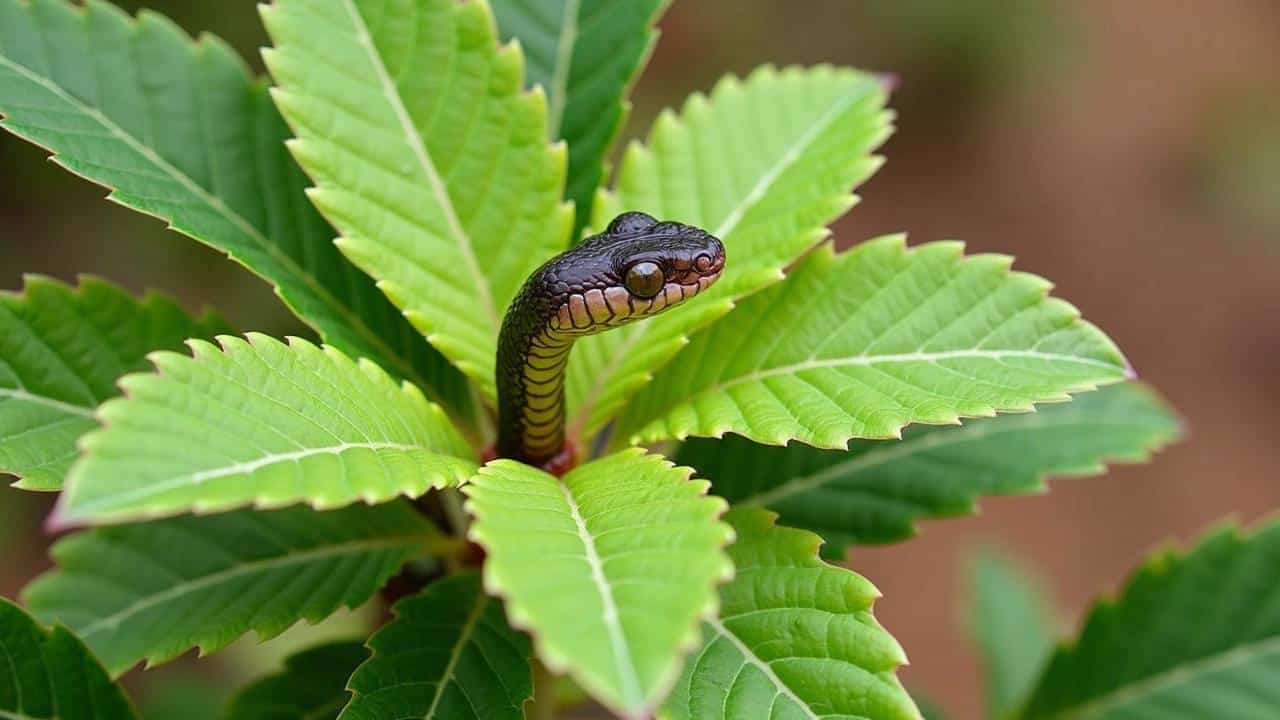
She was bending over her flowerbed, coffee mug cooling on the steps, admiring the lush green border she’d planted that spring. Then one of the “branches” moved. A thin brown body slipped between the stems, so quietly it almost felt like a trick of the eye. She froze, heart pounding, suddenly very aware of how close those plants were to her back door.
Later, her neighbour told her something she wished she’d known months before: that beautiful groundcover she loved is practically a welcome mat for snakes.
She thought she was planting a pretty, low-maintenance border. She was actually building the perfect hideout. And the worst part? She’s far from the only one doing it.
This common garden plant is a snake magnet
Walk through any suburban street in late spring and you’ll see it: dense, glossy foliage hugging the ground, spreading in thick carpets at the base of fences and foundations. English ivy, hostas, creeping juniper, pachysandra… different names, same problem. To human eyes, they look charming and tidy. To snakes, they look like cover, shade and safety.
Snakes love edges. That thin line where lawn meets thick planting is their version of a highway. A plant that forms a cool, shady, undisturbed mat along that edge might as well be a neon sign saying: “Hide here, no predators, plenty of food.”
You think you’re decorating. The snake thinks you’ve upgraded its real estate.
In the southern US, pest control companies quietly share the same story again and again. A homeowner calls after spotting a snake near the porch. The technician arrives, takes one look at the lush, knee-high hostas wrapped around the steps, and nods. Or in older neighbourhoods, they find English ivy climbing walls and spilling across the ground, creating a moist jungle pressed right up against the house.
One study from a state wildlife agency mapped snake sightings in residential areas and found a strong pattern: most encounters happened where dense groundcover met stacked objects like firewood, rocks or garden junk. Not exactly headline-breaking science, but brutally practical if you have kids or pets running around barefoot.
On a small cul-de-sac, you can see the difference in real life. One garden with clipped lawn and open borders rarely has an issue. Two doors down, where thick plantings lap at the patio and children’s toys sit half-buried in ivy, snakes are a seasonal “visitor”. Same climate, same street, completely different habitat.
Snakes don’t care about your design moodboard. They care about three things: shelter, food and temperature. That’s it. A dense border plant that hugs the soil ticks all three. It traps moisture and cool air when the sun is high. It hides small prey like frogs, crickets and mice. It offers shade from birds and neighbourhood cats. From a snake’s point of view, a solid patch of groundcover near a warm building is a five-star hotel with room service.
➡️ 8 phrases deeply selfish people often say without realising it
➡️ According to psychology, very independent people often had to fend for themselves too early
➡️ Goodbye hair dye for grey hair, this simple conditioner add-in restores natural colour
➡️ The way Australians are using their garages is changing faster than anyone expected
➡️ Some people talk incredibly loudly: What that reveals about their character
Plants that sprawl tightly and don’t let much light reach the soil are especially attractive. They create little tunnels and voids under the foliage where a snake can move, hunt and rest while staying almost invisible. When that plant is right against a wall, step or foundation, it adds heat from the structure and a solid “back wall” that makes the animal feel even safer.
Once a snake finds a spot like that and discovers regular food, it tends to return. You haven’t just attracted a passing visitor. You’ve set up a routine path.
How to plant a beautiful garden that doesn’t invite snakes
The first move is surprisingly simple: keep a clear strip around your home. A bare band of 30 to 60 cm (about 1–2 feet) of gravel or short, open planting along the foundation makes a huge difference. Snakes prefer to stay under cover, so that open zone acts like a psychological fence.
If you love lush borders, push them a little further out from the house. Plant taller flowers or shrubs in clusters, leaving visible soil or mulch between them instead of a continuous thicket. Swap dense groundcovers for airy perennials or ornamental grasses with space at their feet. The goal isn’t ugliness; it’s light and air reaching the ground so nothing forms a perfect hiding tunnel.
A tidy edge might save you a panicked sprint back to the kitchen door one hot afternoon.
Next, look at your habits. Not the glamorous ones you post on Instagram, the real ones. Do you leave bags of compost, old pots and firewood stacked right against the wall? That’s prime snake territory, especially when combined with a leafy plant skirt. Move those stacks away from the house and lift firewood off the ground if you can.
Soyons honnêtes : nobody goes out with a tape measure every weekend to check the spacing of their plants. But a quick monthly look for spots where foliage has turned into a wall is realistic. If you can’t see the soil anywhere in a border, it’s time for a light trim or a rethink.
We all know that moment when you reach into a dark clump of plants to pull a weed and suddenly regret every life choice that led you there. That’s your body telling you the planting is too dense for comfort. Your instincts are not wrong.
Garden designers often repeat the same quiet warning: lush doesn’t have to mean tangled. One London-based landscaper told me,
“The biggest mistake I see is people wrapping their house in a green scarf of plants. It looks cosy in photos, but it’s a dream for pests and a nightmare when wildlife gets bolder.”
If you already suspect your plants are inviting snakes, don’t panic and strip everything bare. Start with these small steps:
- Thin or lift dense groundcovers within 1–2 feet of paths, patios and doors.
- Break up long, unbroken lines of shrubs with gaps or lower planting.
- Replace ivy at ground level with mulch and upright, spaced plants.
- Cut back vegetation around sheds, woodpiles and compost areas.
- Work in daylight and use a long tool first where visibility is poor.
*A garden can feel wild without being welcoming to every wild thing that crawls.* You’re not trying to erase nature, just drawing a cleaner line between your living space and theirs.
Living with snakes without losing your garden
Here’s the tricky part: snakes are not villains in this story. Many of them quietly eat the very rodents and insects you complain about. A totally snake-free garden is almost impossible, especially in warm or rural areas. The target is fewer close encounters, not a sterile outdoor room.
Talking openly about that balance can be messy. Some people will read this and decide to concrete half their yard. Others will shrug and keep their ivy jungle. Somewhere in the middle sits a calmer approach: understand what attracts snakes, choose plants and layouts that reduce surprise meetings, and accept that the odd rustle in the long grass at the very back is part of having a living landscape.
That’s the conversation worth sharing across the fence or in the family WhatsApp, before someone learns the hard way what that pretty plant at the front step is really hiding.
| Point clé | Détail | Intérêt pour le lecteur |
|---|---|---|
| Dense groundcovers attract snakes | Plants like ivy, pachysandra and tightly packed hostas create cool, hidden corridors | Helps you identify which “harmless” plants can raise the risk of snake encounters |
| Keep a clear strip near the house | Leave 1–2 feet of open gravel or low, airy planting around foundations and paths | Simple layout change that quickly makes your living areas less attractive to snakes |
| Tidy clutter and stacked materials | Move woodpiles, junk, rocks and dense shrubs away from doors and walls | Reduces hiding places where snakes and their prey like to settle in |
FAQ :
- Which garden plant is most likely to attract snakes?Any dense, low-growing groundcover that creates continuous shade at soil level can attract snakes, especially ivy, pachysandra, creeping juniper and tightly packed hostas near walls or steps.
- Will removing one plant get rid of snakes completely?No, removing a single plant won’t magically erase snakes, but taking out or thinning dense cover near your home makes your immediate living area far less appealing to them.
- Are all snakes in the garden dangerous?Most garden snakes in many regions are non-venomous and shy, though you should always check which species live in your area and treat any unknown snake with caution.
- What can I plant instead that’s less attractive to snakes?Choose upright plants and airy perennials that leave visible soil, such as ornamental grasses, lavender, sage and spaced-out flowering perennials rather than solid carpets of foliage.
- Is it safe to remove dense plants myself?If you live where venomous snakes are common, wear boots and gloves, work in daylight, use tools to move foliage first, and call a professional if you see or suspect a snake is present.