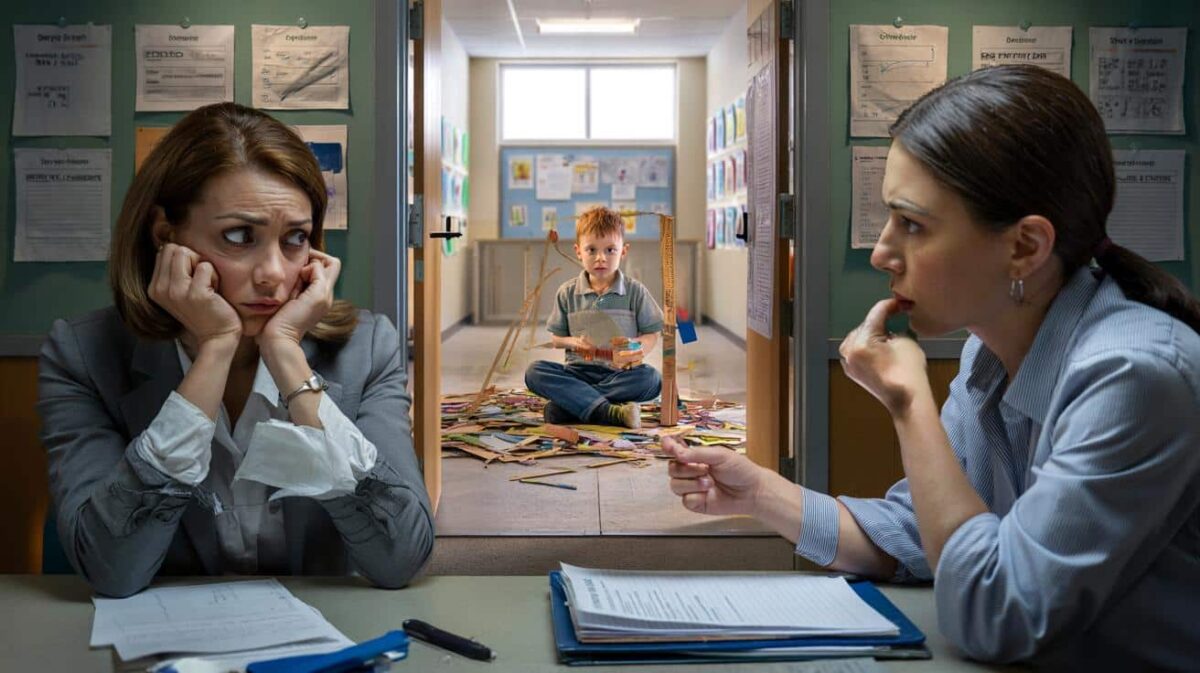
On a Wednesday evening in a crowded supermarket, the loudspeaker announces “Family Discount Hour” and the baby strollers roll in like a parade. A young cashier sighs as a toddler smears chocolate on the card reader, while behind them a woman in her thirties, alone with a basket of salad and wine, watches a dad unload three dozen yogurts. The dad jokes about “the tax breaks that barely cover snacks”, the woman jokes back that her taxes help fund those snacks in the first place. They both laugh, but it hangs a bit awkwardly in the air.
On the bus home, she scrolls through her payslip and sees the same line again: social contributions, family benefits, child-related credits. She has no children. She doesn’t want any.
Yet she still pays for everyone else’s.
At some point, that quiet annoyance starts feeling like a real question.
Why are childfree adults paying for someone else’s private choice?
Walk into any tax office or open any government budget, and a pattern jumps out: public money flows generously toward families with kids. There are child tax credits, free or subsidized schooling, parental leave schemes, family housing programs. All funded by a common pot.
That pot includes the taxes of people who have consciously chosen not to become parents. People who will never use maternity wards, never apply for child benefits, never queue at the school gate. Yet they’re treated as a background resource. A silent support act for other people’s life decisions.
The unspoken rule seems to be: you didn’t choose kids, but you still pay for them.
Look at France, where family allowances and tax breaks for children represent tens of billions of euros each year. Or Germany, where “Kindergeld” pays parents a monthly sum per child. In the US, the child tax credit can cut thousands off a family’s bill.
None of that is evil or wrong in itself. Raising kids costs money, and societies have long decided to help with that.
But here’s the twist. When a 28-year-old software engineer in Berlin says she wants to stay childfree and focuses on her career, she still finances the system. When a 45-year-old nurse in Texas has had a tubal ligation and works extra night shifts, she still partly funds other people’s child credits. They don’t get a line item that says, “Thanks for not using public schooling, here’s your bonus.”
Their choice is invisible in the fiscal story.
The argument is usually, “Kids are future taxpayers, so everyone benefits.” That’s one angle, sure. Yet it treats children as economic units, and turns childfree adults into compulsory investors in a project they didn’t sign up for.
There’s also a quiet moral judgment baked in. Parents are framed as generous contributors to society, childfree adults as selfish or incomplete, so supporting parents feels noble while considering a **childfree bonus** sounds outrageous.
Strip away the sentiment and you’re left with a blunt question. If the state rewards the decision to have children because it’s “good for the country”, why can’t it also reward the decision not to, given the measurable savings in public resources, environmental impact, and social infrastructure?
How a “national childfree bonus” could actually work
Picture a simple line on your tax return: “Childfree Contribution Credit.” No drama. No war between parents and non-parents. Just a clear recognition that choosing not to have children also shapes the collective budget.
One concrete method: ring-fence a small percentage of existing family-related tax revenues and redirect it to a national bonus fund for confirmed childfree adults. Not a huge annual payday, but a recurring, visible amount.
Eligibility could be tied to a signed declaration at, say, 35 or 40, or medical proof of permanent contraception, done voluntarily. The point isn’t to force a final decision at 22, but to recognize people whose path is clearly set.
Think of it less as a reward, more as a basic financial respect.
This is where things get tense. Parents may feel attacked, as if the proposal denies the value of raising kids or suggests they shouldn’t get help. Many childfree people hesitate too, afraid of sounding bitter or anti-child.
We’ve all been there, that moment when you bite your tongue at work while parents get flexibility and sympathy, and you’re expected to cover “just this once” again because you’re “free”. A national childfree bonus would not erase that cultural bias, but it would send a signal: your life choice is not second-class.
The mistake on both sides is to fall into a zero-sum mindset. Either we help parents or we recognize the childfree. Reality is messier. A more honest tax design could soften resentment on all fronts.
The plain truth is: the current system quietly assumes that non-parents exist to subsidize everybody else’s nursery bills, and that silence is exactly what feeds the anger.
- Set a clear age or status threshold
For example, a voluntary declaration at 38+, or proof of permanent contraception, to avoid hasty decisions and administrative chaos. - Fund it from existing family-related tax perks
Not a new tax, but a small rebalancing: skim 5–10% of current family subsidies into a dedicated childfree pool. - Make the bonus flexible
Cash payment, pension top-up, or credits for healthcare, housing, or education. Let adults choose what fits their life. - Keep it neutral in tone
No “heroes” or “selfish” labels. Just fiscal acknowledgment of different paths that both shape the national budget. - Track the impact transparently
Annual public reports on savings from lower school demand, healthcare usage, and environmental stress to justify the scheme.
Rethinking who really “owes” what to whom
Once you start looking at taxes through this lens, the moral story around parenting and childfreedom looks less obvious. Society loves the image of the family as a cornerstone of the nation. That narrative is powerful, emotional, very human.
Yet there’s another quiet group propping up the same system: the people who work overtime, don’t use parental leave, don’t call in sick for daycare bugs, don’t rely on school lunches, and statistically use fewer public family services.
They’re not asking to shut down family support. They’re asking to be seen. To have their contribution spelled out in a way that isn’t just: “You’re flexible, right?”
A national childfree bonus would do something subtle. It would reframe non-parenthood as socially valid, not a default waiting to be corrected by the “right partner” or a ticking clock. It would also open up honest conversations among friends and colleagues.
Imagine the office chat shifting from, “You wouldn’t understand, you don’t have kids,” to, “Your taxes literally help cover my daycare, and you also get a childfree credit — that’s fair.” The tension doesn’t vanish, but it lands on more equal footing.
*People argue less when they feel the ground under their feet is solid.*
There’s a bigger, quieter question sitting behind all this: who gets to define what counts as a “socially useful” life? The parent raising three kids? The aunt who helps pay their college? The neighbor who never wanted children but volunteers every weekend? The tax system, right now, tends to pick a side without admitting it.
Opening the door to a childfree bonus wouldn’t solve every injustice in one swoop. It would, though, force lawmakers, economists and all of us to face a simple fact: procreation is a personal decision with public costs, just as non-procreation is a personal decision with public savings.
Once that truth is on the table, the discussion stops being a culture war and starts looking a lot more like what it really is: a negotiation about who pays for whose choices, and what fairness actually feels like when you’re the one checking your payslip at the end of the month.
➡️ China Has Planted So Many Trees It Has Changed The Water Cycle
➡️ Neither boiled nor raw : the best way to cook broccoli to preserve maximum antioxidant vitamins
➡️ Have you ever tried cloud eggs? This light way to cook them
| Key point | Detail | Value for the reader |
|---|---|---|
| Hidden subsidy from childfree taxpayers | Non-parents fund a large share of child-related benefits they never use | Helps readers name the quiet frustration they already feel about their tax bill |
| Concept of a national childfree bonus | Small credit or payment funded from existing family tax perks for confirmed childfree adults | Offers a concrete, imaginable policy instead of vague complaints |
| Cultural and emotional reframing | Recognizing childfree lives as socially valid paths, not just “missing” children | Gives readers arguments to discuss the topic calmly with friends, family, or colleagues |
FAQ:
- Question 1Isn’t supporting parents just fair, since their kids will pay future pensions and taxes?
- Question 2Would a childfree bonus punish or shame people who want children?
- Question 3How would the state decide who really counts as “childfree”?
- Question 4Could this create pressure on people to stay childfree just for the money?
- Question 5Is this debate just about money, or about respect for different life choices?