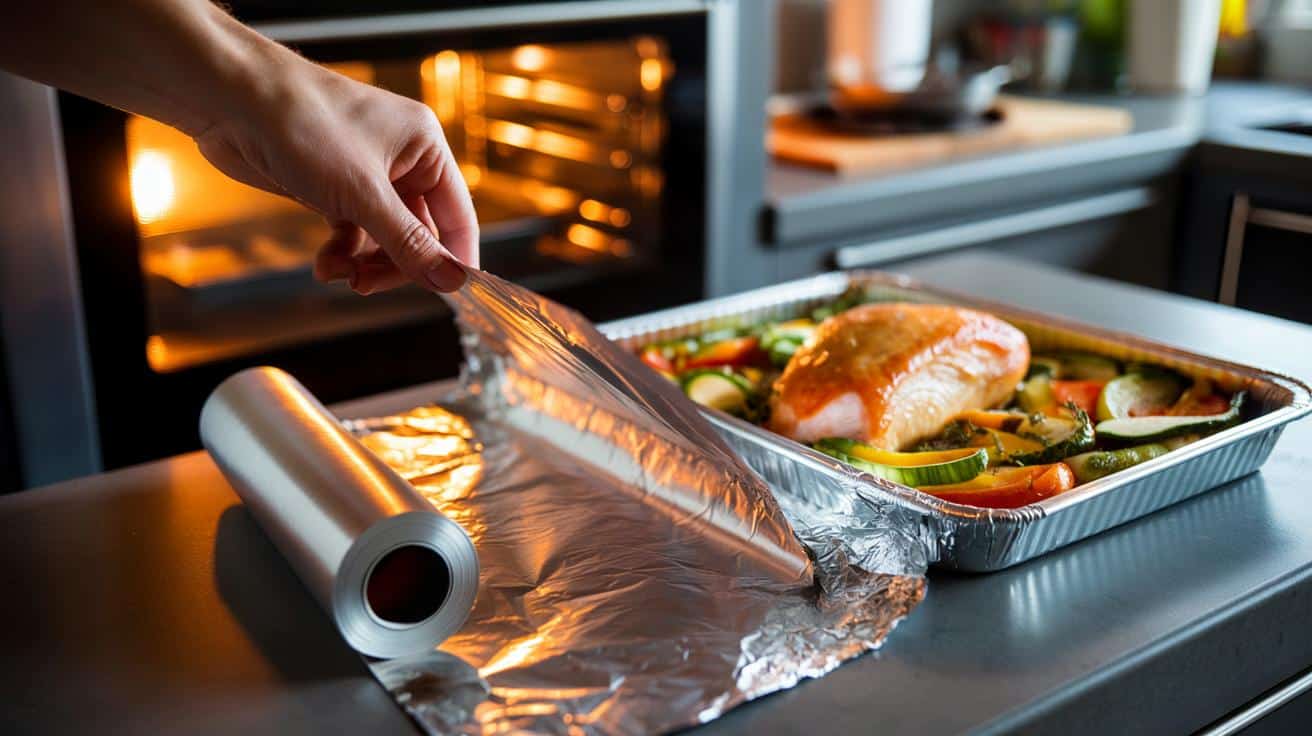
You’re standing in front of the oven, one hand on a roll of aluminium foil, the other already a little greasy from marinating chicken. The oven beeps, the pan’s waiting, and your brain suddenly freezes on the tiniest question: shiny side up, or shiny side down?
You hesitate for half a second, then do what everyone does — pick a side at random and hope you’re not ruining dinner.
Later, while you’re scrubbing a tray crusted with burnt cheese, you catch yourself staring at that dull side, wondering if you’ve been “doing it wrong” your whole life.
The roll never came with a clear answer. Yet the difference is right there in your hands.
So… does the shiny side of aluminium foil really matter?
The first time someone tells you the shiny side “reflects heat” and the dull side “absorbs it”, it sounds oddly logical. You picture your lasagna basking in carefully reflected warmth like a plant under a grow light.
Then you find another friend who swears the opposite, and your confidence collapses.
Here’s the twist: the two sides mostly exist because of the way aluminium foil is manufactured. The metal is rolled in layers, one face rubbing against polished rollers (shiny) and the other pressed against another sheet (dull). From a pure cooking perspective, both sides behave almost the same.
Take the classic Sunday roast. You line a pan, drop in potatoes and carrots, cover tightly with foil, and slide it into a hot oven. Whether you left the shiny side inside or outside, the potatoes don’t come out “twice as cooked” or “half as golden”.
Food labs have tested this. Temperature differences between shiny-up and shiny-down setups are tiny, roughly within the margin of error of an impatient cook constantly opening the oven door.
The real game-changer isn’t the side facing the food. It’s whether the foil is tightly sealed to trap steam, loosely tented to avoid burning, or opened at the right time to let things brown.
➡️ Neither boiled nor raw : the best way to cook broccoli for maximum antioxidant vitamins
➡️ SpaceX in merger talks with other Musk companies ahead of IPO
➡️ You don’t need to be an expert to make this foie gras: I use my microwave and it costs me far less
➡️ Why varying the intensity and frequency of physical activity is better for your health
So why all the myths? Because shiny things look like they *should* do more. Our brains love simple rules: “shiny equals hot, dull equals cold.”
In reality, for day-to-day oven use, grilling, or wrapping leftovers, **both sides conduct heat almost identically**. The main physical differences only start to matter in very specific situations, like high-precision insulation or when you cook under powerful grills and broilers where reflection plays a bigger role.
In the kitchen, the real choice is less about bright versus matte, and more about control: steam versus crisp, covered versus exposed, short heat versus slow tenderness.
The rare moments when shiny vs. dull actually changes things
There are a few quiet little cases where the side of the foil does have a job. They’re not as dramatic as social media makes them sound, but they do slightly tilt the result.
Under a strong broiler or grill element, the shiny side reflects a bit more radiant heat. If you put it facing the heat source, it can help protect the food underneath from burning too quickly.
Flip that logic, and you can use the dull side out when you want a touch more direct heat and quicker surface coloration on the pan or top layer.
Imagine you’re broiling salmon. You place the fillets on a foil-lined tray to save yourself from welded-on fish skin. If you line the tray with shiny side up, facing the fish, the heat that hits the foil gets bounced slightly away rather than soaked into the metal. Your fish gets a gentler bottom heat, a little more from the top.
Swap it: dull side up under the fish, shiny side to the tray. Now the bottom absorbs a tick more energy. On a strong broil, that can mean a slightly darker, crisper underside, especially with sugar-based glazes or marinades.
The effect won’t turn a disaster into a masterpiece, but when you’re chasing that “just right” finish, small tweaks like this begin to matter.
On the flip side, think about insulation. When you’re wrapping something cold, like a block of frozen meat for transport, or keeping leftover pizza from going soggy, the story changes a bit. Foil doesn’t magically refrigerate or heat, but it slows temperature changes by blocking air and radiation.
If you put the shiny side facing outward, it reflects some external radiant heat away. That’s why **many insulating products use reflective aluminium on the outside**. For hot sandwiches or baked potatoes, wrapping with shiny side in can minimally help reflect heat back toward the food, while the outer dull side deals with the environment.
Let’s be honest: nobody really does this every single day. Yet once you know, it’s hard not to notice which side is facing where when you wrap something precious — like that last perfect slice of lasagna.
How to actually use aluminium foil like someone who knows what they’re doing
Start with this simple rule: think about steam, not sides. If you want soft, tender, juicy results — vegetables that melt, meats that shred — wrap tightly, crimp the edges, and treat foil like a pressure softener.
For roast chicken, cover it loosely with foil for most of the cooking, then remove the foil near the end to brown the skin. Shiny or dull doesn’t decide if the skin crisps; exposure to direct dry heat does.
When lining trays, use the dull side up if you want slightly better grip for things like cookies, halloumi, or roasted potatoes, as it tends to be a bit less slippery.
When grilling or broiling, use foil as a shield, not a magic mirror. If your sausages or cheese-topped dishes burn too fast on top, tent them with foil, shiny side facing the heating element, to reflect some intensity away. Not an armour plate, more like sunglasses.
Be gentle with acidic foods like tomatoes, citrus, or vinegar-heavy marinades. Long contact with foil can give a metallic taste and leave grey marks on the food and the foil. Slip in a layer of baking paper between the food and the foil if it’s going to sit for hours.
We’ve all been there, that moment when you peel back foil and discover half your cheese welded to it. Greasing lightly or combining foil with parchment can save your dinner and your mood.
You’ll also want to know when not to use foil. Ovens? Fine. Grills? Fine. Microwaves? That’s a different story. Small, smoothed-out pieces used carefully can sometimes be safe, but big crinkled sheets can cause arcing.
One food scientist I spoke to summed it up bluntly:
“Foil is brilliant at blocking light, air, and moisture. Shiny or dull, its superpower is separation, not sorcery.”
Here’s a quick kitchen cheat-sheet you can mentally keep above the stove:
- For tenderness: wrap tightly, edges well sealed, any side.
- For browning: uncover or tent lightly toward the end of cooking.
- For protection under the broiler: shiny side toward the heating element.
- For wrapping leftovers: shiny in for heat, shiny out for cold — if you care about tiny differences.
- For sticky or acidic foods: add parchment between food and foil to avoid sticking and off-flavours.
What this tiny kitchen detail quietly says about how we cook
Once you learn that the shiny and dull sides of foil come mostly from industrial rollers, not from some secret culinary code, something shifts. You realise how many kitchen “rules” you follow just because someone once swore they were true.
There’s a quiet pleasure in discovering that you haven’t been ruining your recipes for years — just improvising with incomplete information. Foil becomes less of a superstition, more of a tool you can bend to your habits, oven quirks, and moods.
Next time you reach for that roll, you might still pause on the shiny-versus-dull question. Not in panic, but out of curiosity: am I blocking heat, reflecting it, trapping steam, or just saving myself dishwashing time?
That tiny moment of attention changes how you cook. A little less autopilot, a little more intention.
And suddenly, that crinkled sheet of metal feels less like a throwaway habit and more like a quiet co-pilot in the rhythm of your kitchen.
| Key point | Detail | Value for the reader |
|---|---|---|
| Shiny vs. dull is mostly manufacturing | Different sides come from contact with rollers, not a built-in “hot” or “cold” function | Relieves the fear of using the “wrong” side and reduces kitchen myths |
| Side choice only matters in specific cases | Shiny side can reflect a bit more radiant heat under strong grills or for insulation | Offers small but useful tweaks for broiling, grilling, and wrapping hot or cold foods |
| Technique beats surface finish | Sealing, tenting, timing, and pairing with parchment change results more than side choice | Helps improve roasting, reheating, and cleanup with simple, practical habits |
FAQ:
- Does the shiny side of aluminium foil cook food faster?
Not in any meaningful way for everyday home cooking. Lab tests show only very small temperature differences between shiny-side-up and dull-side-up setups in a regular oven.- Which side of foil should touch the food?
Either side is fine for most uses. If you’re under a strong broiler and want a little more heat on the food, you can put the dull side facing it. Plain-truth moment: most recipes work no matter which side you choose.- Is it safe to use aluminium foil with acidic foods?
Short-term contact is generally fine, but long marinating or baking very acidic dishes in direct contact with foil can cause off-flavours and grey streaks. Use a layer of baking paper between the food and foil for those cases.- Can I put aluminium foil in the microwave?
Large, crumpled sheets are risky and can cause sparks. Some microwaves allow small, flat pieces of foil used carefully, but always follow your manufacturer’s instructions. When in doubt, avoid it.- Does foil keep food hot or cold for longer?
Yes, a bit. Foil slows temperature changes by blocking air and radiant heat. For best results, wrap tightly and combine it with an insulating layer like a towel, lunch bag, or container.