The rise of pellet stoves has changed how many households heat their homes, but the way pellets are stored often hasn’t kept pace. A new generation of storage units promises to tidy up the chaos, save time and actually look good in your living room.
Why smart pellet storage changes daily life
Pellet stoves have become a favourite across Europe and North America because they are efficient, relatively low-carbon and easy to control. The weak link is often everything that happens around the stove: bags piled in the hallway, torn packaging, dust on the floor and last‑minute dashes to the garage in slippers.
Good storage brings the pellets out of the garage and into the living space, without the mess or the visual clutter.
A purpose-built pellet chest or bin tackles three everyday problems:
- Access becomes simple: pellets sit next to the stove, ready to use, rather than stacked in a shed or basement.
- Pellets stay dry: airtight or well-sealed lids keep out humidity, which can make pellets swell, crumble and burn badly.
- Space is optimised: instead of scattered bags, you have one defined, often compact piece of furniture.
For many households, the turning point comes after the first really cold month. People realise they are opening new bags almost every day, bending, lifting and cleaning up spills each time.
From ugly bags to design object
What used to be a purely practical item is now moving firmly into the design arena. Brands have understood that pellet storage will be on show in the living room, often right next to a designer stove or a carefully chosen sofa.
Materials that fit modern interiors
Manufacturers are leaning on clean lines and neutral finishes. Painted steel, powder‑coated metal and warm wood are the main contenders. These units are closer to sideboards or benches than to bins.
- Contemporary steel: matt black or anthracite models echo the look of the stove and disappear visually against dark walls.
- Wood detailing: oak or beech lids soften the industrial look and suit Scandinavian or rustic interiors.
- Compact footprint: tall, narrow shapes use vertical space so they can slot between the stove and a wall.
Many of these chests double as small furniture pieces: side tables, extra seating or discreet room dividers.
Beyond looks, thoughtful touches are becoming standard: wheels hidden under the base, soft-close lids, and handles that don’t snag clothes as you walk past.
➡️ Microwaving a lemon : A simple kitchen trick you’ll keep using
➡️ Twitter’s JavaScript roadblock: why you can’t use X.com without it
➡️ A peek inside Physical Intelligence, the startup building Silicon Valley’s buzziest robot brains
➡️ I tried this comforting dish and knew I’d make it again
➡️ Neither boiled nor raw : the best way to cook broccoli for maximum antioxidant vitamins
How the right storage cuts winter hassle
The harsh reality of winter is repetition. Loading the stove is not hard once; it is hard when you repeat the same moves a hundred times between November and March. A large, easy-to-use storage unit removes several steps from that daily loop.
Time saved, trip by trip
Typical pellet bags weigh 15kg. Without indoor storage you might carry in one or two bags every couple of days. A chest holding roughly 40–50kg means several days of autonomy in the living room.
| Setup | Indoor stock | Typical refills per week |
|---|---|---|
| No storage, bags in garage | 0–1 bag | 3–5 trips to fetch pellets |
| Medium pellet chest | 2–3 bags (30–45kg) | 1–2 short refills from the chest |
Instead of cutting open a bag, balancing it above the stove’s hopper and sweeping up spillage, you simply open a lid or flap, scoop the pellets and pour. For older adults, anyone with back pain or families with small children weaving around, that matters.
Choosing the right pellet storage for your home
The market has expanded quickly, from simple plastic bins to high-end, made-in-Europe steel furniture. A few criteria help filter the options.
Key points before you buy
- Capacity: look for units around 40–50kg if you use your stove daily, so you are not refilling the chest too often.
- Resistance to humidity: metal treated against corrosion or reinforced plastic keeps pellets safe in slightly damp rooms.
- Ease of use: wheels, side handles and front hatches are worth paying for if you move the unit or refill it often.
- Design: choose a colour and style that matches your stove and furniture so the unit feels intentional, not improvised.
A good pellet chest is not just a box: it is a tool you will touch every day for four to six months.
Shoppers in smaller flats may prioritise footprint over capacity. In large country houses, the aesthetics and robustness might take precedence because the unit will be a permanent part of the room.
Focus on the XL Jura Montania pellet chest
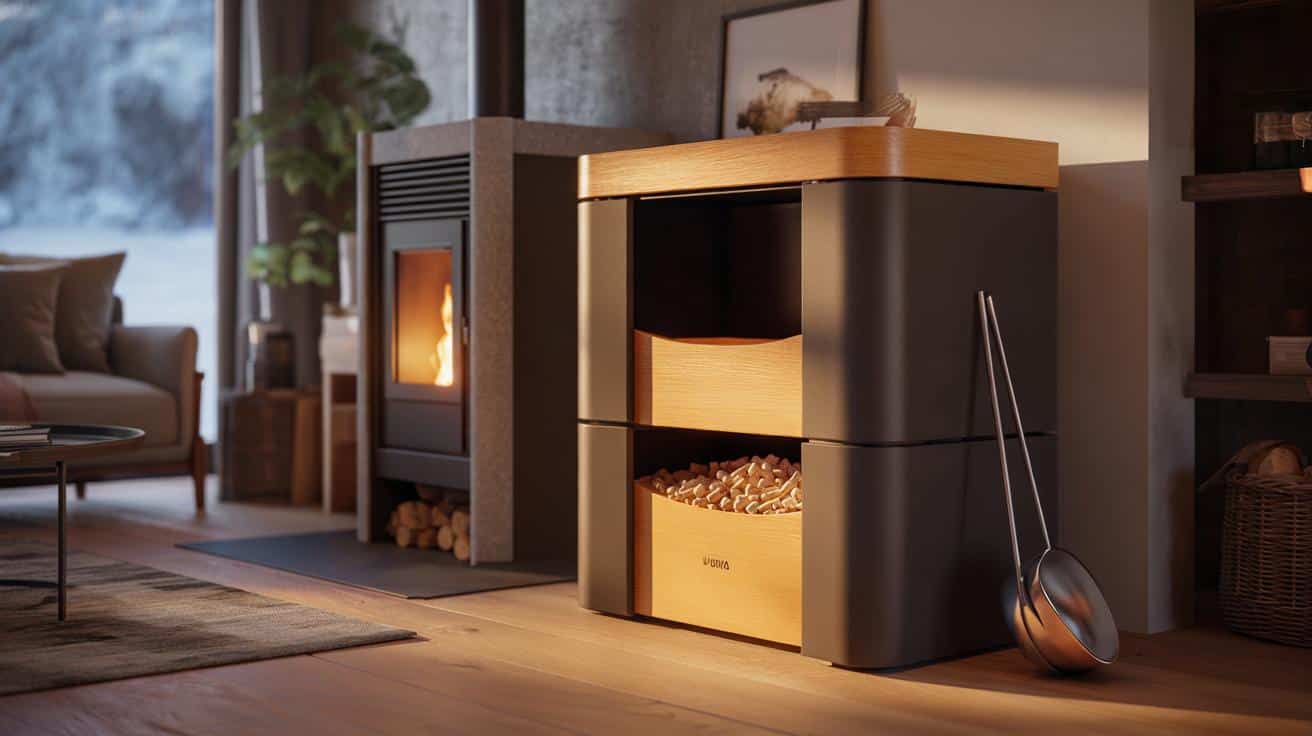
Among the better-known models in France and neighbouring countries is the XL Jura Montania pellet chest, a large-capacity unit aimed at regular pellet users. It is designed to swallow up to 45kg of pellets in one go, roughly three standard bags.
- Generous capacity: with 45kg inside, many households can go several evenings without refilling the chest itself.
- Robust build: thick, high-quality steel protects pellets from knocks, pets and damp environments.
- Clean look: the minimalist, almost monolithic shape suits both modern and more traditional rooms.
- Smart access: a hinged lid on top and a dedicated distribution flap guide pellets neatly into a bucket or scoop.
Rather than hiding in a corner of the utility room, this type of chest is designed to live beside the stove. It turns an awkward pile of bags into a single, calm line in the room.
Why this kind of purchase pays off over time
A design-led pellet chest is not a life-or-death appliance, yet it can shift how you feel about heating your home every night. The benefits are more than cosmetic.
- Better organisation: all pellets stored in one sealed container mean fewer open bags, fewer spills and less dust.
- Pellet lifespan: by reducing contact with moisture, you lower the risk of pellets disintegrating and blocking the feed screw.
- Visual calm: replacing a stack of industrial bags with one piece of furniture makes the living room feel finished.
A small investment in storage can prevent burnt-out auger motors, dirty glass and frustrating stove errors caused by poor-quality pellets.
Understanding pellets, humidity and performance
Pellets are compressed wood. Their density and low moisture content are what make them burn efficiently. When they sit in a damp environment, they reabsorb water, expand, then crumble. Those crumbs can settle in the hopper or in the feeding mechanism.
Users sometimes blame the stove when it misfires, shuts down or leaves unburnt pellets in the brazier. In many cases the root cause lies in storage conditions: open bags on a cold concrete floor or a bin without a lid. A well-sealed chest breaks that chain of problems.
Real-life winter scenarios
Picture two adjacent terraced houses using similar pellet stoves in January. In the first, the owners keep six bags in the garage. Each night one of them goes out, grabs a bag, cuts it open and pours half into the hopper, spilling a little each time. The empty bag joins a small mountain waiting for recycling day.
Next door, the second household refills a 45kg chest every few days. The chest sits next to the stove. A metal scoop lives inside. When the hopper runs low, they open the lid, scoop, pour and close. The routine is short, almost automatic, and the floor stays clean.
The energy bill will be similar, but the lived experience of heating the home is very different. Over a long winter, friction like this often determines whether people keep using their pellet stove enthusiastically or drift back to electric radiators.
Practical tips for getting the best from a pellet chest
- Keep the chest a few centimetres away from the stove body to avoid direct radiant heat.
- Vacuum the inside lightly once or twice a season to remove fine dust that can follow pellets into the hopper.
- Rotate stock: finish the pellets already in the chest before pouring in new bags to avoid very old pellets at the bottom.
- If you live in a very damp region, consider a unit with a gasketed lid for stronger sealing.
For households planning a switch from gas or oil boilers to pellet stoves, thinking about storage early can prevent frustration later. Budgeting for a robust, good-looking chest alongside the stove itself turns a functional appliance into part of a coherent, comfortable living space.